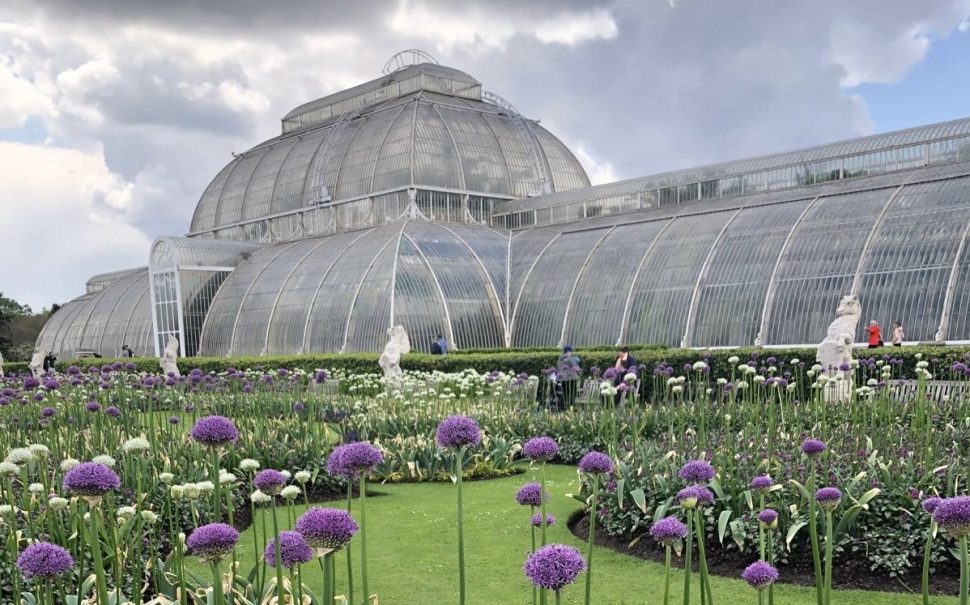
Kew Gardens is reconsidering its choice of plants as historic collections dwindle and drought conditions persist well into November, posing challenges for gardeners across Britain.
Felix Cleverly, arboretum supervisor at Kew Gardens, said that half of Kew’s approximately 11,000 trees could be under threat by 2090, according to climate projections produced by researchers at Kew in 2024.
Cleverly said: “We’re going to have to completely rethink our planting strategy based on that modelling.”
This could mean introducing more drought-resistant species from regions such as the Mediterranean, where plants have evolved to withstand hotter, drier conditions.
But the challenge extends far beyond Kew’s historic collections. Cleverly warned that some familiar British garden plants are already struggling to grow.
“Selecting the right species from parts of the world that have evolved to cope with drought stress is a good way of gardening the UK now,” he said.
In Twickenham, allotment holder Chris, who has tended his plot for 42 years, saw his usual runner beans and climbing French beans fail to produce a harvest during the summer’s heat and drought.
Elsewhere in Twickenham, other crops have flourished in the warmer conditions.
Katy Patterson, 54, a fellow Twickenham allotment holder, said: “There were lots of things that did well this year.
“I grew some great rocket this season and far more tomatoes than usual. They were small, but really tasty.”
Despite these successes, she is reconsidering what to grow next summer.
“I’m not going to bother growing carrots and maincrop potatoes next year as they need too much water. But I’ll probably have a go at planting some peppers and chilli plants,” she said.
Watch how Kew Gardens and Twickenham allotment holders are responding to the changing climate below.
Featured image taken by the author.




Join the discussion