Londoners are travelling around the capital less than they did before the pandemic, with public transport demand still below 2019 levels, according to data from Transport for London (TfL).
The estimated number of daily bus and tram journeys fell by 8% between 2019 and 2024, dropping from 3.7 million to 3.4 million trips a day.
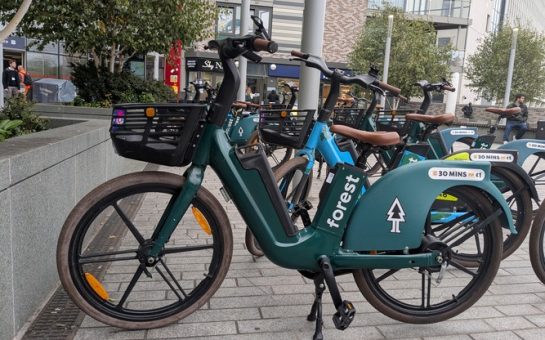
Meanwhile, active travel has increased. Walking and cycling levels both remain above pre-pandemic levels, with cycling up 20% in 2024 compared with 2019, according to a TfL report.
For those who do take the commute across London, buses are becoming a less attractive option. Passengers increasingly face slower and less reliable journeys, making buses less competitive with other modes of transport.
Average bus speeds have fallen by 11% over the past four years, according to TfL, declining from 10.27 mph in 2020/21 to 9.17 mph in 2024/25.
For Charlotte Hocquet, 26, buses have become less practical as a means of travel over the eight years she has lived in London.
Hocquet said: “Buses feel noticeably slower than they used to, largely because traffic has worsened and buses make frequent stops.
“What frustrates me most is the balance between waiting time and journey time: you can wait quite a while for a bus to arrive, only for it to move slowly once you’re on it.”
Average excess wait time – the amount of time passengers wait beyond the scheduled arrival time – increased by 31% between 2020/21 and 2024/25, rising from 61 seconds to 1 minute 20 seconds.
“In many cases, if the bus stop isn’t right outside my house, or right outside the place I’m travelling from, I’d rather walk an extra five minutes to the Tube. It’s usually more reliable, more frequent and less affected by traffic, so the overall journey often ends up being quicker,” adds Hocquet.
For some Londoners, however, switching to the Tube is not an option.
Hanna Dodgson, 23, relies on buses to get to work because she does not live within walking distance of a Tube station.
Dodgson said: “Bus times aren’t always accurate, and I depend on the bus to get to work. If it arrives earlier or later than scheduled, I can miss my connecting train and end up late.”
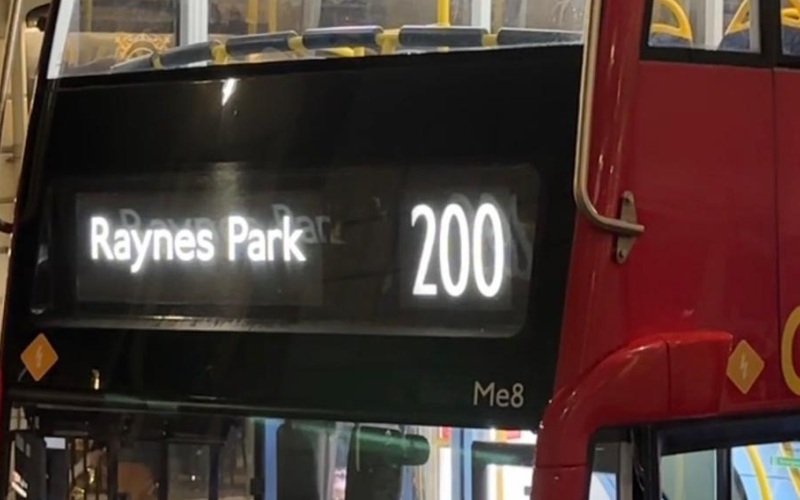
Kiran Duggal, 27, regularly uses the 394 bus route towards Islington and says delays have become routine.
“The 394 is a really important route that connects communities across north-east and east London, but it’s always late. Roadworks make journeys even slower, and it never seems to run on time,” said Duggal.
Route reductions hit communities across London
As fewer people take the bus, TfL faces growing pressure on the finances of the network. Fewer passengers mean less fare revenue, making it more difficult to maintain service levels while controlling costs.
The result is a cycle that is hard to break: slower and less reliable services discourage people from using buses, falling passenger numbers put further pressure on the network, and service reductions can make buses even less attractive to potential users.
According to information obtained by the Green Party on the London Assembly, TfL has cut or withdrawn 40 London bus routes since April 2024.
The figure does not include a number of recent timetable changes that have reduced service frequencies, including changes to routes 13 and 32 introduced last month. TfL is also consulting on proposals to curtail routes 19 and 38 through central London, while reductions have already been implemented on route 484 serving King’s College Hospital.
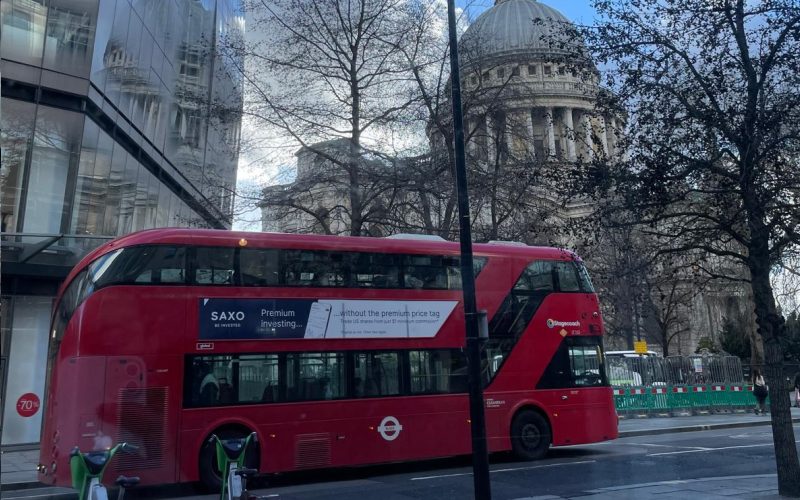
Political concern has been raised over specific service reductions. The Conservative MP for Chingford and Woodford Green, Sir Iain Duncan Smith, has criticised changes to the 379 bus service between Chingford Bus Station and the Yardley Lane Estate.
Duncan Smith said: “I continue to be deeply concerned about the arbitrary manner in which the decision to reduce the 379 bus service was made and how it has been handled, and I have already submitted a complaint and have requested a further meeting.”
The reduction in 379 buses means that from Monday to Friday, between 3pm and 4pm, there will be three buses instead of four, and the same reduced service will apply all day on Saturdays.
This change is due to create “significant problems” for residents on the estate, according to Duncan Smith, particularly elderly and vulnerable passengers.
Residents in Duncan Smith’s constituency have raised concerns on social media, with some describing the changes as “unacceptable” given reliance on the service, and warning that poor coordination with rail services means “if you miss one, you’ve missed both.”
It is not only north-east London affected. In south-east London, recent TfL timetable changes reduced the frequency of the 484 bus, which runs between Lewisham and Camberwell, to one every 15 minutes.
The MP for Lewisham West and East Dulwich, Ellie Reeves, said: “I am deeply concerned about the recent cuts to the 484 bus. It’s a vital route linking communities across south east London and provides essential access to key destinations, including King’s College Hospital.
“I spoke with TfL representatives this morning to hold them to account regarding this decision and ensure that passengers will not see their journeys disrupted or miss important appointments as a result.”
Bus fares remain a factor for passengers
Cost is another factor influencing how Londoners choose to travel. An Oyster bus fare cost 80p in 2005, which is around £1.46 adjusted for inflation, or £1.48 adjusted for median wage growth. At £1.75 now, buses are more expensive. Unlike rail or tube journeys, bus fares are not eligible for Railcard discounts when linked to an Oyster card.
For Hocquet, this makes buses less competitive for regular travel.
She said: “Another factor for me is cost. I have a 16–25 Railcard linked to my Oyster, so off-peak Tube fares are discounted, and I travel to work mostly during off-peak times.
“As bus fares have gone up over the years, the price difference between a bus journey and an off-peak Tube journey often feels negligible.”
In response to affordability concerns, the Mayor of London has introduced a new Weekend Hopper scheme aimed at encouraging bus and tram use.
The initiative will allow unlimited bus and tram travel on Saturdays and Sundays for the price of a single fare. It will run over six weekends during the summer holidays, from 25 July to the end of August.
Announcing the scheme, Mayor of London Sir Sadiq Khan said: “I know how expensive the summer holidays can be for families and my new Weekend Hopper – which is a whopper of a deal – will make it cheaper and easier for Londoners and visitors to enjoy all that our great city has to offer this summer.
“I know that buses and trams are a real lifeline for many Londoners, and I’m determined to keep them the most accessible and affordable mode of transport in the capital as we continue building a greener, fairer, better London for everyone.”
Falling passenger numbers, slower journeys, longer waits and rising costs make buses feel less reliable and less attractive for many Londoners, even as they remain essential in areas without strong tube or rail links.
While TfL says service changes are part of ongoing efforts to balance demand and improve the network, cuts and timetable adjustments risk reinforcing a cycle of declining use and further reductions.
TfL has been approached for a comment.
Featured image credit: Photo by Amy Wild