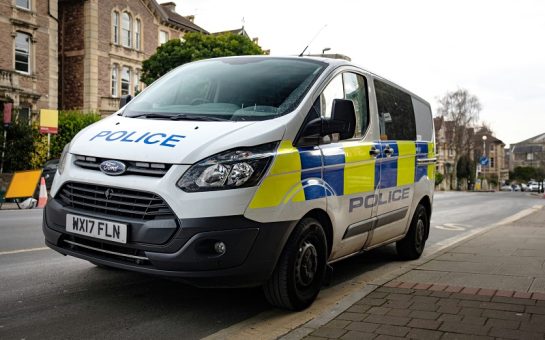
A recent surge in female knife possession shows women are increasingly choosing to carry weapons in public, while gender-based violence has experienced a shocking rise, data obtained through an FOI request shows.
The 2024/25 financial year saw the highest proportion of female arrests for possession of a knife, blade or sharp article in almost a decade, at 6.6 per cent – a 2.6 per cent increase in three years.
This coincides with an alarming rise in violence against women, which includes a 35 per cent increase in sexual offences since 2015.
Sandra Campbell, chief executive officer at knife crime charity Word 4 Weapons, said: “Although women and girls still account for a relatively small share of overall knife possession offences, any increase is concerning.
“When women carry knives, it is often linked to fear, whether stemming from personal experience, harassment, exploitation, or broader perceptions of community safety.
“Carrying a knife may feel like protection, but it can increase the risk of escalation and serious harm.”
In the past decade, female knife possession was highest over the 2015/16 financial year, but the most notable spike was between April 2022 and April 2023.
The year before that – during the Covid-19 pandemic – recorded the most violent crimes against women across the ten-year period.
The recent surge in women carrying knives follows a similar trend, succeeding an increase in gender violence from the year before.
In a new community policing strategy launched in December, the Metropolitan Police outlined a focus on reducing knife crime, and reported that the force has solved more than twice as many crimes linked to violence against women and girls since the first phase of the plan was launched in 2023.
Met Commissioner Sir Mark Rowley said: “Londoners are at the heart of everything we do, which is why we remain absolutely committed to tackling the most serious crimes, including violence against women and girls.
“Phase 1 of our plan has already delivered real results. Public trust is rising. We’ve driven down neighbourhood crime by 15 per cent. We are arresting more male predators of women and children.
“I’m proud of the progress we’ve made, but our journey is far from over.
“Over the next three years, we will build on these successes as we make the Met the most trusted and effective local police service for Londoners.”
Offences that have seen some of the sharpest increases since 2015/16 include stalking (95 per cent), poisoning (95 per cent) and sexual grooming (77 per cent).
Assault on a female constable has also become significantly more prevalent, rising from one case across the first three years to an average of well over one thousand per year since 2020/21.
Campbell said: “The rise in violent offences against women in recent years cannot be ignored.
“If women and girls feel unsafe, some may turn to carrying a weapon as a coping mechanism.
“Knife-carrying – by anyone – is rarely about an initial intent to cause harm, but it is often about perceived vulnerability.
“That reflects deeper societal issues around violence, trust, and prevention rather than a simple enforcement issue.
“If this trend continues, it signals that more must be done to ensure women and girls feel safe without resorting to carrying weapons.”
Addressing the problem
Campbell highlighted the importance of organisations working together to tackle the issue, adding that community organisations, local authorities and the police alike need the backing and resources to address the problem.
A review published by the Met Police last month suggests that extra support and less pressure from the government may have prevented cases such as Sarah Everard’s, who was murdered in 2021 by a serving police officer at the time.
The report was launched following an analysis that showed the Met Police’s vetting refusal rates dropped between 2020 and 2022. It found that the Met Police had deviated from vetting practices and regulations over the period encompassing PUP, the national recruitment programme which set the Met a recruitment target of 4,557 extra officers.
Addressing the report’s findings, Assistant Commissioner Rachel Williams said: “In publishing this report, we are being open and transparent about past vetting and recruitment practices that led, in some cases, to unsuitable people joining the Met.
“This review is part of our ongoing work to demand the highest standards across the Met so the public can have trust and confidence in our officers.
“It is important to highlight that the Met recruits hundreds of officers and staff every year – the overwhelming majority of exemplary character who are dedicated to protecting the public.”
As well as new policing strategies, such as the community-focused plan the Met Police recently announced, many grassroots initiatives are important to addressing knife crime and violence against women, Campbell said.
Improving perceptions of safety is vital, she explained, while options like trauma-informed support are also helpful.
Additionally, various knife amnesty bins around London, which Word 4 Weapons has worked with local authorities to provide, offer the chance to anonymously surrender weapons in public.
“This is a moment for the government to lead and for other agencies to engage with this issue and strengthen support for the partners working every day to prevent knife-carrying and violence,” Campbell said.
“Prevention cannot be reactive. It must be properly supported at the grassroots level.”
Featured image credit: Richard Bell via Unsplash