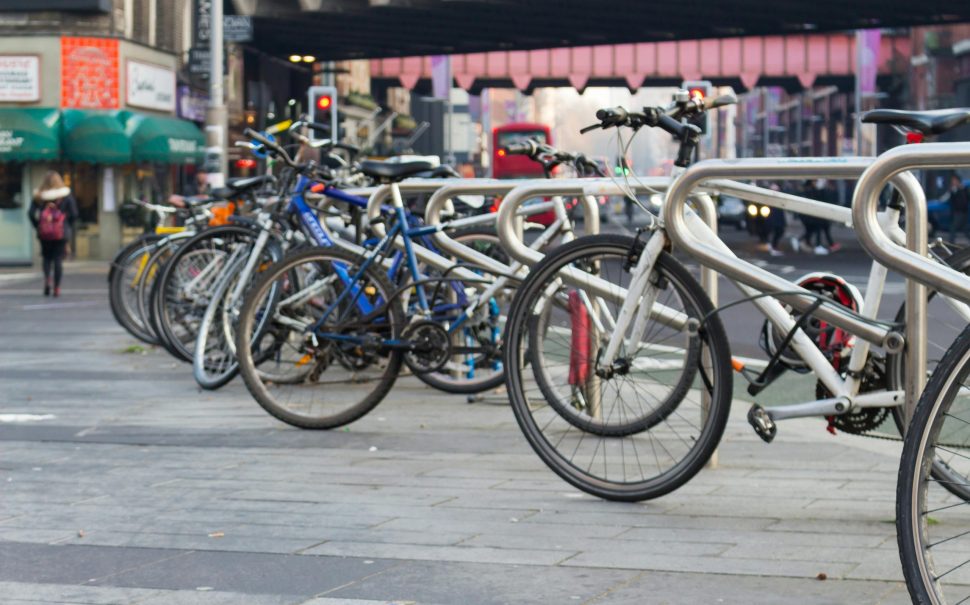
More than 1.5 million daily bike journeys were made in London last year, marking a 25-year high in cycling across the capital.
The daily number of people using bikes in London has more than tripled since 2000, a Transport for London report has found.
London’s Walking and Cycling Commissioner, Will Norman, said: “As we continue to expand London’s cycle network, the number of daily bike trips is soaring.”
The study, called Travel in London 2025, revealed that the estimated number of daily cycle journey stages — sections of trips which may include other modes of transport — reached 1.5 million last year, up from 0.47 million in 2000.
Bike usage rose by 12.7% in 2025 compared with 2024, with the daily demand for bikes in the capital similar to the number of daily travellers on the Northern and Piccadilly underground lines.
Norman continued: “There’s no doubt that London is fast becoming a cycling city.”
The report identified the most common reasons for travelling by bike since 2022, with the top three being: commuting to the workplace, leisure, and shopping and personal business.
Grace Clinton, 23, is among the Londoners cycling to work.
She said: “I enjoy being able to go at whatever time best suits me, and having the opportunity to get in a bit more exercise than if I did not.
“My work has a cycle to work scheme so I can get benefits such as money to repair and maintain my bike.
“I also like that my office has a dedicated bike rack and places to shower should it be really hot out.
“Overall, it seems like a sensible way to travel for my route.”
David Hilliard, a cycle instructor who works with groups such as the Enfield Cycling Campaign and the London Cycling Group, said factors such as community initiatives and improved infrastructure have contributed to the rise in bike usage.
Cycleways, designated routes which are designed to be easy for cyclists of all levels to navigate, form one major part of this infrastructure.
TfL’s research found that 76 per cent of London residents using these routes feel safe all or most of the time.
Hilliard added that cycling, particularly on e-bikes, can be a more efficient way for many Londoners to commute, particularly in central London.
He said: “I think it’s such an easy, quick way to get around. I think electric bikes now make it so easy.
“Having e-bikes is significant and will become more significant. It just makes it so much easier to get around.”
Asked what local authorities should be doing to further encourage bike usage, the instructor said that a ‘nudge approach’ is needed to get people out of their cars.
He said: “You need to nudge people to make it a little bit harder to drive, and a little bit easier to do the shorter journeys.
“So it’s cycle lanes, it’s low-traffic neighbourhoods, connecting people to the cycle lanes.”
Isabella Lapadula, 23, recently moved from Edinburgh to London and uses her bike both to get exercise and to commute.
Lapadula said: “I find cycling can be a faster way to get around than walking, especially with short to medium distances.
“Cycling can also be more reliable than public transport, as delays on the tube and buses often lengthen journeys unnecessarily.
“As someone new to London, cycling has become a way to get to know the city, explore, and become aware of different areas, as the city is so big!”
Izzy Romilly, Sustainable Transport Campaigner at climate charity Possible, celebrated the rise in cycling.
She said: “The rise of cycling in London is a success story – gone are the days when the majority of Londoners would never even dream of getting on a bike for everyday journeys around the city.
“We’ve now got hundreds of kilometres of protected cycleways, London’s air is getting cleaner, and many more people are able to enjoy the exercise and freedom of cycling thanks to a whole range of factors – from a diverse network of groups building confidence and skills, to more on-street cycle storage.”
However, Romilly added that more steps need to be taken to ensure that all Londoners feel safe on their bikes.
She cited issues such as heavy traffic, isolated routes, and harassment as reasons that some people might avoid cycling.
Romilly said: “Feeling safe – from vehicles and also from abuse and harassment – is the number one reason why people don’t cycle more.
“London Cycling Campaign’s Women’s Network, for example, surveyed one thousand women and found that one in five stop cycling because of intimidation faced on the roads.”
She added that measures such as upgrades to roads and junctions, lower speed limits, more on-street cycle storage, and more practical e-bike schemes would contribute to making cycling around London safe, easy, affordable, and accessible for everyone.
Featured image credit: Dom J via Pexels