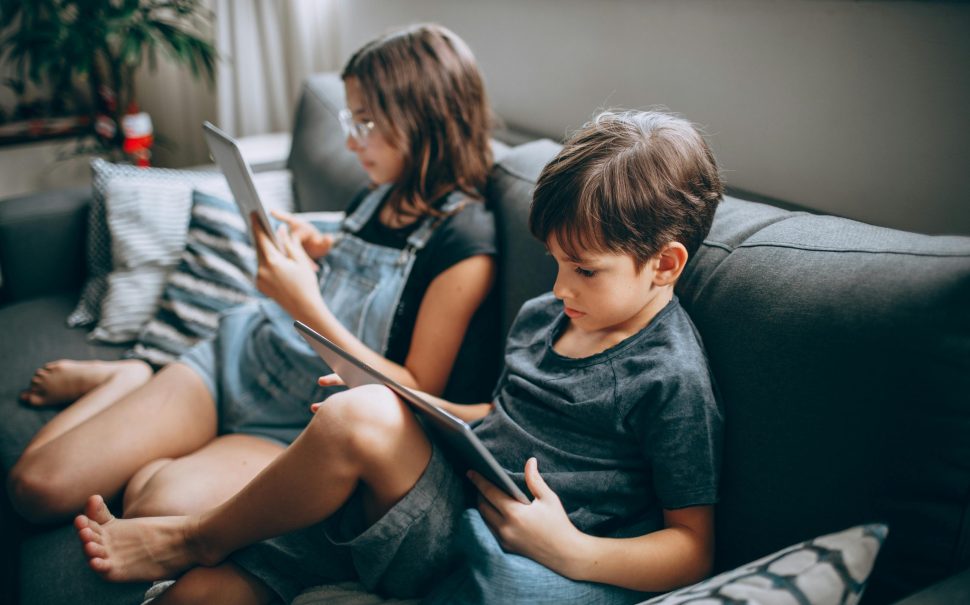
Londoners are having mixed feelings about the newly-implemented Australia ban on social media for young people.
The policy — aimed to promote online safety for children under the age of 16 — was put in place on December 9, and sparked debates over whether the UK should follow suit.
While social media can be beneficial to learn about the world and connect with friends, over 80% of children aged 12 to 15 have had potentially harmful experiences online, according to the department for digital, culture, media & sport.
Opinions are divided among London residents, as some, including Australian history teacher Elizabeth Ingleson, who moved to the UK 10 years ago.
She said: “It’s the corporations that need the real regulations, they need restrictions, they need far more boundaries on how marketing works.
“It’s more the people profiting who need to have regulations around them rather than the people using it.
“We live in a world where you need to embrace innovations, there are a lot of benefits to social media, quite important ones.”
Sasha Rosemary Bateman, 18, said: “I’m on an apprenticeship for music marketing with Amazon, which is a massive opportunity, and I wouldn’t have found out about that without social media.”
However, she pointed out the importance of online safety for children, adding: “I have had social media since I was eight and I think it was damaging for me to have social media at a young age.”
When asked whether the policy should be implemented in the UK, Acer Mcfarlane, 23 said: “They really shouldn’t, a lot of information is online, I learned a lot on YouTube.
“If you have homework or want to look up how to do something, it is really good.”
Others welcome the implementation of the policy in the UK, such as 77 years-old ex-teacher Linda Malcolm.
She said: “I think it’s an absolutely brilliant idea, I’m an ex-teacher and I am terrified of what social media is doing to young people.
“They are not able to maintain eye contact anymore, they can’t have a conversation with a stranger and I find it very very scary, so I think it’s a great idea”.
William Martin, a 45-year-old father of a teenage girl, also supports the policy.
He said: “She’d be happy without a phone if no one else had one.
“A lot of social media is powered by trying to sell them stuff or manipulating them in some way so I think keeping them out of it is probably a good idea.”
Gen Z residents were also backing the ban, as Ada Orlow, 24, said: “It’s very bold but that has to be done.”
As Australian teenagers have already started using VPNs or photos of older people to bypass the facial recognition-based ban, all Londonders agree on the need to protect young people online and the complexity of implementing such a policy.
Megan Dawes, 30, said: “There’s no way that would work in the UK.
“What does that open the door too, are they gonna get private websites, are they gonna go looking elsewhere?”
Daniel Loretto, 24, said: “I think it is a good thing in theory, but it might just be so hard to do in practice.”
“I remember growing up in school, you weren’t meant to make an account on Facebook until you were 13 but people in school were just doing it anyway.”
Chris Sherwood, chief executive at the national society for the prevention of cruelty to children (NSPCC) said: “We must not punish young people for the failure of tech companies to create safe experiences online.
“It is vital young people are protected from the deeply concerning harm that takes place on social media, but we believe blanket bans take a blunt approach – undermining teenagers’ rights and driving them to unregulated spaces online which exposes them to even greater risk.”
In 2020, nearly 22 million reports of child sexual exploitation were made, including over 65 million images and videos, according to the department for digital, culture, media & sport.
People are urged to contact NSPCC’s Childline at 0800 1111 if a child is experiencing online abuse.
Feature image credit: Pexels