There was space to spread out. No rush hour crush. No sea of passengers blocking the aisle or doors of the bus.
It was a single-deck bus with a handful of people scattered across the middle and front of the bus.
I sat towards the back on the bus on an aisle seat. I’m always conscious of being trapped in a space as a woman with no escape.
I noticed a man sat two metres to my right, across the aisle. I could see through my peripheral vision that he kept looking.
This wasn’t unusual for me on public transport, so I kept an eye on him without making it obvious.
Then my heart sank. When I looked again, I saw the man touching himself.
First, I was shocked, then horrified and finally scared.
All I could think was, ‘if I get off this bus now, I’ll be late for work’, and I was very close to my next bus stop.
I told myself ‘don’t panic. Don’t react. Breathe.’
My brain searched for an explanation. Maybe my eyes deceived me. Perhaps I misunderstood.
So, I looked again from my peripheral view as he was still very close.
And no, I did not misunderstand. He was masturbating.
I felt sick. I remember thinking ‘why is no one looking back? Why can’t no one see what I’m seeing?’
I thought, ‘how brazen. He’s doing this in broad daylight with the bus stopping every two three minutes with no fear of someone coming in, walking down and witnessing him.’
There was no dark alley, no deserted road, no late-night journey home. Just daylight, public transport and the assumption that I was at least safer. Surely.
It was only when I later spoke to Lisa Squire, chair of trustees for charity It Does Matter, that I began to understand why offenders can appear so brazen.
The charity set up in memory of her daughter Libby Squire, a university student who was raped and murdered by a man who had extensive history of non-contact sexual offences.
Lisa said: “It’s because they think ‘I’m going to get away with this, and I can do this because I want to’ – it’s horrible.”
The charity’s mission is to educate women, girls and boys about non-contact sexual offences through educational establishments and public awareness campaigns so they can recognise it, report and create change in memory of Squire’s daughter.
She criticised the term ‘low-level sexual offences,’ and said: “I absolutely cannot stand it, we need to get the ‘lower level’ out of it.”
She sees non-contact sexual offences as ‘red flag offences’ and added: “Not all offenders will go on to become rapists and murderers, but a vast majority do and we can stop this.”
Squire wants to see tougher and lengthier penalties for repeat offenders, plus rehabilitation programmes for those at the start of offending.
She argued it can help prevent escalation, and believes the wider justice system must move faster.
Squire explained how lengthy court delays that can last up to five years and low conviction rates for crimes like rape risk discouraging victims from coming forward.
She also wants to see great public awareness, including posters in tube stations highlighting different types of non-contact sexual offences and QR codes allowing victims to report incidents online.
She believes this also spares women feeling dismissed when reporting in person.
Squire stressed reporting offences is vital, not only because it can help prevent future offending, but because it gives police forces the data they need to dedicate more resources to tackling these crimes.
She pointed out one of the reasons why these crimes go unreported is because victims minimise what happened.
Squire said: “There’s a common misconception: I haven’t been hurt, he hasn’t touched me. He was masturbating in front of me. It wasn’t a pleasant experience, but I haven’t been physically hurt.
“What we don’t realise at the time is that it has long-term effects on us.
“We become more guarded when we get on a train. You won’t walk down the street in the dark, you take the long way around, so you don’t have to cross the dark road, and I don’t think as women, we put those two and two together.
“If we dismiss it as just indecent behaviour or harassment, then again, it belittles it.
“And it is sexual violence – they are sex offences.”
A report by the APPG for UN Women found non-contact sexual harassment is extremely common, with 71% of women reporting that they have experienced some form of sexual harassment in a public space.
The reality is likely to be worse than statistics suggest as police acknowledge non-contact sexual offending is significantly underreported, with research indicating that around 95% of incidents are not formally reported to authorities.
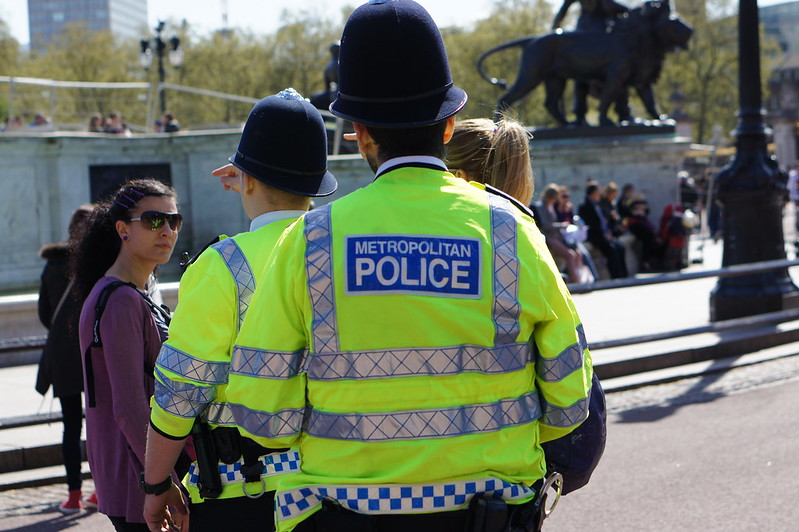
In London alone, the Metropolitan Police recorded 1,566 exposure and voyeurism offences in 2024. Yet just 10.9% resulted in a positive outcome, highlighting the gap between the scale of the problem and the likelihood of justice.
Squire acknowledged trust between women and police can be a barrier to reporting, with some victims claiming they encountered dismissive attitudes towards non-contact sexual offences.
But she also noted she had seen efforts within the police to improve after working with the Met, and she believes the force is trying to change that.
She noted rebuilding trust also requires greater openness and transparency from the police.
Squire stressed the importance of accessible reporting including online options and encouraged anyone who feels they have not been taken seriously in person to ask to speak to another officer.
She said: “You’re not reporting it for yourself, you’re reporting it for the next person because the next person he may rape, the next person he may touch, and you could be stopping someone else from becoming a victim.”
Featured image credit: Yukiko Matsuoka