
Pets that were bought for companionship during the Covid-19 lockdown are now being surrendered or abandoned as owners struggle with rising living costs, according to new figures.
In 2023, an RSPCA report found an 11% increase in abandoned animals, compared with the 2022 figures, reaching the highest level since 2019.
For many, the pandemic was a time of high isolation and anxiety, and as a result, people were in desperate need of companionship.
Cheryl Hague, regional media manager at the RSPCA, said: “The RSPCA fears a surge in pet ownership during the Covid-19 lockdown and the increasing financial hardships due to soaring living costs have led to the increase in people dumping their pets.
“For those who are struggling, we urge them to reach out for help and encourage others to really do their research into whether they can manage all the commitments before taking on a pet.”
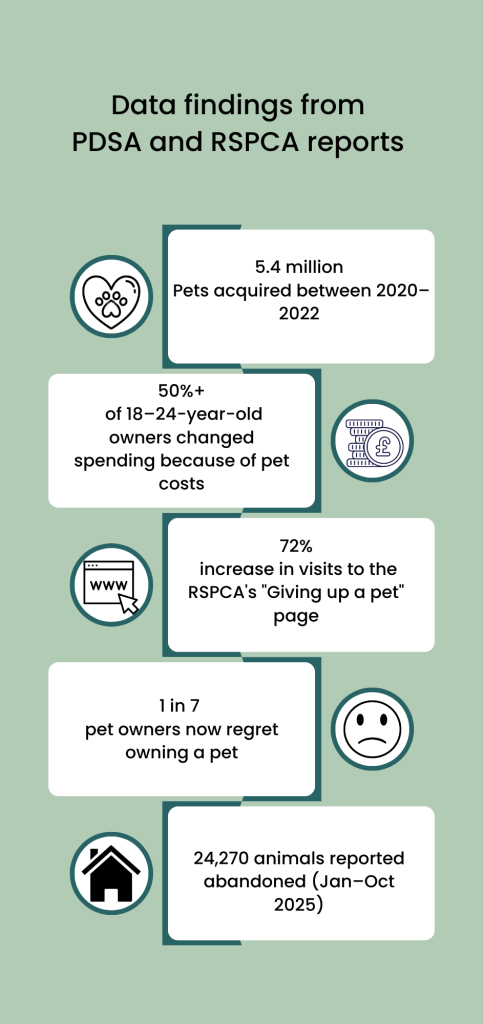
The RSPCA received 24,270 reports of abandoned animals between January and October 2025, compared with 19,727 during the same period in 2024.
From 2020-2021, 70 stray dogs were taken in by the borough, which increased to 115 in 2022-2023, an increase of 64%.
Cats are absent from many council datasets because, unlike stray dogs, local authorities have no legal duty to collect them under the Environmental Protection Act 1990.
Animal charities argue this makes it harder to understand the true scale of pet abandonment across the UK.
Around 5.4million pets were acquired in the UK between 2020 and 2022, according to a PDSA report from 2022.
Battersea warned as early as 2021 that the rise in “pandemic pets” could lead to an increase in animal relinquishment as owners returned to work, a prediction reflected in recent figures from the RSPCA.
A 2022 study by researchers from Queen’s University Belfast and the University of Sussex found that pets acquired during the COVID-19 period were at greater risk of relinquishment.
The survey collected responses from 3,945 participants across the UK, USA, Canada, Italy, Spain and France and found that pets acquired less than six months before the pandemic were three times more likely to be considered for relinquishment or actually relinquished than pets acquired earlier.
Among respondents who had already given up their pet, 66.7% rehomed the animal with a new owner, 14.3% relinquished it to a shelter, and 19% arranged temporary care.
According to the 2023 RSPCA report, the research found that Gen Z pet owners are struggling the most with basic pet costs.
Over 50% of young pet parents aged between 18-24 said they had to change their habits due to the financial pressure, compared to just 28% of owners over 55 who experienced the same issue.
Housing may also be a factor, as there is currently no law in England giving tenants an automatic right to keep a pet.
Holly Grace, 25, a pub manager from east London, is a young pet owner who adopted a cat during the peak of lockdown, which she eventually had to give up two years later due to housing and financial issues.
She said: “I was truly heartbroken because Rocco was my only companion during a really lonely time, but as vet visits, food, and general cat upkeep kept rising, I was left with no choice and knew he’d live a better lifestyle with my mum.”
The 2023 Annual Review shows Battersea has shifted its focus from simply rescuing and rehoming animals to preventing pets from entering rescue centres in the first place.
Its new strategy includes supporting owners in financial difficulty, promoting pet-friendly housing and helping people keep their pets wherever possible.
Between March and May 2023, the RSPCA recorded 40,000 Google search clicks to its “Giving up a pet”, while visits to the page increased by 72% compared with the same period in 2022, suggesting growing numbers of owners were looking for ways to surrender their pets.
Their 2026 Animal Kindness Index also found that around one in seven pet owners now regret owning a pet, with many citing the increasing cost of caring for animals.
In 2022, the RSPCA launched a money-saving section on their website where people can get advice on pet costs, as well as accessing pet food banks.
Charities including the RSPCA, Battersea, Dogs Trust and Blue Cross are increasingly focusing on helping owners keep the animals they already have – a shift that highlights the dedication of pet welfare in the UK.
Featured image credit: Unsplash