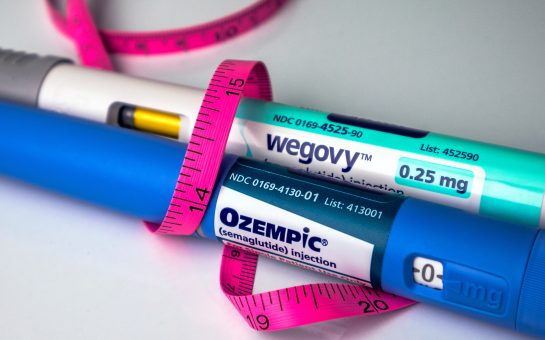
Weight loss medications are dangerously accessible to individuals at risk of eating disorders, according to experts.
Charities, health professionals and affected individuals have spoken to the Londoners about the increased use of weight loss medications — often accessed through unregulated retailers — which comes amid a sharp rise in eating disorder figures.
They warn the drugs, now used by more than 2.5 million people in Britain, can be triggering and, in some cases, life-threatening for those at risk.
BEAT, the UK’s leading eating disorder charity, said the growing availability of these drugs without adequate screening is ‘incredibly worrying’.
“In the wrong hands, these medications can be very dangerous,” said Tom Quinn, BEAT’s director of external affairs.
“They can worsen harmful thoughts and behaviours for those who are unwell or contribute to an eating disorder developing for someone who is already at risk.”
Philippa, who was prescribed weight loss medication, Orlistat, via the NHS – during an unrelated GP appointment – shared her experience.
“At the very start, it felt like a really positive thing. It put the wind in my sails and it felt like I had almost like a cheat code,” she said.
“The losses were amazing and it was quick and it was great.
“But when it got to the wobble point, things started to get really scary because there’s a threat of, well, they’re going to take it away.
“I recognised that I was getting really mentally stressed by it. But I felt like I couldn’t stop taking it.
“I’ve been nearly entirely unmonitored on that medication.
“It’s almost deliberate negligence in my eyes, because how is it possible for me to be so unmonitored on it?”
Philippa said she felt she had ‘conned the system’ with her continued usage of the medication.
“As medical professionals, they should have had measures in place to make sure that I can’t do that,” she said.
The NHS currently prescribes weight loss medications to people living with obesity who meet specific criteria.
NHS guidelines outline that weight loss injections, also known as GLP-1s, should only be prescribed to patients who have a body mass index (BMI) of over 35, or a BMI of 30 and at least one weight related health problem like high blood pressure.
However, people who do not qualify for weight loss injections via the NHS are now finding alternative ways to access the drugs – without regulations and support.
First Steps, an eating disorder support and recovery charity, explained how one client was able to purchase weight loss injections online, by falsifying their BMI information.
This individual felt he had ‘no choice’ but to use the drugs, after struggling with crippling body image pressures.
Lauren Dogharty, head of management at First Steps, described the outcome as ‘devastating’, resulting in ‘hospitalisation with heart complications and palpitations’.
“He suffered quite significant health impacts. It did have an impact on his heart as well,” she said.
“We’ve now supported him again to come off those weight loss medications and manage his eating disorder in other ways.”
Dr Julie Evans, a clinical psychologist specialising in eating disorders, said that the growing use of weight loss injections is ‘something we are now very aware of in our services’.
She said: “People are using GLP-1s as a way to cope with things, cope with their worries about eating, worries about their body, etc, which isn’t necessarily what they’re there for and isn’t necessarily helpful for them.
“Unfortunately, people are turning to other ways of getting the medication, which then means there is less regulation and less support.
“I’m very keen that people are aware of the risks of the GLP-1s, because I think people feel that they are harmless, or don’t quite understand that they can be fatal for people.”
Evans explained that GLP-1s can impact the heart, kidney, liver, but that there is still more research needed.
An eating disorder sufferer, who would like to remain anonymous, claimed that having access to weight loss drugs would have been ‘catastrophic’ during their illness.
The anorexia survivor said: “It’s concerning how normalised this conversation is.
“It has triggered a wider normalisation of fatphobia and validates disordered thoughts.
“It makes recovery seem out of reach and will certainly lead many individuals down a much more difficult path.”
Dogharty said: “It is something that we see a lot in our support conversations – the inescapableness of it. It is everywhere.”
She explained how the cultural pressure is intensifying: at work, in social-media feeds, among friends — the weight loss injections are now part of the popular conversation.
“Service users are currently trying to challenge the idea that weight is the be all and end all and then we’re seeing on social media that actually people are being celebrated for their weight loss,” she said.
“It’s often in direct conflict with what our service users are attempting to work on and that’s really important to keep as part of the conversation.”
Eating disorder professionals are advocating for more robust regulations surrounding access to and discussion of weight loss injections.
Quinn said: “We need more stringent checks, such as mental health assessments, in place so these medications are only prescribed to people who are well enough to take them – as well as more education around the risks.”
Anyone affected by eating disorders or weight loss medication can contact BEAT’s Eating Disorders Helpline for confidential support on 0808 801 0677.
The Londoners have contacted NHS England, the Department of Health and Social Care and the Medicines and Healthcare Products Regulatory Agency for comment.
Featured image credit: Unsplash