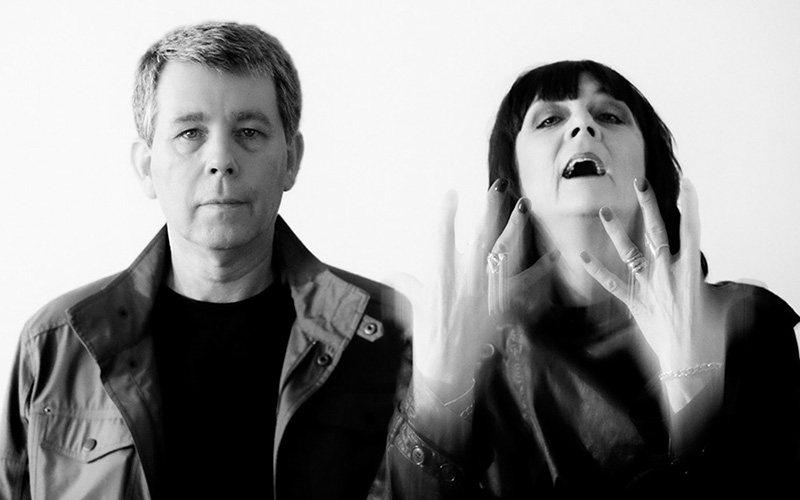
The band faced wild hostility at their debut long before the centre that first hosted them held the celebration.
Throbbing Gristle’s debut at the Institute of Contemporary Arts (ICA) spurred extreme responses across Britain, with Conservative MP Sir Nicholas Fairbairn describing the band as “wreckers of civilisation”.
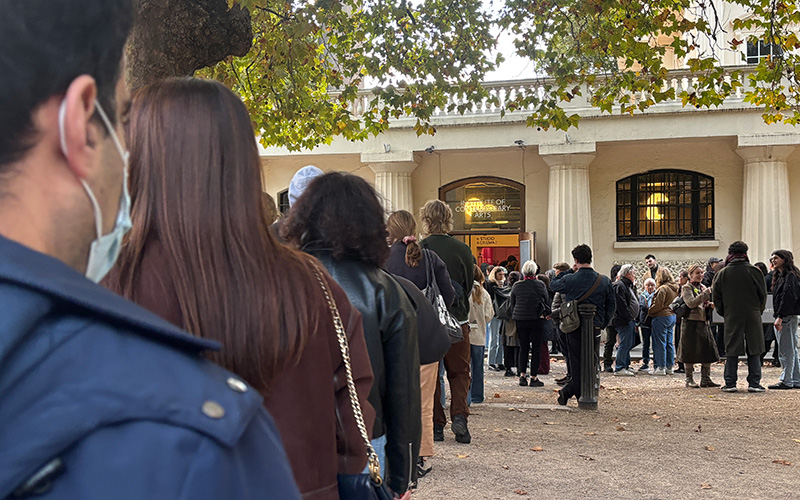
50 years on, the ICA invited the former members back for TG:50, a day-long celebration of their work.
This included a free-to-experience listening space, screenings of concert recordings and a Q&A.
ICA Music Programmer, Jacob Silkin, said: “The exhibition was a defining moment in British art and in the ICA’s own history, as well as marking the public debut of the band, so it felt fitting to celebrate this 50 years on.
“It’s clear that its impact is still felt today, not only through continued interest in the exhibition itself, but in the influential artists, musicians and ideas that emerged from it.”
The group was composed of members Genesis P-Orridge, Cosey Fanni Tutti, Chris Carter and Peter “Sleazy” Christopherson.
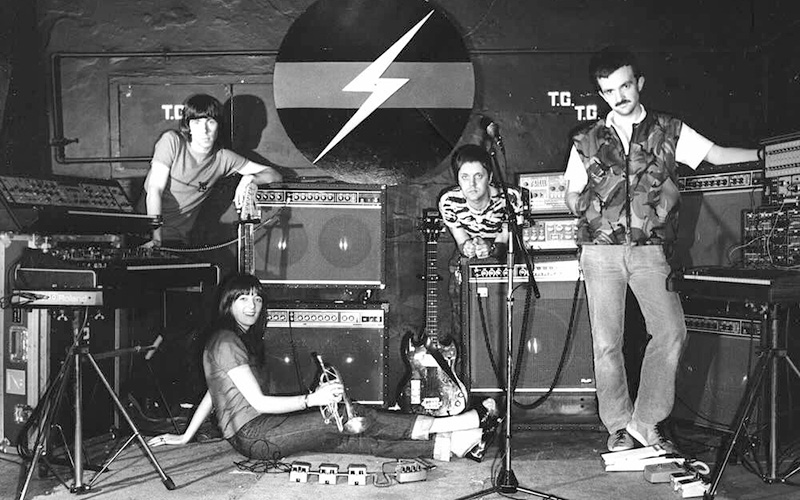
The infamous 1976 exhibition, PROSTITUTION, was a retrospective of works by Throbbing Gristle’s forerunner, art group COUM Transmissions. It displayed adult images of Tutti and other transgressive works, and it was where the band gave their debut performance.
This content, and the ICA’s use of public funds to support it, outraged the media and sparked intense criticism of arts funding during the economic hardship of the 1970s.
At the Q&A, the band’s surviving members, Tutti and Carter, said that they had not expected the controversy that surrounded the exhibition.
Tutti said: “We just sort of focused on what we wanted to do.”
The band responded to backlash by displaying newspaper clippings reporting on their work at the exhibition.
Tutti and Carter pushed back against notions that they approached heavy material with bad intent. Instead, Tutti claimed the band had aimed to discuss darker truths about the society they lived in.
She said: “I think people misconstrued our intentions.
“We’re just presenting what’s actually happening.”
Carter then admitted that he believed P-Orridge was largely interested in “shock value.”
Not long after their ICA debut, Throbbing Gristle gained prominence for their provocative industrial music – a harsh and experimental subgenre that often uses electronic sound.
Along with their lax use of taboo material, the band were known for their manipulation of regular instruments and confrontational style.
Author Matthew Levi Stevens, a former friend of Throbbing Gristle members, delivered a lecture on them days before the ICA’s event.
Discussing the band’s impact on industrial music, he said: “They created it, and started it and gave it a name.
“Of course, there were precursors all the way back to the Futurists and Dada…but I think with Throbbing Gristle, it’s the way they brought it together.
“It was unlike anything I’d experienced.”
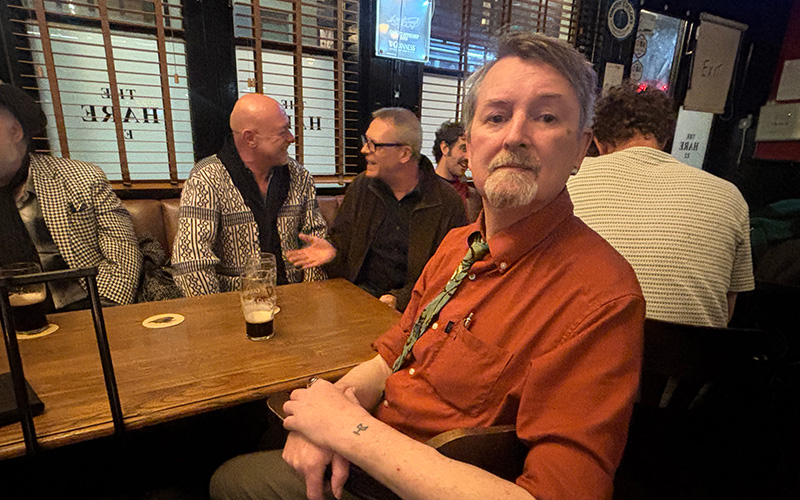
Following the band’s breakup in 1981, members formed other iconic groups such as Psychic TV, Chris & Cosey and later Coil.
Eli Andrejs, 24, attended Levi Stevens’s lecture and described how he first encountered Throbbing Gristle through Psychic TV.
He has been in a band for a few years now, “making music inspired loosely by them.”
He said: “I think to hearken back to a time where you could get a guitar, get whatever, put it through mad distortion and apps – I do it with accordion – it’s quite inspiring.
“Everyone was ahead of their time, and it’s even more relevant now.”
The celebration continued the ICA’s long-standing tradition of highlighting alternative artists.
Owen Atkinson, 30, who visited TG:50, said: “The ICA does good stuff, but I feel like it doesn’t do stuff that looks back.
“Obviously, the art tends to be up-and-coming new artists. It’s cool to see something that’s historical.”
Featured image: ICA, courtesy of the artists.


Join the discussion