The number of recorded domestic abuse-related crimes fell for the second consecutive year, but domestic abuse charities warn the data obscures the true scale of abuse.
The number of domestic abuse-related crimes decreased by 4.1% across England and Wales in 2024-25, even as arrests rose by 3.7%, the latest Office for National Statistics data shows.
London recorded higher arrest rates than the national average, with 55.2 arrests per 100 domestic abuse-related offences compared with 44.2 across England and Wales.
However, the ONS and domestic abuse experts have linked this downward trend largely to changes in police recording practices as in 2023, the Home Office changed how domestic abuse offences were recorded.
A Home Office spokesperson said the change was intended to restore the principal offence-counting rule, with police now recording only the most serious offence per victim, which they argue better reflects the number of individuals coming forward.
Where multiple offences towards one survivor were previously logged separately, police now record them as a single offence, which has contributed to the recorded decrease in domestic abuse-related incidents.
The number of arrests recorded in England and Wales in 2023 rose by 18.7% compared to the previous year, suggesting that this change in recording practices impacted how domestic abuse was counted rather than the volume of cases being investigated.
SafeLives, a national charity working to end domestic abuse, pointed out that data collection does not necessarily track changes in abuse itself.
A SafeLives spokesperson explained: “As a general rule of thumb, the majority of the changes in trends are far more to do with political choices around data collection rather than saying very much about the underlying changes in prevalence, severity or frequency of domestic abuse.”
This change in recording practice has similarly affected the increases in arrests and charges.
With fewer crimes being recorded, each arrest or prosecution makes up a larger share of the total, pushing percentages up.
Furthermore, domestic abuse charities have expressed worry over the way the ONS data is collected, pointing out that it fails to capture the experiences of some of the most vulnerable survivors, particularly children and young people.
Bo Bottomley, Policy and Public Affairs Manager for Refuge, said: “We’ve seen a concerning rise in domestic abuse amongst young women and girls between the ages of 16 and 25, and that particularly includes psychological abuse, coercive control, and physical violence.
“But one of the things around the data and the crime survey is that it only applies to over-16s, so it doesn’t capture the experiences of children and young people who are experiencing domestic abuse.
“However, we do know that abuse in teen relationships is really high.”
The Youth Endowment Fund’s 2025 report on Children, Violence and Vulnerability showed almost 40% of teens in relationships reported experiencing emotional or physical abuse from a sample of 11,000.
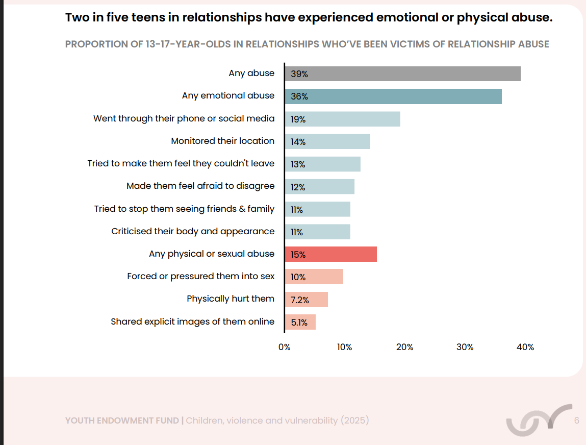
Domestic abuse campaigners claim this further highlights how national crime data can underestimate both the scale and impact of domestic abuse, particularly among younger surivors who may never come into contact with police or support services.
In last month’s Freedom From Violence and Abuse Strategy, Labour pledged to tackle dangerous attitudes surrounding control and power in relationships, partly by educating young boys in schools on domestic abuse.
While this pledge is largely welcomed by domestic abuse charities and campaigners, there is widespread concern that the data collection is systematically flawed and there are fears the problem cannot be effectively addressed.
The SafeLives spokesperson claimed outdated systems used for data collection, near-universal court backlogs resulting in survivors becoming wary of continuing with cases, and uneven use of data amongst police forces have all contributed to an incohesive response that varies significantly between areas.
In London specifically, SafeLives’ 2025 study into serious harm from domestic abuse in London revealed data and information sharing are fragmented across boroughs, leading to inconsistent allocation of resources and differing priorities set by local Police and Crime Commissioners.
The report also found that while multi-agency risk assessment conferences (Maracs) are widely viewed by professionals as an effective tool, their implementation varies significantly between boroughs, creating gaps in support for survivors depending on where they live.
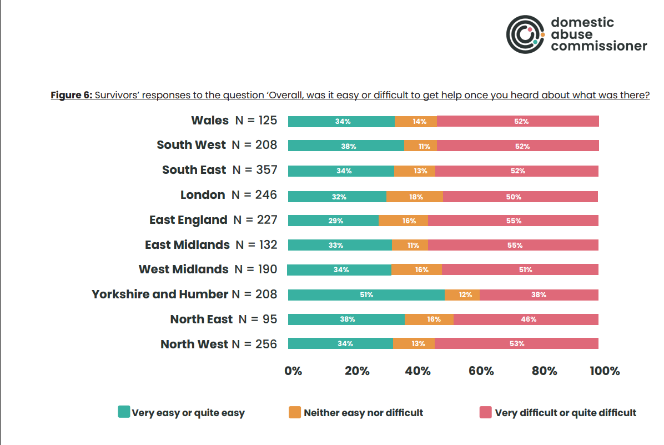
Only a third of survivors in London found it easy or very easy to get help once they knew what support was available according to Domestic Abuse Commissioner’s 2022 report, the second lowest response in the country.
In order to begin fixing these systematic issues, Refuge and SafeLives stressed that a whole-system response is essential.
A SafeLives spokesperson reiterated: “We need prevention, we need information sharing. We need focus and support on high-quality data collection, creating the systems and the resourcing to be able to do that.
“It’s very easy, I think, in an era of cuts, where it’s a huge pressure on lots of people’s budgets, not to update the technology, not to pay attention to the skills that good data collection requires. It’s easy not to focus on that because it’s not human. It’s a system.”
Charities have also pointed to more targeted approaches to tackling domestic abuse.
SafeLives welcomed the nationwide rollout of the Drive project, a perpetrator intervention programme which targets those who pose the highest risk of harm.
They said the project represents a shift towards holding perpetrators to account, rather than leaving survivors to deal with their perpetrators alone.
Refuge also emphasised the importance of investing in specialist services, including independent domestic violence advisors (IDVAs), to provide survivors with an advocate who can help them navigate a complex and backlogged criminal justice system.
Bo said: “It’s absolutely vital that the police response and prosecution rates for domestic abuse increase, but it’s also absolutely vital that this is backed up with investment in specialist services that support survivors when they experience domestic abuse.
“That investment is really going to be critical to the government’s mission to halve violence against women and girls over the next decade.”
A Home Office spokesperson said: “Domestic abuse has a devastating impact on victims. Our new Violence Against Women and Girls Strategy addresses the root causes of these appalling crimes to prevent them from happening in the first place.
“We have strengthened protections for victims through Domestic Abuse Protection Orders, domestic abuse specialists in 999 control rooms and programmes to tackle high harm perpetrators.”
The Metropolitan Police were contacted for comment.
If you are experiencing domestic abuse, Refuge’s 24-hour National Domestic Abuse Helpline is available on 0808 2000 247, and their confidential live chat is accessible online via www.nationaldahelpline.org.uk.
Featured Image Credit: Carolina Grabowska