Gisèle Pelicot, the French survivor whose case sparked international outrage, appeared at the Royal Festival Hall one month after releasing her memoir, A Hymn to Life, where she reflects on family, aftermath and the challenge of rebuilding a life in public.
The Southbank Centre felt different before the lights even went down. There were women everywhere – in groups, alone, in pairs – moving through the foyers with a purposeful energy before the event began.
Downstairs, Rape Crisis had a support point set up for the evening, a quiet but important presence that told you everything about the weight of what was to come.
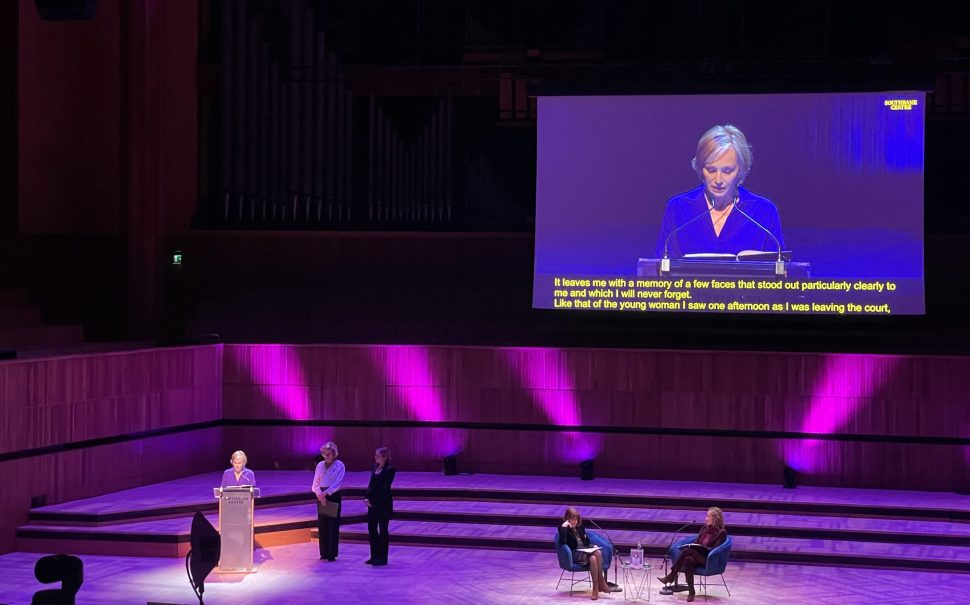
The event itself, staged around Gisèle Pelicot: A Hymn to Life, was chaired by Samira Ahmed, with readings by Juliet Stevenson, Kristin Scott Thomas and Kate Winslet.
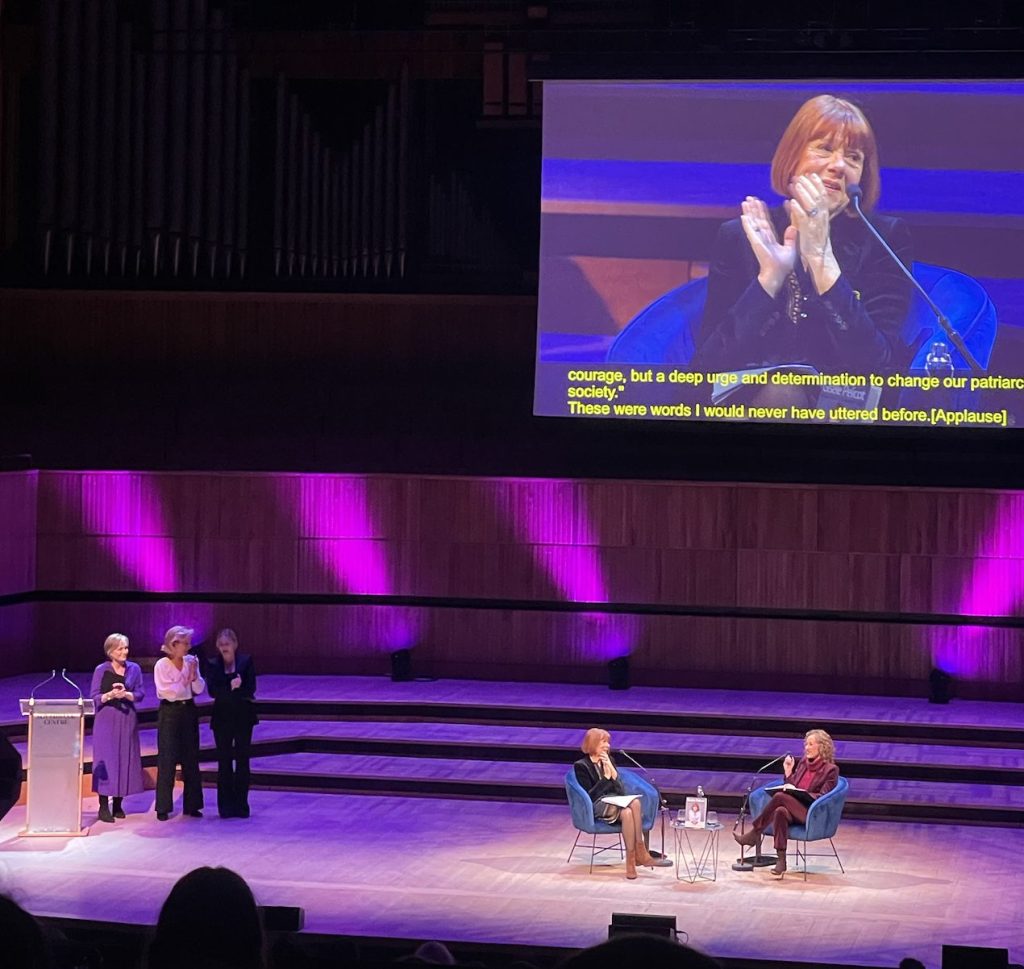
As she walked across the purple stage, a standing ovation greeted Pelicot almost immediately.
The stage glowed purple, and a standing ovation arrived almost immediately, as the room declared itself.
Pelicot, now 73, spoke in French with a calmness that made the details land even harder.
She returned to ‘the beginning’ on November 2, 2020 and to the phrase that has become both rallying cry and rebuke: “Shame must change sides.”
Gisèle described coming home from court and finding strength in letters and notes from women. She spoke about the humiliation of court, and the first moment she was told: “I am going to show you some videos and photographs that you’re not going to like.”
What emerged across the evening was not only the horror of what was done to her, but the systematic way it was obscured: medical appointments, symptoms dismissed as anxiety or early dementia, mini-strokes, the fog of chemical submission.
Gisèle spoke with clarity about how the man she had been married to for nearly five decades wanted to subjugate a woman who was not submissive. She described the realisation as a tsunami.
But there were tender turns as well.
Love at first sight. An upcoming golden anniversary. Her son, David. She mentioned writing her daughter’s wedding speech while out walking, and called walking a love in and of itself.
In a line about survival that seemed to steady the whole hall, Gisèle declared she would “never give death a helping hand”.
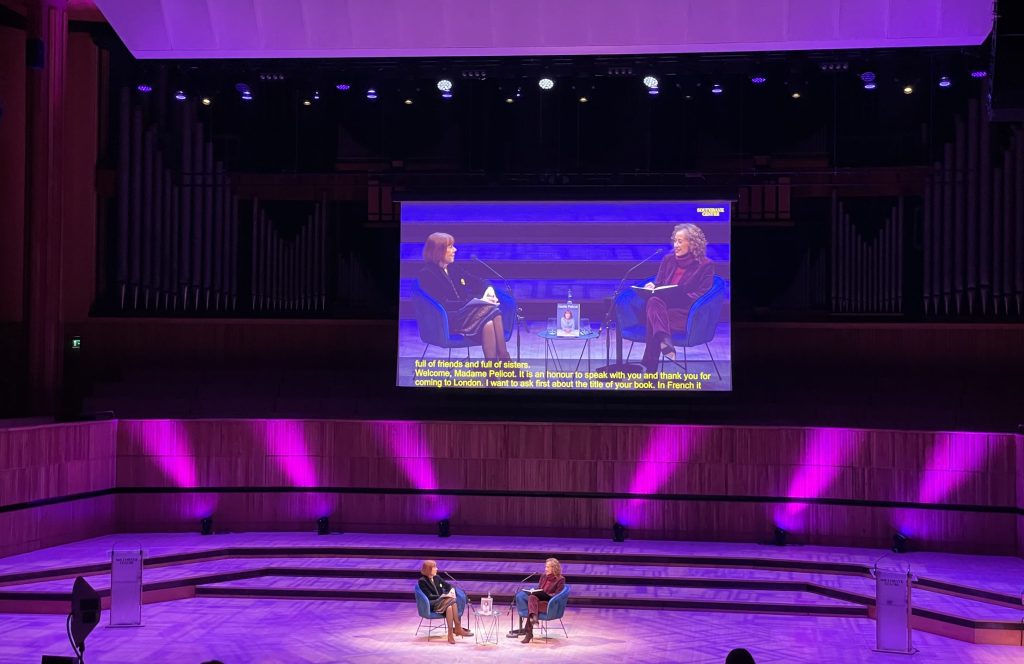
The readings from Stevenson, Scott Thomas and Winslet gave the night shape, but never shifted the focus from Gisèle herself, speaking after the French trial in which her ex-husband, Dominique Pelicot, was convicted of repeatedly drugging her and inviting dozens of men to rape her while she was unconscious.
Dominique was jailed for 20 years, and the other 50 men on trial were also found guilty.
Gisèle spoke about her daughter’s ‘perpetual hell’, about trying to tie family bonds back together, and about the damage that spreads far beyond one courtroom.
Applause came throughout, but the final note was gentle.
Gisèle spoke of Jean-Loup, her new partner, and of wanting to live the rest of her life ‘quietly’ and ‘serenely’. Then she said, simply: “I will always be here.”
And in that room, under the purple lights, you believed her.
Featured image credit: Daisy Redhead