More than eight million people in the UK work evenings or nights. But behind the statistics are workers navigating disrupted sleep, missed social lives and the mental health challenges of living outside the traditional nine-to-five…
As most people settle into bed, 22-year-old chef Finn Henly is still plating dishes in a busy restaurant kitchen.
Surrounded by the noise of service, he is working through the hours when much of the country is switching off. By the time he finishes after midnight, friends have gone home, family gatherings are over and another weekend evening has passed without him.
Finn’s routine reflects the experience of millions of workers across the UK whose jobs continue long after the traditional working day has ended.
From chefs and bartenders to nurses and hotel staff, night workers keep essential services running, but their schedules can leave them living out of sync with the rest of society.
For Finn, late nights are simply part of the job. Working across breakfast, lunch and evening services, his shifts can begin at 7am or finish after 10pm, depending on the rota.
“The shift patterns vary from breakfast shifts at 7am to finishing after service,” he said. “About 10.30 is when my day ends.”
According to the Office for National Statistics (ONS), around 8.7 million people – approximately 27 per cent of the UK workforce – usually worked evenings or nights in 2022.
Although this has fallen from 9.5 million in 2016, night work remains a significant part of the UK economy, particularly in industries such as hospitality, where late finishes and weekend shifts are common.
However, the challenges of night work extend beyond tiredness. For many workers, the biggest sacrifice is the impact on their social lives, relationships and ability to maintain routines that fit around a nine-to-five society.
Hospitality workers often operate when friends and family are free.
While others make plans for Friday nights or weekends, restaurant and bar staff are preparing for their busiest hours.
“You miss out on a lot of things,” Finn said. “Meeting up with friends and trips with my family because of the hours that I do.”
He said the contrast between his life and that of many customers is something people often overlook.
“Everyone that has a nine-to-five comes into a restaurant to relax, and that’s when we need to do our job.”
One shift remains particularly memorable.
“I finished at 3am on New Year’s Eve and completely missed New Year’s,” he said. “The next day I spent my day off recovering before going back to work.”
For NHS workers, the disruption can be even more difficult to separate from everyday life.
Ella, a critical care nurse who regularly works night shifts, said the fundamentals of caring for patients remain the same overnight, from administering medication and carrying out observations to feeding and repositioning patients.
The environment may be different, but the workload does not necessarily become lighter.
“Despite this, the workload can still be extremely heavy,” Ella said, particularly when caring for critically ill patients who require constant attention.
Working through the early hours also means dealing with fatigue while maintaining concentration in a demanding clinical environment.
The impact of irregular working hours is also linked to sleep and mental wellbeing.
The NHS (2023) recommends that adults aim for around seven to nine hours of sleep each night and warns that poor sleep can affect mood and concentration.
For shift workers, achieving consistent rest can be challenging because working nights conflicts with the body’s natural circadian rhythm – the internal clock that regulates sleep and wakefulness.
Research into shift work has found that sleeping during daylight hours can be shorter and less restorative because humans are biologically adapted to sleep at night.
A 2016 review by Kecklund and Axelsson, published in the BMJ, found that shift work and insufficient sleep were associated with sleep disruption, fatigue and wider health consequences.
Further research by Torquati and colleagues in 2019 found an association between shift work and an increased risk of depressive symptoms.
While researchers do not suggest that shift work alone causes mental health problems, the evidence indicates that irregular schedules can be an important factor affecting workers’ wellbeing.
For Ella, the consequences extend beyond the hospital.
“Working night shifts regularly has affected all aspects of my life,” she said. “It becomes extremely isolating as you work whilst everyone is asleep and then sleep whilst everyone is awake.”
Sleeping during the day can also make it difficult to recover before returning to work.
“I don’t get a restful sleep and have to come to work exhausted already,” Ella said.
The impact can mean sacrificing time with friends and family. Working nights and weekends means being asleep when others are available, leaving little opportunity for a conventional social life.
Ella said this becomes particularly difficult around family occasions.
Working Christmas shifts can mean missing celebrations, while having a birthday on Christmas Day has added another layer to the experience.
“It can be extremely lonely and secluded to work and not celebrate such an important occasion that you have celebrated all your life with your family,” she said.
For hospitality workers, the effects of working nights can also overlap with workplace culture.
The industry is closely connected with alcohol, and some workers describe drinking after shifts as part of unwinding after a demanding service.
Finn said relaxing after work often means “a cold beer and a cigarette”.
He believes drinking after shifts has become part of hospitality culture because “it’s the easiest way to get back out of the work mindset”.
However, alcohol can negatively affect sleep quality, potentially making it harder for workers to recover after late shifts.
Despite these challenges, night workers can develop strong bonds with colleagues.
Finn says spending around 60 hours a week with the same team creates friendships that replace some of the time he misses with family and friends.
“You build strong bonds with people in the kitchen because you spend so much time together,” he said.
Ella also said colleagues can provide an important source of support during difficult shifts.
“Talking to my colleagues that I can trust to confide alleviates some of my anxieties,” she said.
But both accounts highlight a wider problem: night work does not necessarily mean less work.
For Ella, one of the biggest misconceptions is that a hospital becomes quieter once patients are asleep.
“Just because patients are asleep it doesn’t mean that the workload or shift is easier,” she said.
In critical care, patients can still require constant monitoring and treatment throughout the night, while staff are simultaneously managing the effects of fatigue.
Despite the sacrifices, Finn has no plans to leave hospitality.
“This is something I know I want to do,” he said. “You either show up or you don’t, and those times that you do show up make you who you are.”
The ONS figures show the scale of Britain’s night workforce, while NHS guidance and academic research highlight the potential impact of working outside conventional hours. Behind the statistics are millions of people adapting their lives around schedules that most of society rarely sees.
As the last bill arrives for a family enjoying a meal out, chefs begin closing down the kitchen and preparing for another day. Bartenders and waiting staff clear empty tables, hotel workers turn over rooms for new guests and hospital staff clock in for another demanding shift.
These workers keep some of Britain’s most essential services running, but at what cost? The sacrifices of working late are measured not only in hours spent on the job, but in the moments missed along the way — birthdays, weekends and time with the people who matter.
Behind the long shifts are workers navigating disrupted sleep, isolation and the mental strain of living on a different clock from the rest of society.
The challenge is not simply working longer hours – it is finding balance in a world designed around daylight.
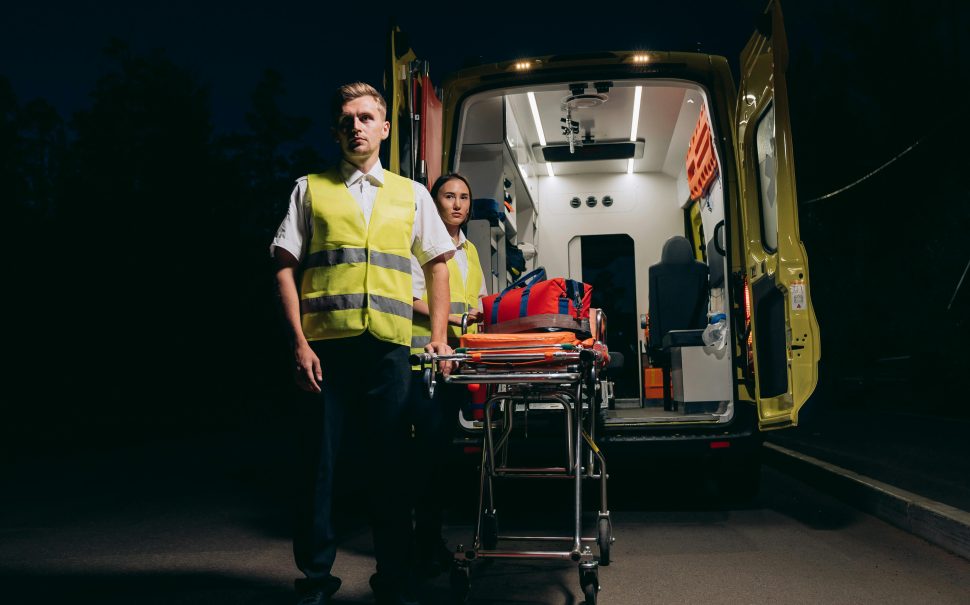
Featured image: Mikhail Nilov, free to use