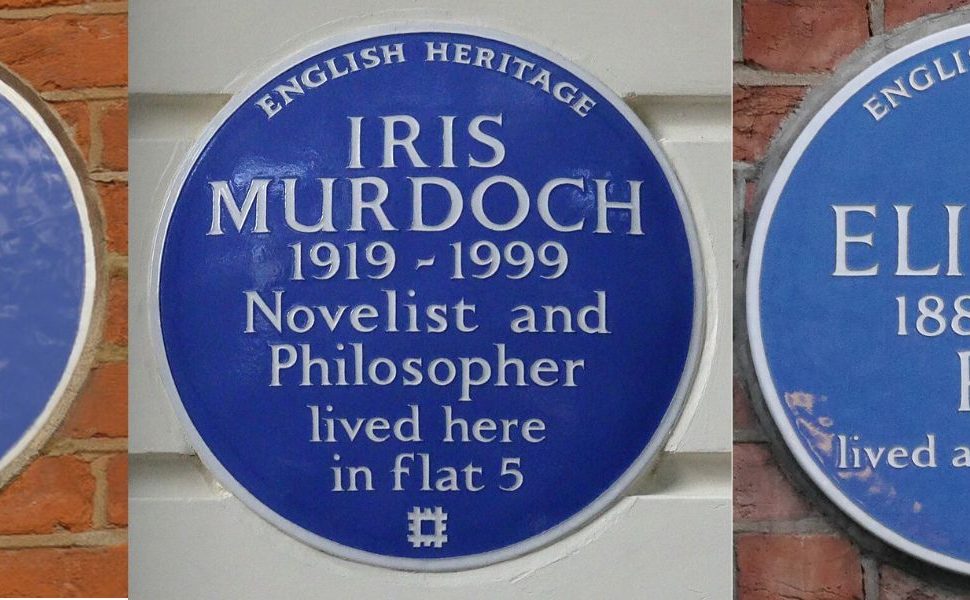
You do not need to walk far in the streets of Kensington and Chelsea before encountering one of London’s famous blue plaques.
Look up often enough, and you will find one of the distinctive blue circles adorning the front of buildings, marking where notable figures once lived.
The first blue plaque scheme started in London in 1866, and there are now over 1,035 across the capital, managed by English Heritage.
Kensington and Chelsea boasts 194 of them – second only to Westminster’s 333 – but one statistic stands out.
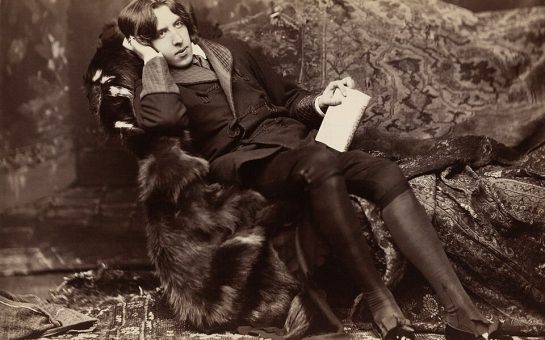
Sixty of the plaques across the Royal Borough commemorate writers, poets, and playwrights, from Dame Agatha Christie and Bram Stoker to Oscar Wilde and Samuel Beckett, giving it the highest concentration of literary blue plaques in London.
So, is this London’s most literary borough?
The plaques themselves only tell part of the story.
They may reveal who lived here, but not why so many writers were drawn to the area in the first place.
Tour guide Emily Laurence Baker, who works closely with the Chelsea Heritage Quarter, explained that while the area is synonymous with affluent residents, multimillion pound houses and immaculate square gardens today, things were historically quite different.
“Chelsea was farmland for a long time, and then a bit dodgy,” she said, referencing Charles Dickens’ line from his 1841 novel Barnaby Rudge, that “few would venture to Chelsea, unarmed and unattended.”
“Because of this dodgy background, Chelsea actually was an affordable place for artists and writers to go.”
Painters, such as J. M. W. Turner, James McNeill Whistler and John Singer Sargent, were drawn to the area by the riverside views, which created a ‘Bohemian flavour.’
This in turn attracted more artists and writers to the area.
Among the most influential was the Victorian essayist, Thomas Carlyle, who was known as the Sage of Chelsea – yet, oddly, the blue plaque commemorating Carlyle is not in Chelsea, but in Camden.
And as Emily pointed out, when such influential writers are associated so deeply with such an area, others are inspired to move nearby.
She named pubs such as the now-closed King’s Head and Eight Bells and The Cross Keys as key meeting points for writers in the borough.
Perhaps nowhere better illustrates Chelsea’s literary appeal than Carlyle Mansions.
Named for Thomas Carlyle himself, and nicknamed ‘Writers’ Block’, it housed a succession of celebrated authors at different times, including Henry James, T.S. Eliot and, later, James Bond creator Ian Fleming.
The success of Chelsea’s residents, however, transformed the atmosphere and demographic of the area.
Mike Carter, researcher and guide at London Literary Tours, said: “What happens, time and time again, is that when an area is cheap – a slum even – the writers and artists move in, then it becomes fashionable and the cost of housing inflates, so the creative people move elsewhere.”
The pattern has repeated itself across London, from Bloomsbury to Fitzrovia, and indeed today, in neighbourhoods such as Hackney Wick and Peckham.
By the late 19th Century, the only writers moving to Kensington and Chelsea were the ones who were successful enough to afford it.
Henry James, for example, moved to the grander De Vere Gardens in 1886 after the success of novels including The Portrait of a Lady.
Later residents included A.A. Milne, who had already established himself as a successful journalist before creating Winnie-the-Pooh.
But even if the literary community has changed, the borough continues to celebrate its heritage.
The Chelsea Arts Festival, launched last year and returning this September, brings together authors, actors and artists to showcase the area’s cultural history.
This year’s programme includes Booker Prize-winner Bernardine Evaristo, while broadcaster Mishal Husain and comedian Nish Kumar will host ‘Blue Plaques Talk Back’, a panel spotlighting iconic, if often overlooked, figures commemorated in the area.
For Emily, the plaques remain valuable for this reason.
They do not simply honour household names, but encourage people to discover stories they might otherwise miss.
Through her weekly Wonder Women Wednesday series on Instagram, she highlights a woman who is commemorated by a plaque but who may have been overlooked elsewhere in the history books.
Visitors, she says, are invariably curious.
Emily said: “Americans always ask about them, and then you can explain what it’s for so I think they’re great.”
There is no definitive measure of London’s literary pedigree, and other areas, like Bloomsbury, Hampstead and Fitzrovia, have equally strong claims.
But the blue plaques offer one way of mapping the city’s cultural history.
By that measure, Kensington and Chelsea has more plaques dedicated to writers than anywhere else in the capital, reflecting nearly two centuries in which the borough repeatedly attracted some of literature’s biggest names.
Featured image credits: T.S Eliot by Edwardx, Oscar Wilde – Blue plaque in Tite Street (2) by Basher Eyre