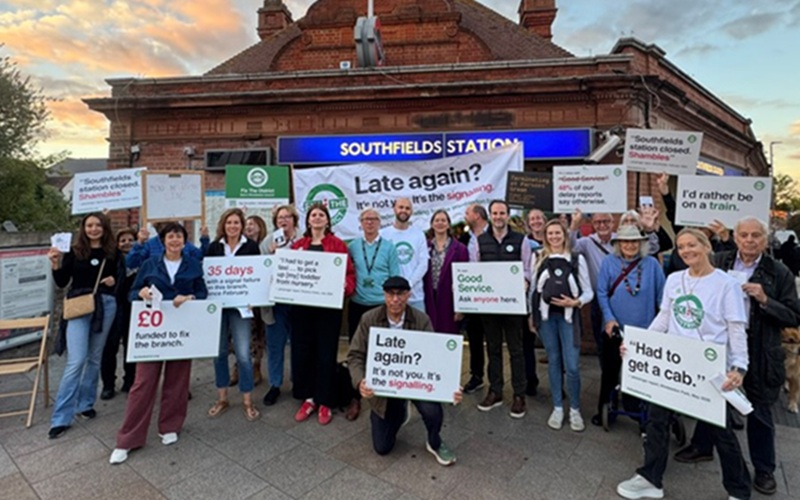
Campaigners are demanding Transport for London (TfL) add modern signalling to the District Line’s Wimbledon branch amid disruptions.
Campaign group Fix the District led a demonstration outside Southfields station last month, handing out leaflets and gathering signatures for its petition.
This comes as the groups own analysis of TfL data shows that the three Wimbledon branch stations, which accounted for 37% of total fault days, represent only 5% of total District Line stations.
Campaign organiser, Max Barber, 32, said: “I live very close to Southfields Tube Station, but I don’t use it very much because I can’t rely on it, and it’s distressing when I am late and miss things.”
He shared about an occasion when he almost missed a flight due to tube delays and had to take an Uber and train to arrive on time.
Barber added: “It should be a service that runs cleanly and easily – you should not think about your infrastructure or your transport – it should just work.
“We are in a situation where people are being impacted all the time – it’s crazy that this happens nowadays and people are fed up.”
A resident, Li Mao, estimated that 80% of her journeys are affected by delays or when there is no service at all.
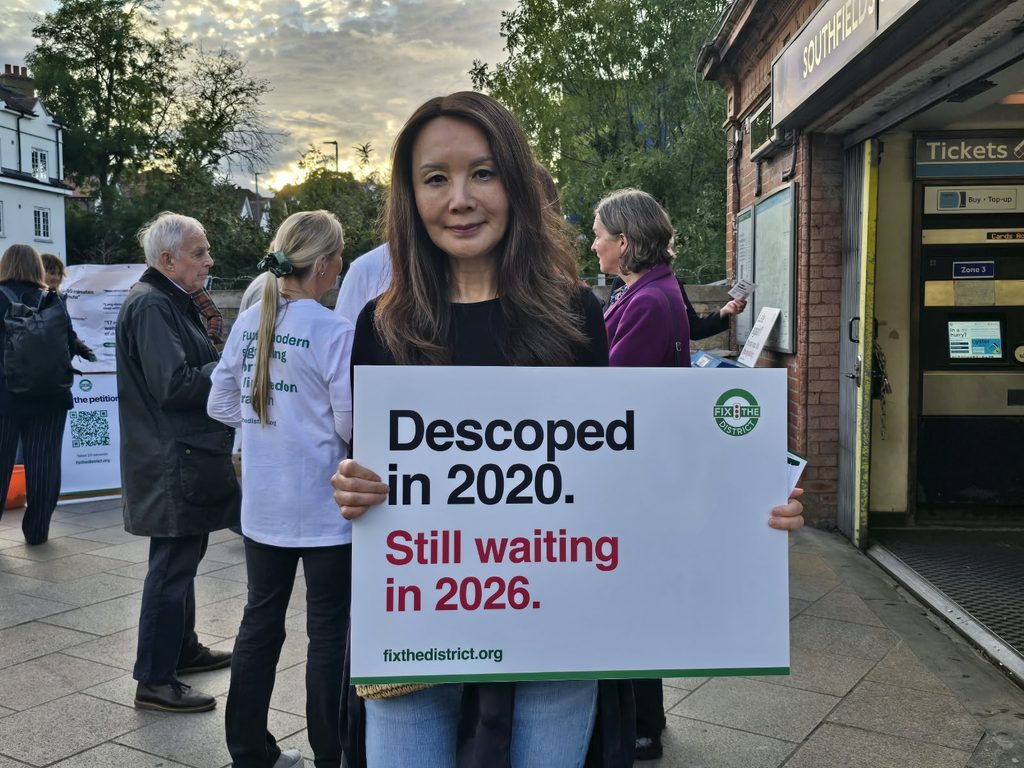
She said: “Gradually I start to build up kind of panic – I always check in the morning and before I leave – just worried that there will be something going on.
“And God knows how many times I have been delayed, it’s really not fair.”
Another resident, Bill Wale, 80, said: “I was ready to do something, even to lend my voice to the fact that we cannot depend on the District Line to go anywhere.
“I’ve had long journeys, changing buses when the line is down.”
His message to TfL was: “Fix it please, it’s always down, and we cannot depend on it.”
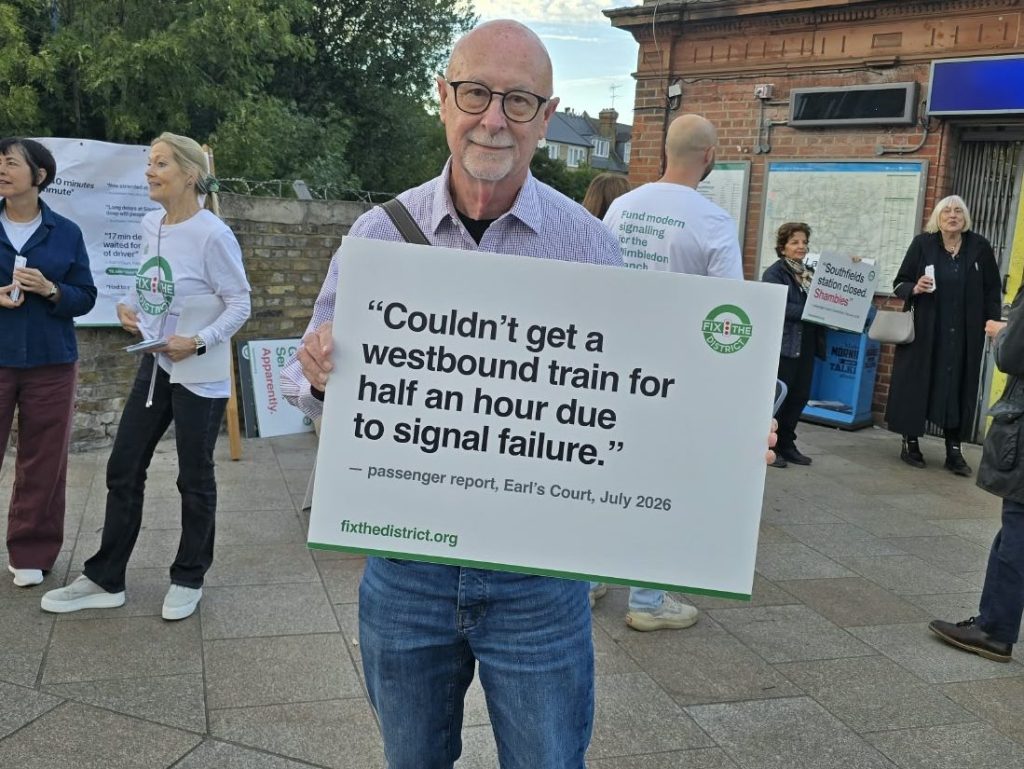
Local Labour MP, Fleur Anderson, was at the demonstration, and said: “I know how fed-up people are, and I’m delighted that loads of people are coming out here making a noise and joining me in my campaign to say, loud and clear, to Transport for London: you’ve got to fix the signalling.
“They need to get the money, and they need to back the Wimbledon branch and make sure that all of us who use this service don’t have to be stuck here on this unreliable service any longer.”
Based on a Freedom of Information request from last year, TfL said: “We are aware of the issue you cite and acknowledge that the Wimbledon branch has a history of poor customer information, including inaccurate or missing information, particularly during periods of disruption.”
It described the branch’s train-tracking system as including “life-expired equipment” that is “prone to faults” leading to inaccurate or missing information for the tubes.
Without proper signalling, tubes cannot guarantee that they can operate safely along the track, and so services are sometimes stopped, or delays occur.
Approved in July 2015, the Four Lines Modernisation programme aimed to improve the District, Circle, Metropolitan and Hammersmith and City lines, a part of which was to change the old signalling with modern automatic train control.
Reviewing the plans, costs, and timetable in 2020, TfL decided to exclude Southfields, Wimbledon Park, and Wimbledon stations, proposing to review the situation and re-signal these stations in the future.
The reason for this removal was partly due to cost, since some tracks are shared with National Rail, and since it is not a comparably busy part of the District Line, they could not justify the high costs.
According to TfL, ahead of the 2026 Wimbledon Championships, and rather than a full re-signalling, they spent £500,000 with Network Rail on upgrading track circuits, heat-protective coatings on signalling equipment and improved communications and fault detection.
However, referring to the £500,000, the organiser of Fix the District said: “It is a sticking plaster, and it is not doing what we need.”
At present, based on another FOI from TfL, there are no plans to address the situation in the near future, with a review planned for the next financial year.
Barber said: “We will continue campaigning on this until it is fixed.
“And not just a sticking plaster, not just a small bit of repair that keeps it running – we need proper modern signalling.”
The campaign is calling for full modern re-signalling, a properly funded plan with no further repairs to the existing system.
Talking about the demonstration itself, he added: “Lots of people around, like it was really family-friendly.
“There were babies there, including my own.
“There were young people, there were football fans, everyone campaigning for a better service.
“Everyone that came up to see us was fully on board.
“It is just that we need the groundswell of public opinion, which is what we are trying to build here.
“We’re trying to build more people and more signatures so that when the politicians say something to TFL, TFL realises it’s not just a politician asking for something; it is real, on the ground, people unhappy and dissatisfied.”
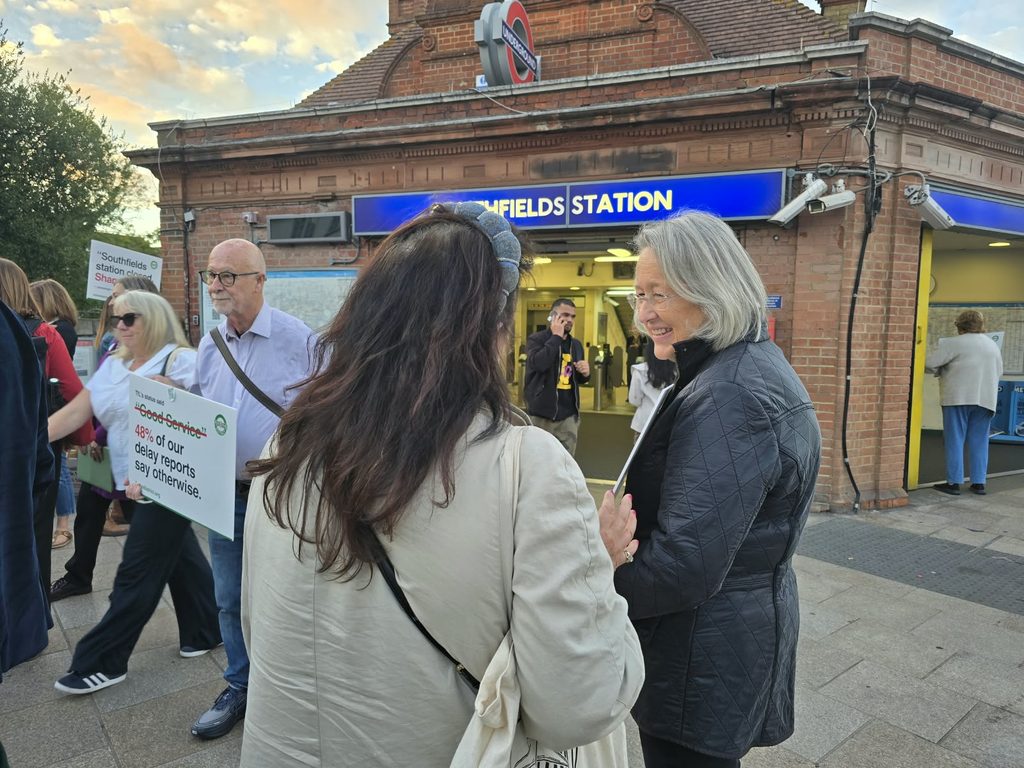
The petition has had over 3,000 signatures, and organisers hope more people will share their support for the campaign so that they can get their voice heard.
The Director of Asset Performance Delivery for London Underground, Richard Jones, said: “We have worked closely with Network Rail to invest around £500,000 to improve the signalling infrastructure between Wimbledon and East Putney, and it has made a positive difference.
“The work has addressed issues with signalling, track circuits and drainage and has improved the reliability of the railway, while also meaning faults can be repaired more quickly and with better co-ordination.
“We know that historically there have been problems with the service that we have delivered to customers who live in this area, and we will continue to work with Network Rail to improve it as much as we can.”
They added that a signal upgrade from Earl’s Court to East Putney has recently been launched, meaning significant upgrades in customer information for every station on the Wimbledon branch of the District line.
They also said that a full upgrade to current signalling would involve a large section of Network Rail infrastructure, which would cost millions, and there is no current funding in place.
Featured image credit: Burst Pictures


Join the discussion