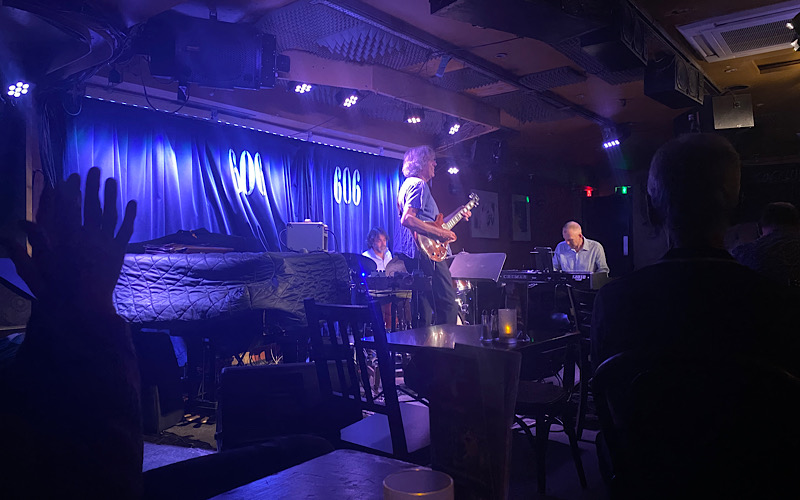
Intimate live music venues have always played a role in upholding the London music community since the 1950’s, with the emergence of basement clubs such as Ronnie Scott’s or Studio 51 in Soho.
However recently their popularity has declined with 30 grassroots music venues closing last year, according to the Music Venue Trust’s annual report (MVT).
An estimated 25 million people and 175 towns and cities have been left without regular touring shows, the Music Venue Trust has said.
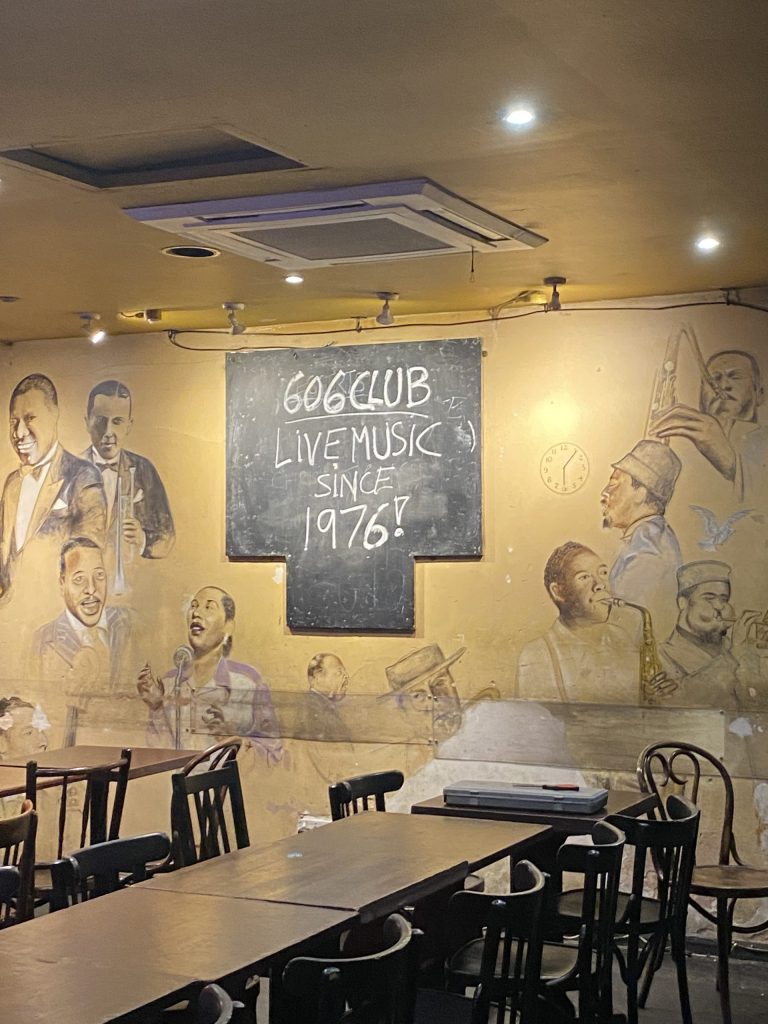
Musician and owner of the 606 Club since 1976, Steve Rubie spoke about the importance of a community that shows up for small venues.
“There are quite a lot of them out there, but there are fewer and fewer all the time because people are not going out to support them,” he said.
“So, just trying to get the word out there, that is so critical.”
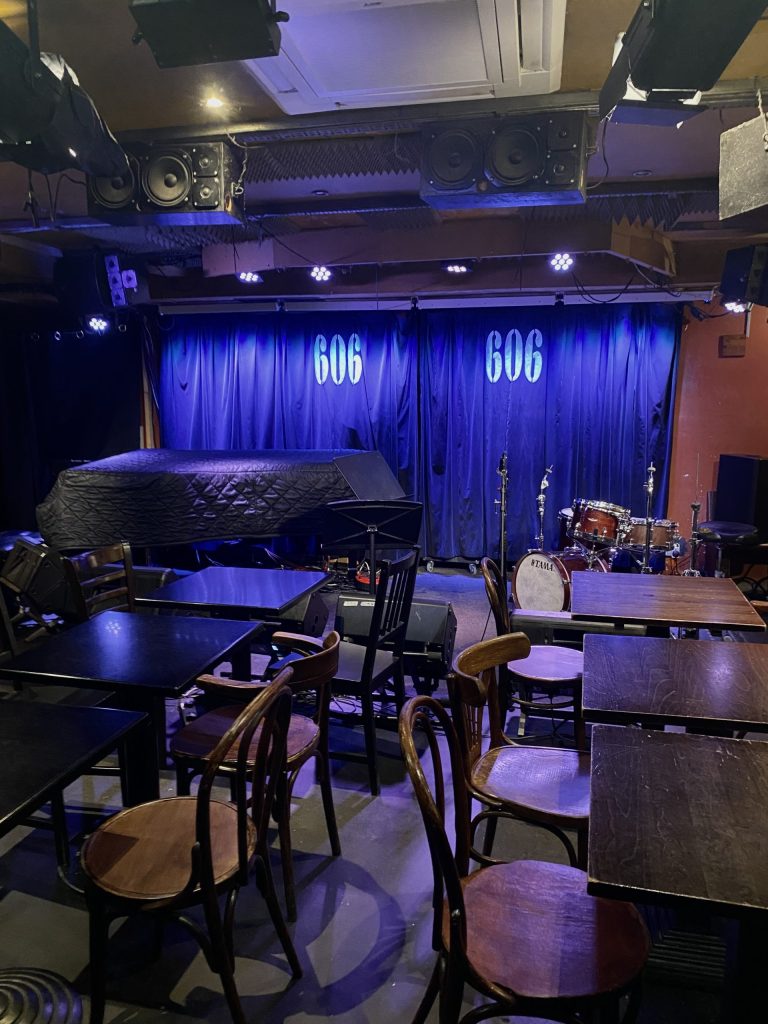
The 606 Club, in Chelsea is a longstanding live music venue, celebrating its 50th anniversary in October with a packed schedule of 56 artists over two weeks playing a range of genres every night.
With a 120-seat capacity, the musicians aren’t separated from the audience, further breaking down that barrier between creator and consumer which is the aim of these venues.
Being able to see the chords and notes play out in front of you as well as speak to the musicians during intervals changes not only the audience’s attitude, but fulfils the need for connection through music.
“That’s what it’s about as a performer, you need to create a bond,” Rubie said.
“You shouldn’t just walk up and just play and expect people to fall at your feet.”
Beyond the audience as well, small music venues offer community to the employees as well.
Rubie added: “Without all those people who come into work every day, to make this work, and without all the musicians who come, none of this happens.
“It really is a joint enterprise.”
These kinds of live music venues allow for more interaction between audience and performer, as there is no green room for the musicians to disappear into nor a stage to glorify them.
Marco Marconi, a classically-trained jazz pianist, said: “Everyone is talking to you in a constructive way, they ask you good questions, they give you compliments.
“But for example, when you play venues like the Royal Albert Hall, you don’t have that interaction.”
While not a bad thing, it certainly changes how one would listen to music, and how the audience reacts especially with jazz.
The nature of the genre means that improvisation and experimental ideas are common and almost expected during a live set.
“In jazz it happens that you play a written melody, which is called head, and after the head, you go through the harmony, you improvise on the harmony,” Marconi said.
“Thats what I have to do, that’s what every jazz musician has to deal with, that’s the language.”
Being able to watch the musicians have this connection, as well as hearing it through large speakers in a tiny room, allows you to understand and feel the music deeper.
Speaking to Marconi about why intimate venues are needed for music, he said: “Places like Oliver’s are very, very important for the local community, for the musician, for the local audience.
“That is the kind of jazz. Real jazz that you should expect.”
Marconi played at Oliver’s in Greenwich, which is an even smaller 80-seat capacity jazz bar.
Similarly to the 606 Club, you descend a set of stairs to an underground basement filled with chairs – but considerably less smoke than their predecessors.
Both venues are praised as good places for beginner musicians who want to practice and play somewhere less intense and more familiar.
Rubie told of a ‘2 new artists’ policy at the 606 Club, which allows for constant new acts to be given the chance to perform at the basement bar/restaurant.
Not only a testament to Rubie’s dedication to undiscovered music, it also shows the audience’s trust in the club’s choice of music.
Rubie mentioned playing jazz to jazz-haters and converting them to the wide world of blues and swing music, while Marconi was all too happy to explain his passion and craft to the faces staring back at him in the audience.
The bond and rapport with the audience is vital for small music venues because as Rubie and Marconi demonstrate, it’s not solely about the music, but also the way in which it is presented.
“It’s interesting because there are people who come here because they’re really keen to see musicians that they like to follow, in this environment,” Rubie said.
“It’s for the venue just as much as it is for the music.”
All image credits: Valerie Raguy Dunn



Join the discussion