There is no other patch of London quite like it. Six Premier League or EFL clubs crammed into an area most people in the rest of England would consider a single neighbourhood.
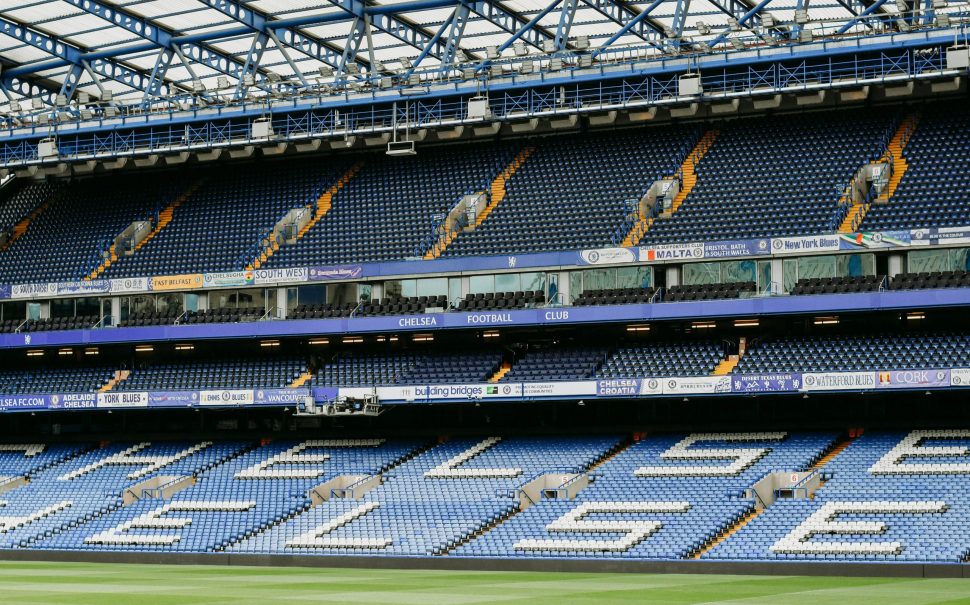
Chelsea at Stamford Bridge. Fulham at Craven Cottage. Brentford at the Gtech. Crystal Palace at Selhurst Park. QPR at Loftus Road. Wimbledon working their way back up from the lower leagues.
That concentration of competing loyalties in a few postcodes creates something genuinely unusual in British football – the strong possibility two people sharing a table at the same pub support clubs who actively dislike each other, and both consider themselves the local side.
For anyone placing a wager on the Premier League through online sports betting markets, the SW London postcode creates a specific kind of tension.
The sports betting odds at a platform like BoyleSports reflect the league table, the squad quality, the manager, the form.
What they cannot reflect is the deeply personal calculation going on in the head of someone who supports Fulham and is being asked to bet on Chelsea.
The irrational discount that Fulham fans apply to Chelsea’s chances, the refusal to give them credit even when the numbers demand it, is not unique to south west London.
However, it is more densely concentrated here than almost anywhere else in the country.
The rivalries that make it complicated
The west London rivalry structure is genuinely strange when you map it out.
Fulham consider Chelsea their main rival. Chelsea do not particularly consider Fulham a rival at all, selecting Arsenal, Spurs, and Manchester United when asked.
QPR fans pick Chelsea as their top rival, with Fulham second. Brentford fans picked Fulham first, QPR second, Chelsea third.
Crystal Palace fans are mostly looking south and east toward Brighton and Millwall rather than west toward Stamford Bridge.
The result is a set of overlapping resentmentswhich do not form a clean rivalry structure, but instead create a web where almost every club is somebody else’s enemy – even if the feeling is not mutual.
This matters for sports betting in a way that is more than just anecdotal.
Research on how fans bet on football consistently shows that emotional investment distorts analytical judgment. The more you care about a result, the less accurately you assess probability.
A Fulham fan betting on a Chelsea versus Arsenal match is operating with a built-in bias against Chelsea that has nothing to do with either club’s actual form or squad quality.
In a borough where you are almost certain to have a bias against at least two of the six clubs in your general vicinity, the sports betting landscape becomes a minefield of irrational pricing and emotionally driven decisions.
What the concentration actually produces
Having this many clubs in close proximity does something interesting to football conversation that has no real equivalent anywhere else in England.
A street in Hammersmith might contain Chelsea fans, Fulham fans, QPR fans, and Brentford fans who have been arguing about the same fundamental question for decades: which of us is actually the local club?
Each has a reasonable claim. Chelsea have the trophies. Fulham have the oldest ground. QPR and Brentford have the working-class west London roots that predate Chelsea’s existence as a football club.
The fact Chelsea was founded in 1905 specifically because Stamford Bridge needed a tenant, and Fulham had already turned down the stadium, is still mentioned in pubs in Hammersmith as if it happened recently.
Crystal Palace adds a different dimension from south of the river. Their rivalry structure points toward Brighton and Millwall more than toward the west London clubs, which means Palace fans in the SW postcodes often feel slightly separate from the main west London conversation.
They are loyal to a club which looks east and south, while they live in an area which looks west and north.
It produces a particular kind of south west London football identity which exists slightly apart from the dominant Chelsea-Fulham-QPR-Brentford axis.
Why the betting market struggles with all of this
The sports betting market prices football matches on expected outcomes. Squad quality, recent form, home advantage, injury lists.
It does not price local allegiance, historical grievance, or the irrational confidence that comes from genuinely believing your club is the real south west London side.
Those factors live in the people placing bets rather than in the odds themselves, and in SW London there are a lot of people with a lot of historical grievances affecting their judgment about which team deserves to win any given match.
The market cannot pick a winner between the six clubs as a collective because the six clubs have never truly competed from the same division at the same time.
When they are all in the Premier League simultaneously, the south west London sports betting conversation becomes something unprecedented.
Every household has skin in the game, every result has a local dimension, and the odds, which know nothing about any of that, sit there reflecting only the cold mathematics of probability.
Feature image: Virginia Marinova/Free to use from Unsplash