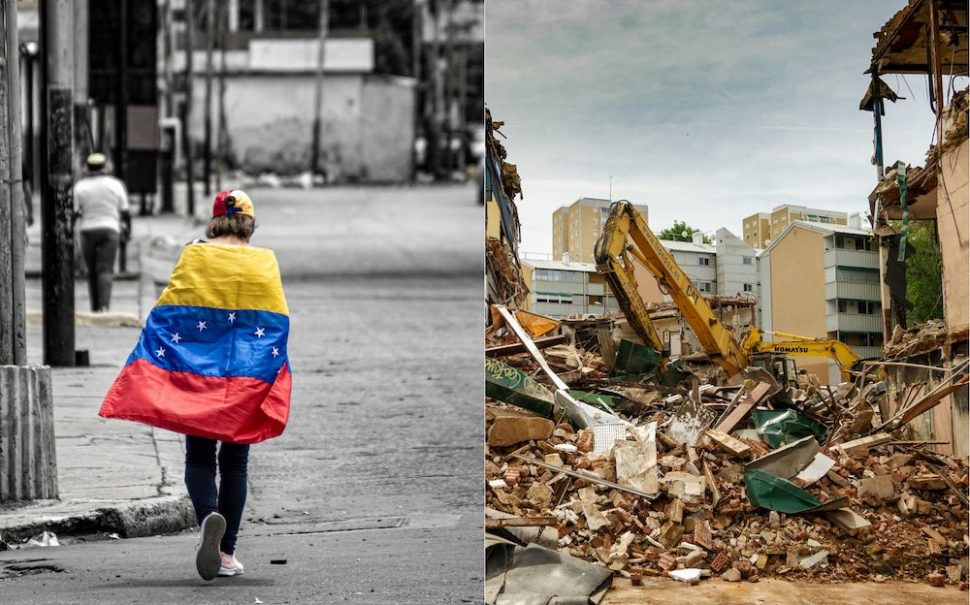
A UK charity supporting those in Venezuela has asked for the public to rethink their types of donations after two earthquakes struck several parts of the country last month.
Chamos is a charity aimed at improving the lives of children in Venezuela through education programmes, health and nutrition. It has called for people to donate money instead of physical items to increase the rate of support in the country.
Maria Antonieta Rodriguez is Venezuelan and has lived in the UK for 20 years. She is a trustee for Chamos and said: “I know people are overwhelmed about trying to help and give donations of food, clothes, medicines and things like that, but the reality is that the emergency needs to be treated now. Immediately. There’s no day we can wait.
“Receiving physical donations at the moment is not efficient.”
She emphasised they were very appreciative of the physical donations they had received but due to airports being closed and the heavy amount of bureaucracy that is involved with sending over large shipments, money is the preferred option.
Of all the donations that the charity receives, 84% of them are directly applied to the programme, so it does not have a huge fixed cost which in turn helps the children more.
The charity has worked with people on the ground in Venezuela daily to assess what the survivors currently need and communicate with rescue groups and hospitals to facilitate this.
On our side of the Atlantic, Chamos have been working with Dons Local Action Group (DLA), a charity based in Wimbledon, to organise the collection of donations and send them over to Venezuela.
DLA co-founder Craig Wellstead said: “Our charity is very much a family, so if something happens around the world, a tragedy like this, we will 100% have some volunteers who are from that country, and we will help.”
Chamos has created a three-step programme to inform and be transparent with donors of how their money is helping earthquake survivors.
The first is the immediate response, which focused on water, sanitation, nutrition and food security, and medical supplies. The second is stabilisation, which centred around child welfare and psychological support, and nutritional recovery. The final stage is a structural assessment of which schools and communities survived or would have an opportunity to be rebuilt.
Gauging the reactions from the families and children in Venezuela in response to the help Chamos had given post-earthquakes has been difficult as the situation is still turbulent. But there was also another reason.
Rodriguez said: “We’re not even promoting that the money is coming from Chamos. We don’t care.
“[However,] throughout the year we constantly hear from the kids how they feel we have helped them change their life.”
If you would like to donate to help the children and families in Venezuela, you can do so here.
Featured image credit: Andrés Silva and Jose Antonio Gallego Vázquez via Unsplash