For some, radio may be a thing of the past, while for others, it is a source of news, community and in some cases, a start to their career.
Local and community radio in particular can help people feel more connected to their area and can even offer students wanting to find their first step into audio their first chance.
This is the reality for Riverside Radio in South West London, a local station first launched in 2015 in the heart of Battersea.
For student journalists in particular, it is a hub of opportunity and growth, as the radio is known well for its student placement and volunteer reporters, news readers and event assistants.
Riverside Radio was founded by Jason Rosam, who also presents the Breakfast show on weekdays.
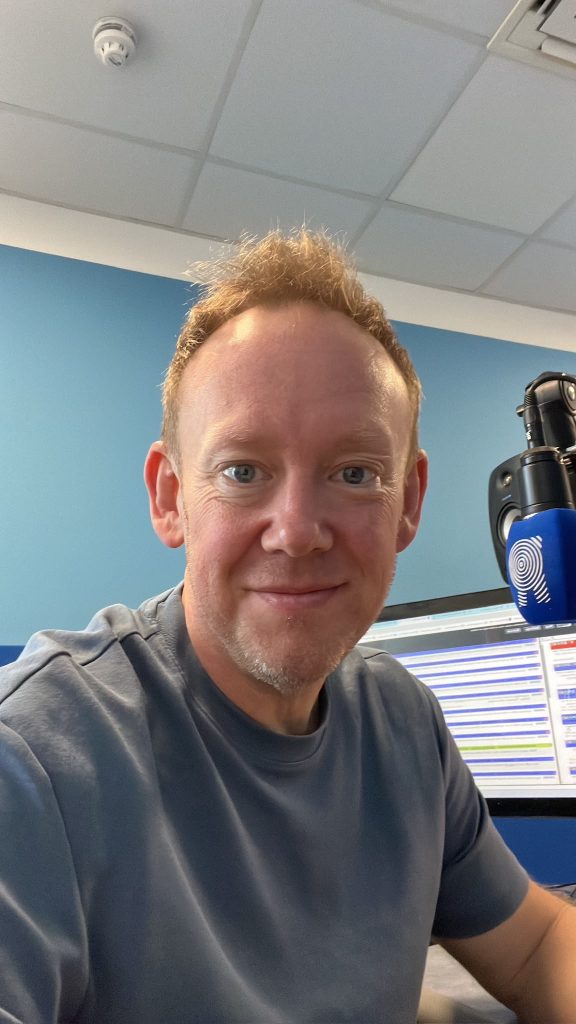
He said: “The idea behind the radio was very simple, I wanted South West London to have a station that genuinely belongs to the people who live here.
“Nobody else can genuinely reflect a local community in the way a dedicated local station can.
“Technology will continue to evolve, but people will always care about what’s happening around them.”
The University of Northampton found that, since Covid, a majority of people who listen to local radio feel more connected to their local community, in their ‘Listening Locally Across the UK’ study.
It also found that these connected feelings lead to more social connections in real life, with 38% agreeing, and 12% strongly agreeing, that local radio helped them make new friends or meet new people.
Rosam added: “I also wanted to create opportunities.
“In my own career, I’d been fortunate enough to work with people who opened doors for me, and I felt there should be somewhere people could learn broadcasting by actually doing it.”
Rosam said that a lot of his proudest achievements at Riverside aren’t always the ones that can be seen from the outside.
He said: “What gives me the greatest satisfaction is seeing the impact Riverside Radio has had on people.
“We’ve had volunteers who have gone on to careers in broadcasting and it’s always a proud moment when someone tells you their time at the station helped them get their first job or gave them the confidence to pursue a career they hadn’t thought was possible.”
Eve Bennett is currently News Editor at Sky News, and did her work placement with Riverside whilst studying for her NCTJ (National Council for the Training of Journalists) Diploma before landing her first job there over three years ago.
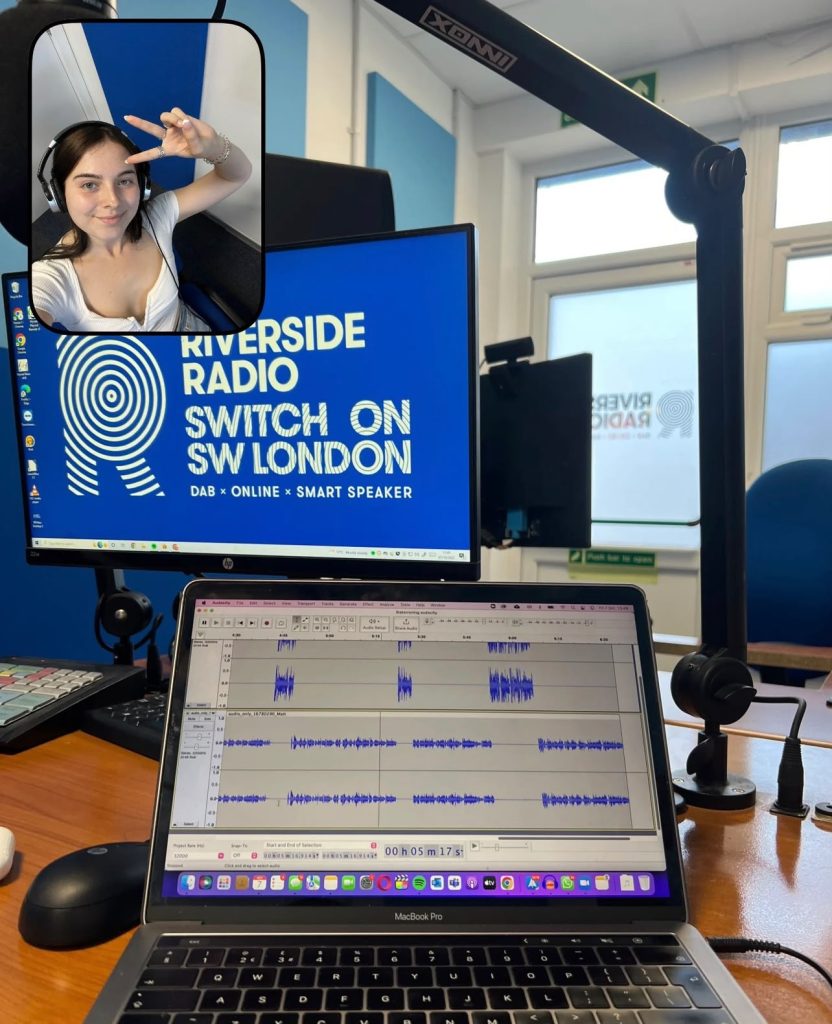
She said: “I knew I wanted to do broadcast journalism, and I used to present at Black Country radio in the West Midlands where I’m from, and I always really enjoyed it.
“I listened to a lot of radio growing up, it was the main way I got my news, so I thought I would give it a try again.”
After reaching out to Riverside she started working every Friday writing bulletins and presenting the main news show.
She added: “It was probably one of the most helpful things I did.
“It was really great to make new friends and I think it put me in really good stead when I then went to go and interview for my job because I could say I got a lot of firsthand broadcast experience.”
When it comes to journalism students, Rosam said that Riverside is keen to make placement experiences as practical as possible.
He said: “Students work alongside experienced volunteers and presenters rather than simply observing from the corner of a studio.
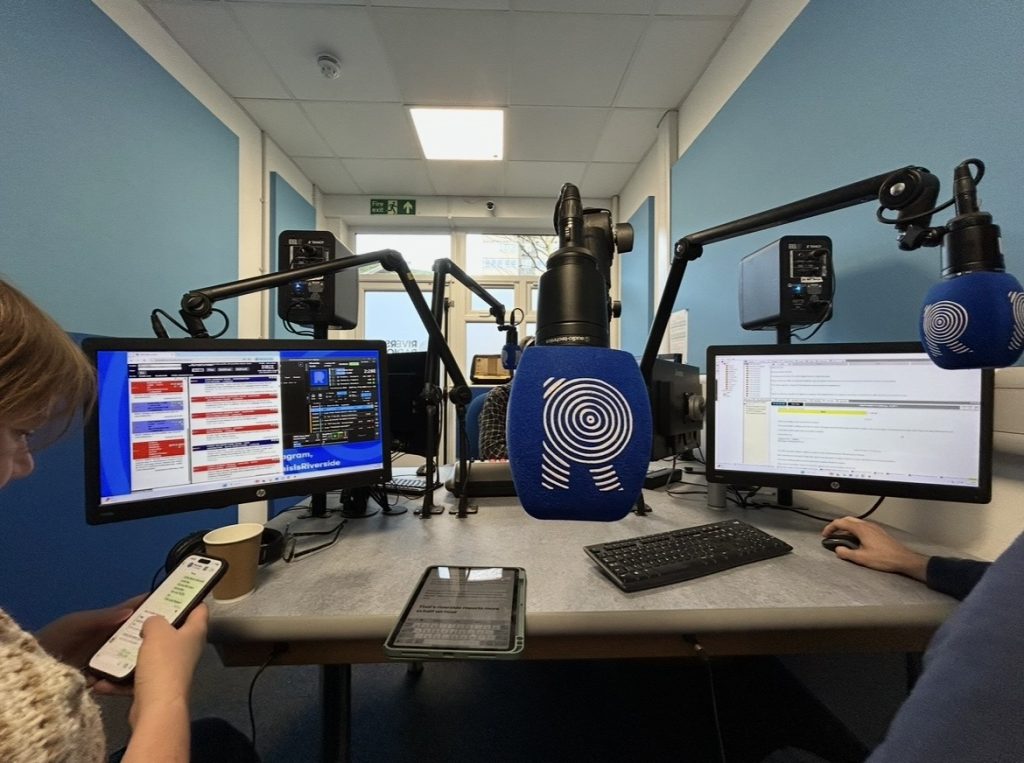
“They have opportunities to produce programmes, write news stories, conduct interviews, help with outside broadcasts, create digital content, and learn the technical side of running a station.”
Riverside Radio also runs a Radio Club for secondary school students, where they can learn how to present, produce and work as a part of a team, receiving an Arts Award certificate and qualifications at the end of the week.
He added: “Broadcasting teaches people much more than how to use a microphone.
“I’ve watched people arrive who were incredibly quiet and lacking confidence, and over time they’ve become capable interviewers, presenters and producers who are comfortable speaking to senior politicians, business leaders or members of the public.
“Watching that personal growth is one of the most rewarding parts of running the station.”
Comparing her placement at Riverside to some of her peers, Eve said that Riverside is one of the best.
She said: “They let you take ownership and be very independent.
“You put your ideas forward and you can actually contribute and gain skills, which I think is what you want in a placement.”
Current News Editor at Riverside, Ben Stephenson, joined as a volunteer in December 2025 when he heard about an open evening whilst studying for his NCTJ Diploma.
He said: “It’s a great environment for students to apply their skills from studies and see how journalism works in a more accessible way, rather than larger organisations.
“For me, I was able to practice some of the skills I had learned but also fill in some gaps, my course didn’t cover broadcast skills so a lot of it was new to me.”
After working in many roles, including social media presenting, co-hosting and editing news packages, he spoke to the previous news editor about his ideas for the station, which led to Ben stepping into the role when they left.
He said that the radio has made him more confident in both his journalism and himself, adding: “I feel more able to keep going when things go wrong, as they do on air, and I’m much better at thinking about story angles based on what the audience wants.”
Talking about the importance of local radio, Stephenson said: “Local radio covers news that is relevant to communities in a way that larger or national outlets won’t.
“The public’s trust in mainstream media is low, so if people see journalism in action in their local community, covering issues that directly affect them, then it can help to restore that trust.”
Culture Secretary, Lisa Nandy, recently announced the Government’s Local Media Strategy, which aims to boost the sector and plans to launch a £6 million local news fund, as well as increasing Community Radio funding to £1million a year.
After the announcement in March, Media Minister Ian Murray visited Riverside to speak to directors, board members and volunteer news reporters.
Talking about the meeting, Rosam said: “When people visit the station, they quickly realise we’re about much more than playing music.
“They hear local stories being produced and understand how many different organisations rely on us.”
He added: “If people making policy understand the role local stations play in education, skills, community cohesion and local democracy, there’s a much stronger chance those stations will receive the recognition and support they deserve.”
Bennett agreed that local radio was important for community.
She said: “There’s very few mediums that can reach people in the way that radio does.
“Radio always makes you feel like you’re speaking directly to the person, it builds that whole engagement that you don’t necessarily get through TikTok or television.
“I also think in terms of journalism work experience, one of the best things you can do to get to know an area and to think local.
“In my experience, local radio stations have always been the most welcoming and open to training new journalists.”
Rosam said that the relationship between Riverside and the student volunteers works both ways.
He added: “Students bring fresh perspectives.
“They’re often the first to spot changing trends in social media or audience behaviour, and they constantly challenge us to think differently about how we create content.
“They also bring enthusiasm.
“Their excitement reminds everyone why we got into broadcasting in the first place.
“Each new intake introduces different ideas, interests, and voices, which keeps the station evolving.
“Without volunteers and students, Riverside Radio simply wouldn’t be the station it is today.”
Featured Image credit: Lizzie Bradley

Join the discussion