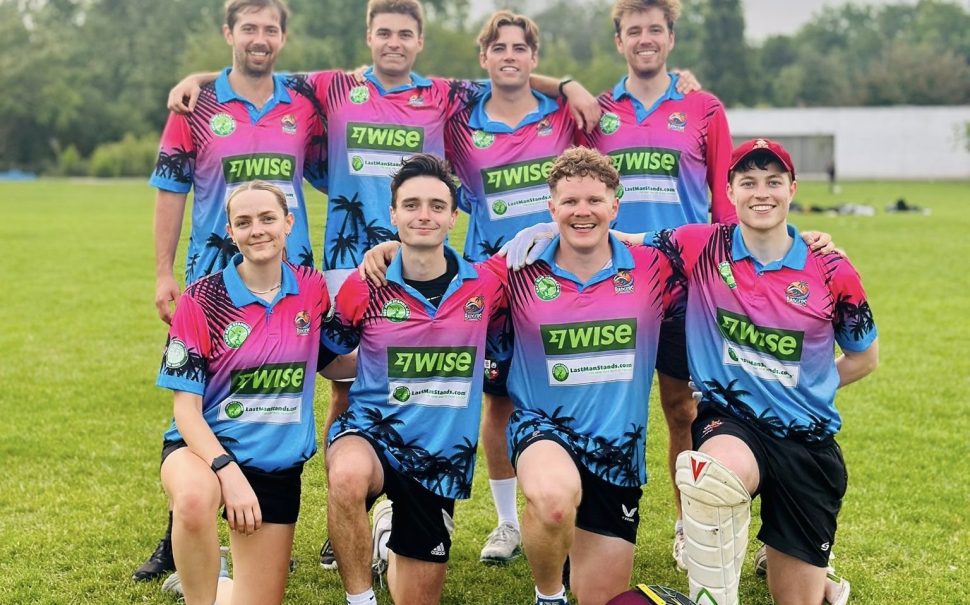
Every week, over 7,000 Londoners turn up to their local park to play Last Man Stands cricket.
But what is it, and why has it become so popular?
The format was created in 2005 in London by South African school friends Wayne Greve, Bjorn Briggs and Ross Cawood to make cricket faster and more accessible for working people.
It is now played in 12 different countries, and holds national and international tournaments for the top teams. In London alone, 530 teams play every week.
Cawood, Last Man Stands regional manager for London, said: “We started it as we were all working full-time playing club cricket, but just didn’t have the weekends.
“We were just too busy to be spending all day playing cricket, so we devised the concept of last man stands.”
Last Man Stands (LMS) differs from traditional cricket in several ways.
Teams are made up of eight players, as opposed to the normal 11, making it more likely that every player will see some action.
There are five balls in an over instead of six, thus speeding up the game, and a six – the ball being hit to the boundary without bouncing – off the final ball of an innings counts for 12.
Finally, when all but one batter is out, the final batter can continue batting by himself – hence, ‘last man stands’.
Cawood said: “It’s been very successful because of the ease of it for teams and players.
“London’s DNA is built for Last Man Stands. We hire all the parks, all the parks have cricket pitches, and all the parks are close to train stations.
“But it’s very much the ease of it all for the teams. Everything is organised for them. It’s all about giving amateur cricketers the professional experience.”

One player enjoying the quicker format is Ben Haigh-McShane, 24, an accountant who has just moved to London from Auckland, where he also played Last Man Stands.
He said: “Cricket’s such a long game, and it just takes away your whole day, it takes away a whole weekend.
“Last Man Stands is kind of that perfect in that it’s a couple hours after work, a couple hours on the weekend.
“I’m just enjoying the game, but not really giving that time commitment away.”
Another feature is that every player has their stats from the game tracked and added to a worldwide database.
Cawood said: “Players love seeing their stats. The stats connect our community around the world.
“Everyone who plays in the 12 different countries can see where they’re tracking on the website.
“You can see your local rank and your regional, national, and international ranking.”
One such player is Last Man Stands legend Manoj Oswal, a 52-year-old banker who has played since 2008.
He has participated in over 900 games, scoring over 20,000 runs and taking 720 wickets.
Oswal said: “There are different levels. So, if you’re a social-level cricketer, there are leagues for you.
“You can have fun with other teams that are a similar level.
“If you’re at a more serious level of cricket, then there are leagues available for you to play as well.
“And then if you want to go and become a bit more serious, you can play at the regional level, national level, or world championship level.”
“I used to work for Barclays, so I got invited to play for the company team, and we used to play against other corporate teams and the format just clicked because, it was quick. It was fun.”
Oswal also praised the convenience, pointing out that those in full-time work and with young families may not have a whole day to give up in their week, but only need two hours on a weeknight to keep playing cricket with LMS.
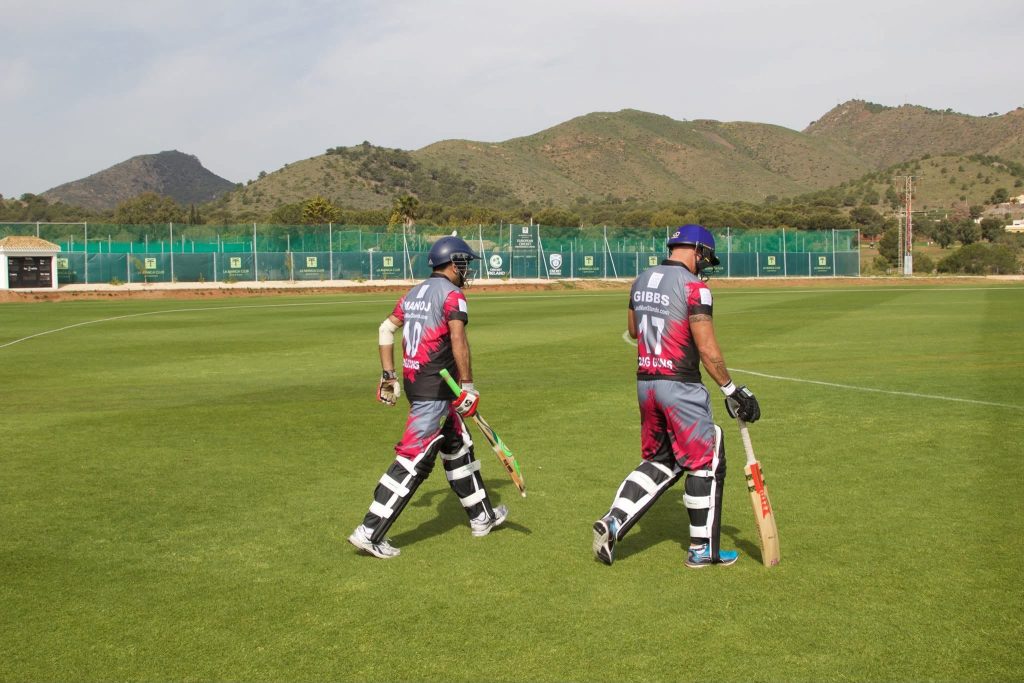
Everyone felt LMS was good for cricket because it keeps people involved who might otherwise have quit.
Haigh-McShane said: “For me, after school, I didn’t really play cricket much, just because of the time commitment and.
“Then I got back into it through Last Man Stands, and I’ve found my love of the game again.”
Cawood added: “It’s getting players back into cricket that were lost to the game.
“The good thing about it is in a lot of these teams, some of the players think, ‘Well, I’m loving my cricket again, I’m gonna go back and play club cricket.’
“So, it’s a good ecosystem for players getting back into the club structure.”
According to Sport England, 354,000 people played cricket in 2024/25, making it the second-most popular team sport in the country behind football.
Earlier this year, £45million was injected into grassroots facilities thanks to investment in The Hundred, a controversial new professional league introduced by the England Cricket Board (ECB) in 2021.
The Hundred is similar to LMS in that it was designed to speed up the game and attract new fans and players with a modernised product.
The ECB does not have a formal partnership with LMS, but there is healthy cooperation with both sides understanding the mutual benefit of more participation in the sport.
Between the success of LMS and The Hundred, there is clear evidence that the sport can continue to thrive if it evolves with the times.
Featured image: Last Man Stands