As 139 of London’s council estates face demolition or redevelopment, creatives across the city are immortalising the legacies and lives lived in social housing to raise awareness of the impacts estate regeneration has on underprivileged communities.
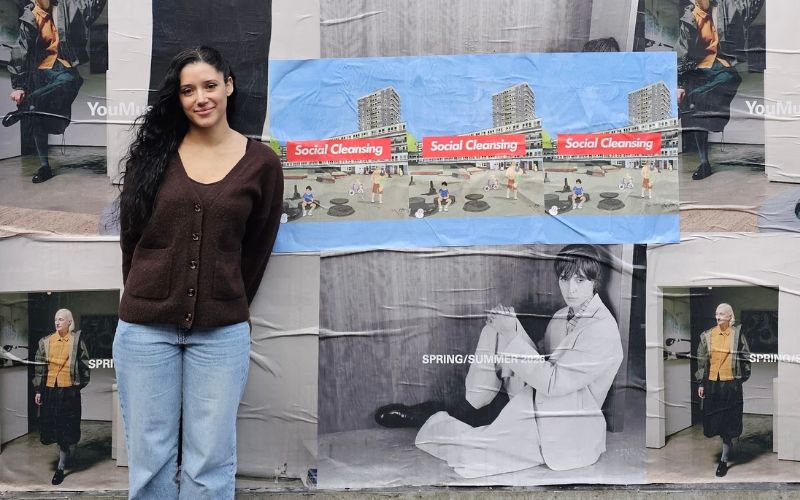
GG The Illustrator, also known as Gianna Fiore, is on a mission to paint every council estate in London to showcase the forgotten communities and cultures residing within them as they continue to be earmarked for regeneration.
The artist, originally from west London, debuted her first solo exhibition, Estate of Mind, as part of Hackney Art Week last month, bringing together her unique collection of London’s council estates.
The exhibition featured Gianna’s self-published book alongside her social cleansing prints and t-shirts, with 50% of the proceeds going to Hackney Giving.
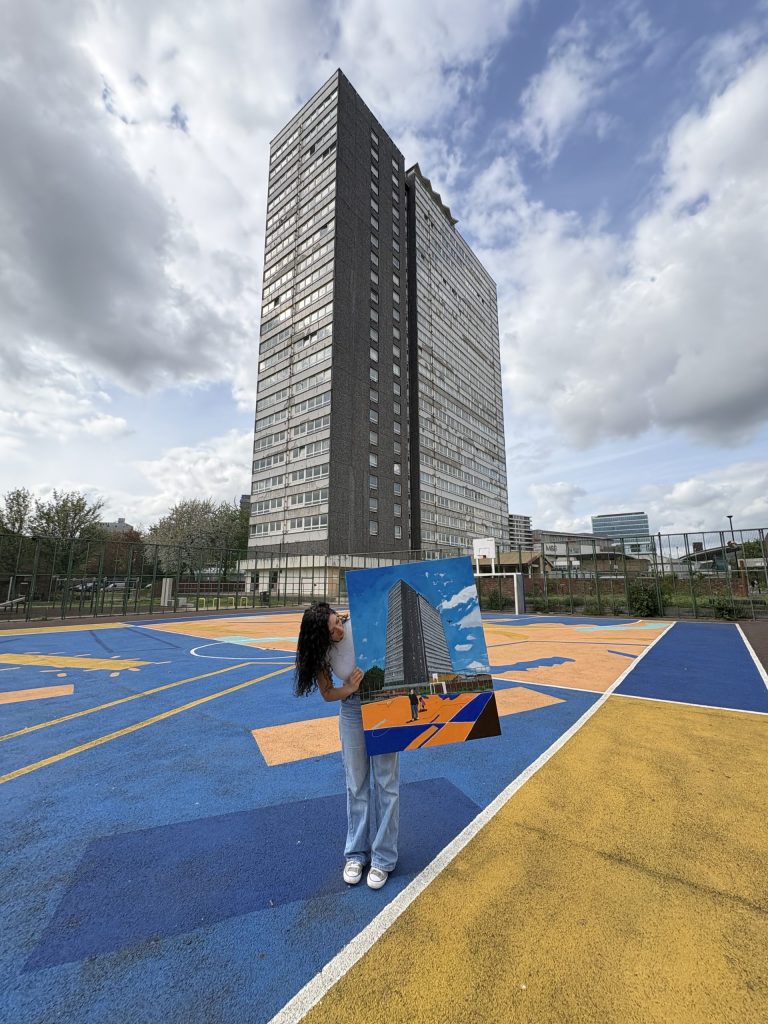
Growing up around the Cleverley and White City estates, Fiore began creating graphic illustrations of London’s council estates in 2022 after witnessing how areas which were once considered working-class had changed due to regeneration.
What is estate regeneration?
In London, estate regeneration has been an ongoing process since the 1990s.
In the last 25 years, 161 housing estates have been demolished under regeneration plans, with at least 131,000 people forced out of their homes, often outside of London.
This process can range from refurbishing existing estates to complete demolition for the purpose of introducing new housing and other amenities.
Fiore has accused estate regeneration of socially cleansing working-class people for financial gain, arguing that new social housing is built with wealth, rather than communities in mind.
She said: “The process of regeneration is not the same everywhere.
“It shouldn’t be that one area gets to keep their estate and receive refurbishments, while another gets completely knocked down and the residents are moved to Clacton-on-Sea.”
Although the full extent of the impacts remains unexplored, Mayor of London Sadiq Khan has continued to fund estate regeneration, making it a priority for his 2026-2036 Social and Affordable Homes Programme (SAHP).
This follows claims that the city had turned a corner in its approach to regeneration, placing residents at the heart of decision-making by requiring developers to hold resident ballots on regeneration proposals.
Critics, however, continue to highlight shortcomings in the process, citing the demolition of an east London estate in 2022, after a resident ballot approved the proposal by a margin of seven votes, as one example.
In 2025, London Councils and the London Housing Directors’ Group set out to highlight the benefits of estate regeneration in their report A Decade of Renewal: The contribution of London Estate Regeneration.
They suggest estate regeneration improves living standards, increases housing supply, and offers new skills and employment to residents, among other benefits.
The impact on working-class communities
However, Fiore argues the unspoken impacts of estate regeneration can dismantle the communities which are fundamental to London’s diverse culture.
Beyond the promise of new homes and investment, regeneration can displace long-standing residents, accelerate the gentrification of entire neighbourhoods, reduce the availability of social housing, and drive up housing costs.
For those living on estates earmarked for redevelopment, the process can also bring years of uncertainty, disruption, and a decline in day-to-day living conditions.
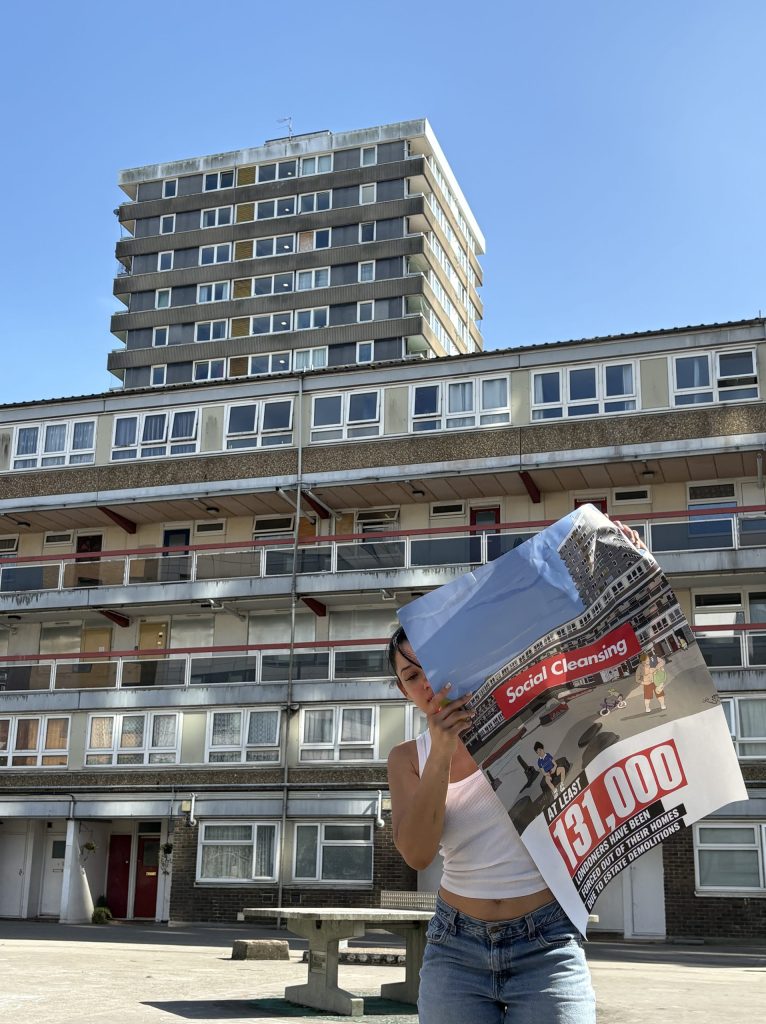
She said: “What attracted me to focusing on social cleansing and estate regeneration are the human stories.
“The reason why I document estates and do what I do is to shed light on the issue. It’s my way of doing something.”
Growing a mixed-media collection of almost 80 council estates, Fiore hopes her art will change perspectives and encourage people to view the communities that live in London’s social housing beyond the stereotypes perpetuated online.
She said: “It feels like the working-class are constantly punished for being poor – people need to know how serious the impacts of estate regeneration are.
“Most people that live it know this, but we feel helpless because we’ve been programmed to just get on with it.
“We’ve been programmed to feel like there’s no way out.”
Capturing council estates across the city
While her own experience growing up in and around estates informs much of her work, Fiore also travels across the city to capture the reality of London’s estates with her close friend and photographer Alfie Kalesperas, who has experienced the impacts of estate regeneration firsthand.
Documenting what he calls the nostalgia of council estates on his Fujifilm X-T4, Kalesperas – also known as sh0tbyak on social media – began photographing London’s social housing after living on the Gascoigne and Colville estates, which currently fall under regeneration plans.
The Gascoigne Estate, composed of an east and west section, is being demolished as part of the Area Policy SPP1(Strategic Planning Policy) of the Barking and Dagenham Local Plan 2020-2037.
The eastern part of the estate was approved for demolition by the GLA in 2015, with the western side receiving planning permission for phases of redevelopment in 2018.
This estate, as well as Colville, was exempt from the requirement to ballot residents on demolition by the mayor – leaving many without a role in deciding the future of their homes.
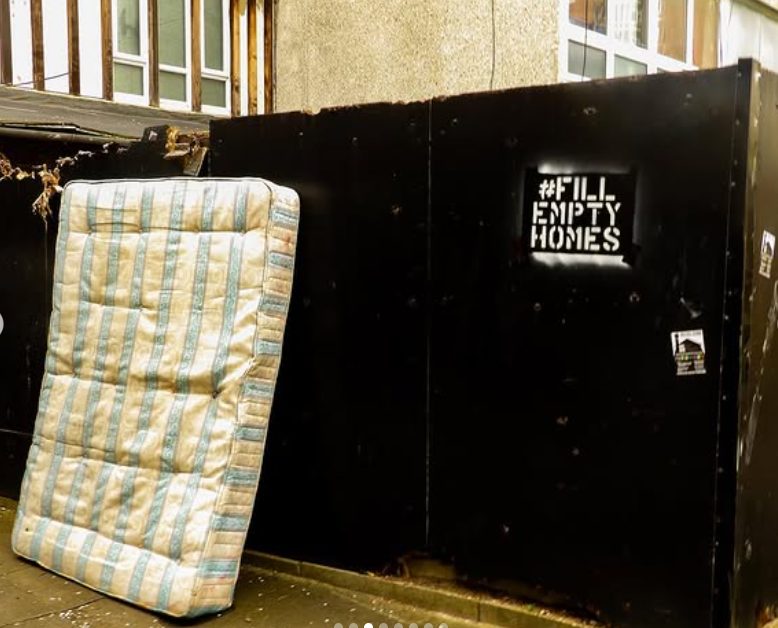
Kalesperas said: “I’m not really a fan of handouts.
“But when it comes to things that I do think should be handed out, housing is a basic human right.”
He argues that while estate regeneration isn’t always bad and can be necessary under certain conditions, it’s often used as an excuse to profiteer and displace working-class people.
Kalesperas added: “Gentrification makes me feel very uncomfortable.
“You look at Hackney now, and all the East-Enders are being pushed out to places like Clacton-on-Sea where there are no opportunities.
“I understand that there has to be some sort of capital gain within estate regeneration, but at the same time, it shouldn’t be at the cost of displacing families.”
As regeneration continues to reshape social housing in London, Fiore and Kalesperas are building an archive of the histories, communities, and lives lived on council estates – many of which may soon exist only in the memories of the people who call them home.
Their work preserves a record of these forgotten corners of London, while exposing the lasting impacts estate regeneration and gentrification have on communities across the capital.
Featured Image Credit: Gianna Fiore