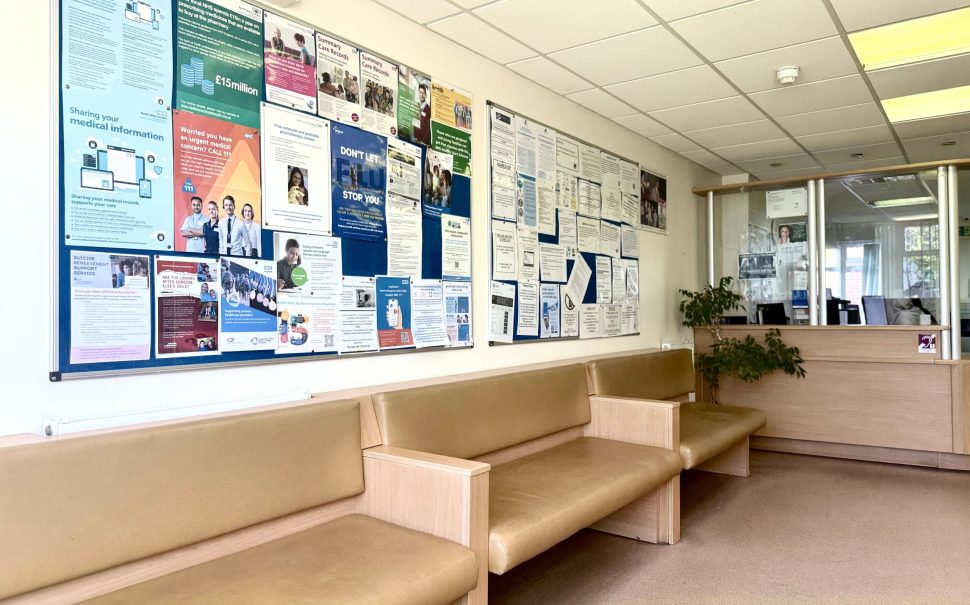
The NHS announced this month that it is accelerating the rollout of artificial intelligence to cut waiting times and improve patient care.
This step is part of a £10 million plan to overhaul the national healthcare’s technology, digital and data systems.
Amongst the advancements, an AI-powered triage tool will be integrated into the NHS App to help direct patients to the most appropriate services. This marks the next step in the government’s ambition to modernise the front door to healthcare.
The challenge facing the NHS is that many young people have already built their own AI-powered route into healthcare. They have effectively turned to consumer chatbots to interpret symptoms, understand medical terminology and decide whether they need to seek professional care.
In other words, the NHS isn’t introducing AI into an empty space. It is entering a landscape where many patients have already established their own health-seeking habits, completely unprompted.
King’s College London’s latest research (2026) into how consumer AI is revolutionising pathways to healthcare in the UK illustrates just how quickly those habits have developed.
Among those using AI for health advice, convenience – not necessarily trust – appears to be the driving force. The report found the most common reasons for using AI chatbots were that they were quick and convenient, people were curious about the technology, or they were unsure whether their symptoms were serious enough to justify contacting a healthcare professional.
The NHS announcement focuses on AI built into official services to improve triage and reduce pressure on GPs. But for many young adults, AI has already become a form of informal self-triage. Rather than replacing doctors, it has inserted itself before the healthcare system, becoming an unofficial first point of contact.
Whilst using it as a tool, perhaps surprisingly, the King’s College research suggests this generation is far from uncritical of AI. In fact, 18 to 24-year-olds were the age group most opposed to AI being used in NHS clinical decision-making, with 49% against, compared with 36% of those aged 65 and over. Overall, the public was almost evenly split, with 37% supporting the use of AI in clinical decision-making and 38% opposed.
That finding suggests young adults distinguish between using AI as a personal tool and actually trusting it to make decisions about their healthcare. They are comfortable asking questions, but much less comfortable allowing algorithms to determine diagnosis or treatment.
The report also highlights why this distinction matters. Around one in five people who used AI for health advice said it discouraged them from seeking a professional opinion, while a similar proportion decided not to seek medical care because of something the chatbot had told them. Senior Vice-President of Health & Life Sciences at King’s College London, Graham Lord, described this as the emergence of “an unregulated AI healthcare system alongside the NHS.”
This creates a challenge that extends beyond technology. Just as Google became synonymous with searching the internet regardless of official alternatives, ChatGPT and other consumer AI tools may become synonymous – and maybe even default – with seeking initial health advice.
If that happens, the competition will no longer be between AI and traditional healthcare. It will be between the NHS’s AI and everyone else’s.
For policymakers, that means success will not rely on building effective AI, but on understanding that they are creating these tools within an ecosystem of platforms consumers have already turned to.
Feature image credit: Izzy Titherington