More than a third of doctors in the NHS are non-British – recent NHS data has shown – which is over double the amount of those born abroad living in the country.
The latest House of Commons statistics show that 16% of the UK’s population were born in the UK – yet non-British NHS doctors make up 38% of their workforce.
Doctors have the largest proportion of immigrants out of all professionally qualified clinical staff roles in the NHS, as 57,801 out of 153,249 are not of British nationality.
Henry Phillips from Kent is just one man whose life was saved by this immigrant staff force – after being hit in the head by a shot put in 2014, he was hospitalised for two months, and was looked after by staff from all kinds of backgrounds.
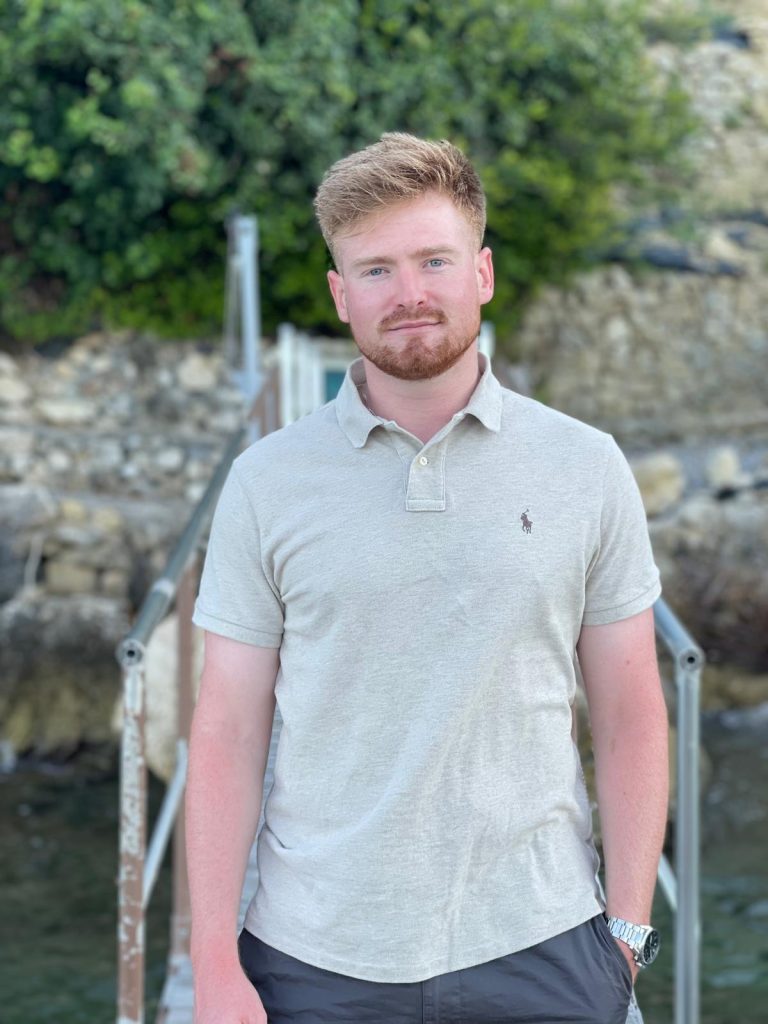
For one month, 14-year-old Henry was ‘out of it’ in intensive care, where he received multiple operations, including surgery to clear up damage from a fractured skull and another inserting a tube in his head, to release liquid around his brain.
Now 26 – and with no long-lasting damage – he reflected how his time in hospital has shaped his views on immigration, as he was cared for by some ‘stand out’ staff members, like his Nigerian brain surgeon Desmond or his Indian head nurse Rani.
He said: “For all of this time, I remember Rani, I remember Desmond, and I’m never going to forget these people because they saved my life.
“Desmond was a big Chelsea fan, and I’m a massive Arsenal fan. I remember he would always come around on time, if not earlier.
“We’d do all the stuff about the operations, MRIs, and X-rays and after we got that out the way, he would ask ‘Who do you think you’re signing this summer?’ or ‘What do you think of the World Cup so far?’
“It was nice to just have a chat with someone. I had a really, really good relationship with him.”
Out of all NHS doctors, Nigerians make up 2.27% – in February 2026, there were 3,482 of this African nationality.
Rani also made a mark on Henry. After waking up, he needed physio to get walking again, and she was the one who helped him push through.
“I was feeling sorry for myself and didn’t want to do physio,” he explained.
“But I remember quite vividly her saying in her strong Indian accent, ‘Henry, I want you to be bothered. You need to be.’
“At the time, I felt like I was being pushed, but looking back now, I know she was so encouraging and caring. She wanted what was best for me – Rani was like a mum kind of relationship.”
Currently, a third of nurses are not British – and 11% are Indian.
Just like doctors, immigrants make up a higher proportion of this workforce than they do the UK population.
While Henry specifically remembers Rani and Desmond, they are not the only people he is thankful for.
He said: “From the surgeons to the people that would clean my bed, I don’t have a bad word to say about any of them.
“This experience has heavily shaped my views on immigration. The NHS would fall apart without it. When people say ‘We only want highly skilled immigrants’, I fundamentally disagree.”
Out of all ‘support to clinical staff’ roles in the NHS, a fifth are not British – which is again higher than the 16% of those born outside the UK that make up the country’s overall population.
One anonymous junior doctor based in the south of England agrees with Henry that immigrants play a ‘huge part’ in healthcare and the NHS.
She was born in Poland and moved to Hungary at seven-years-old, before coming to the UK to study medicine.
She said: “There’s a lot of immigrant doctors, but there’s also a large number of immigrant nurses and healthcare assistants, and truly I feel like a lot of the time they are running the show behind the scenes.
“If you work in healthcare and you’re anti-immigration, I think that’s just not really the environment for you.
“You might not be an immigrant working in healthcare, but if you’re working in healthcare, you definitely know an immigrant. I think you get a unique appreciation for it.”
Across the NHS, nearly a quarter of staff are not of British nationality – this is both clinical staff, support to clinical staff, and infrastructure support.
While it has not happened to her, the junior doctor explained there have ‘definitely’ been negative behaviour towards healthcare workers because of their race – but rather than direct comments, it can be an “off” attitude.
“I don’t think I’ve ever faced any direct comments,” she said. “Sometimes patients see my name on my badge or hear that my accent is not quite English, and they ask me questions.
“Sometimes it’s also more senior doctors too. They ask me where I’m from and how I got here.
“But I also think it really depends on the person’s attitude. You can usually tell when someone’s asking questions in good faith – whether they’re genuinely curious or being accusatory. But you do have to have your guard up a little bit.
“I think for me though, it’s definitely easier because I’m white. So visibly people can’t point me out and ask, ‘Where are you from?’”
Junior doctors help consultants, scribe notes, make plans for patients, sort the order of investigations such as blood tests or images, prescribe medications and write discharge summaries – while there is support, it’s still ‘a lot of responsibility’.
And there have been times this junior doctor’s nationality has actively helped her save lives.
She explained: “One time, a Polish lady came into A&E with an allergic reaction where her throat swelled up. She couldn’t speak English and was confused about what was happening – but I could speak to her.
“Another time I was in a pancreatic and biliary cancer clinic, and a patient was coming in to discuss surgery but he couldn’t speak English. Again, I think it was very good I could be there in person.
“Multiple times a person will enter and the doctors and nurses will worry when they notice the patient doesn’t speak English. But I’ll see that their name is Polish or Hungarian, and I can translate and speak to them.
“I think these are my proudest moments because you can really see the difference you make.”
She explained that while there is an interpreter service in the NHS, it ‘slows down the conversation and removes the non-verbal communication’ – a patient asks a question, before someone translates over the phone, and vice versa.
“This is why it’s so amazing the NHS has so many immigrants from so many areas of the world. You find out that a patient speaks a certain language, and you say, ‘Oh wait, that doctor speaks this language! Can we get them?’
“To me, that’s such a beautiful representation of the NHS, because it reflects how colourful and different British society is.”
As well as this positive side of immigration – there was another thing this junior doctor wanted to stress.
“Even if a patient is rude, racist, xenophobic, or whatever,” she began. “You’re a doctor, and you’re still going to help them because that is your job.”
NHS England was approached for comment.
Featured image credit: Unsplash.