People with learning disabilities are the least likely group in Britain to be employed, yet their employment into hospitality has surged by nearly 60% in five years.
People with severe or specific learning disabilities remain the least likely disability or health condition group in the UK to be in work, according to Department of Work and Pensions (DWP) data.
Just 30% are employed, the lowest rate across all health condition groups.
By comparison, 33% of people with mental illness or other nervous disorders are in work, along with 33% of people with epilepsy and 34% of people with autism.
Ellen Wells once spent entire shifts folding hundreds of napkins for a venue at Gatwick Airport.
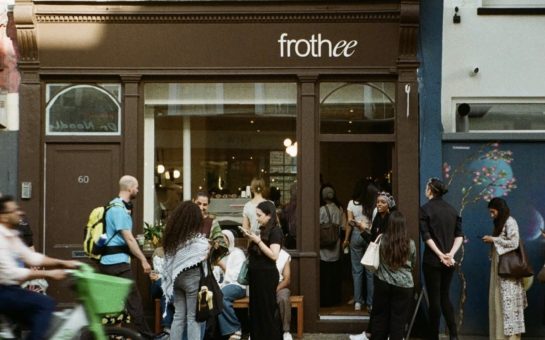
This summer, she will graduate as a hospitality all-rounder from Fair Shot, a Covent Garden café that helps young adults with learning disabilities and learning difficulties move into paid work.
The 23-year-old serves coffee to shoppers in central London, rotating between the till, food preparation and her favourite job.
She said: “I love the milk station and the latte art. “Like making a love heart.
“I was a little nervous and now I’m excited about my new level of independence. I do more things by myself, like taking the train into Victoria.”
She has formed close friendships with other trainees and has begun enjoying a more independent life outside work too.
She added: “Me and Cara, we went for dinner with her mum and my mum. That was nice.”
Now, her next ambition is to get a job in one of London’s West End theatres.
Ellen has Down syndrome, while other trainees at Fair Shot have a varied range of learning disabilities and learning difficulties, including autism and global developmental delay and so far 85% of graduates have gone into long-term paid employment.
And while overall employment remains low, the food and drink sector has seen a sharp rise in disabled workers with severe or specific learning difficulties, increasing from 11,739 in 2020/21 to 18,696 in 2024/25, a 59% rise in five years.
The reason places like Fair Shot can take on 15 learners each year is because of funding from Education, Health and Care Plans (EHCPs).
These plans usually start from school age and local authorities are responsible for helping disabled young people prepare for adulthood, including identifying routes into work and increased independence.
There was a 17% increase in young people leaving EHCPs for paid employment last year, according to Department for Education data.
But once you’re over 25, leave education or decide not to continue training, that support often disappears creating a gap between education and employment.
Jane Hatton, chief executive of Evenbreak, a specialist global job board for disabled candidates, explained that many candidates struggle long past younger years.
She said: “We’ve got candidates we’ve been working with for a long time who are autistic, who struggle to find work and find interviews difficult.
“A lot of it is around myths and misconceptions. There’s still an assumption that people with learning difficulties can’t do things for themselves, when in reality we see people with huge talent and motivation who simply struggle to get the opportunity.”
Bianca Tavella, chief executive of Fair Shot, added that the real problem is employers that don’t understand that everyone has to start somewhere.
She said: “The reason many people with learning disabilities are not in paid employment is not because they can’t work. It is because the opportunities have not been created.
“If no one gave us our first job, where would we all be?”
Most participants arrive directly from college. Fair Shot runs an 11-month supported internship in partnership with Mencap, followed by six months of in-work support.
Tavella added: “The majority of our cohort come straight from college. At 25, many young people lose their EHCP funding, which is often what unlocks support for programmes like ours.”
Graduates have gone on to roles with employers including Big Mamma Group and Wolseley Hospitality Group.
Hospitality is particularly well suited to tackle the employment gap, according to Piper Holmes, employment programme manager at Fair Shot.
She said: “It’s the perfect industry because it’s so flexible. The variety of roles, the shift patterns and the creativity in how jobs are structured make it one of the most inclusive sectors out there.
“You’re not just making a coffee, you’re handling money, dealing with customers and solving problems. There are so many hard and soft skills involved, and you can achieve exactly the same outcome, but you do not have to do it in exactly the same way.
“Some people assume neurodiversity means someone has no social skills, but that simply isn’t true. This work is all about people, and many of our interns are brilliant at connecting with customers and colleagues.”