As soon as the school gates open, the afternoon commute back home commences, the air full of the sound of children chatting, excitement at the afternoon of freedom ahead.
Two years ago, the typical after school commute back home to the Kennington Ethelred estate began for then-12-year-old Aaishah Mohammed – but what happened next changed her family’s life as they knew it.
After walking her younger sister, then aged eight, home from school, Aaishah turned around to go to football practice on Black Prince Road in Kennington.
A grey car came speeding around the corner and knocked her to the ground, causing her to hit her face on the bonnet as she fell.
She was bleeding from the mouth with broken teeth as the driver drove off.
“There was blood everywhere,” said Farhia Mohammed, Aaishah’s mother. “She looked so scared.”
Aaishah received 24 stitches in her gum and 22 in her chin after emergency dental surgery, as well as a prosthetic tooth.
The Mohammed family were left traumatised after the incident and Aaishah even missed several weeks of school, falling behind in class.
Farhia added: “It made me so scared to let my daughters out again.
“We have to do something to make our roads safer for our children.”
Police only came after a couple of days, but no further action was taken against the driver, who claimed the child was fine.
“I was left so angry about how little was done to punish the woman who did this and to prevent this from happening again.” Farhia said.
She is retelling the event for the first time as new research has come to light, uncovering that every year 443 children in London suffer injuries on the school run alone – a number of injuries equivalent to an entire primary school.
Of these, 16% – 72 children – are seriously or fatally injured on the London school run.
Fariah and Aaishah Mohammed are not alone in their trauma. Katy Heald has also shared the story of how her four-year-old son, Ben was nearly crushed under an SUV while riding on his bike at the end of the school day.
Katy and Ben were at a traffic light waiting to cross the nose-to-tail traffic. The pedestrian lights switched to green and Ben rolled forward to cross the road on his bike while Katy followed with her toddler in the buggy.
The traffic suddenly began to shift forward and an SUV driver, who had already crossed the yellow line, followed the traffic ahead without checking the crossing to see if anyone was there.
The wheel and front fork of Ben’s bike was crushed, coming dangerously close to his leg, and the driver had no idea that he was there until his bike was under her car because of the car’s high bonnet.
Katy said: “I screamed but by the time she realised what she’d done she had driven over the front wheel of Ben’s bike.
“Ben was distraught and so was the driver, who had her own kids in the back of the car.”
In total, 6,181 children suffered injuries on the road across London, with 1,328 of these taking place during the school run.
A total of 1,006 children were killed or seriously injured in the past three years.
Examples of ‘serious’ injuries are fracture, internal injury, severe cuts, crushing, burns (excluding friction burns), concussion, severe general shock requiring hospital treatment, or detention in hospital as an in-patient.
It is important to note that all of the data recorded has been drawn from police records of road incidents rather than from hospitals.
According to Transport for London’s (TfL) guide to collisions data, evidence suggests that non-fatal injuries are under-reported by police – meaning that the real number of child injuries during the school run could be much higher.
Research further suggests up to a fifth of casualties reported by the police are not recorded by them.
It has also been reported police often underestimate the injury level of an incident due to the difficulties of distinguishing the severity of an injury at the scene of an incident.
Children walking and cycling to school in London equate to 57% of all school run journeys while making up 78% of school run casualties, meaning children are disproportionately at risk if they walk or cycle to school.
For many parents in London, the fear of the dangers of the school run has sparked anger and resistance. Stories like Aaishah’s and Ben’s are impossible to ignore and parents feel it is time to take things into their own hands.
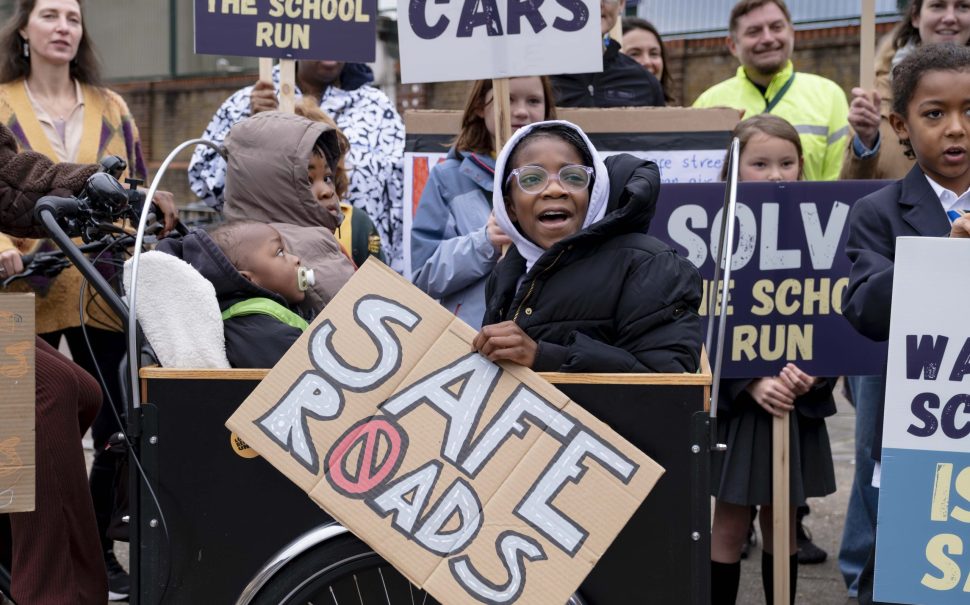
Parents have been holding vigils across London calling for safer streets across the capital, with protests happening across Lambeth, Lewisham, Twickenham, Camden, and Hackney to bring awareness to the danger that children are facing while travelling to and from school.
Solve the School Run, a parent-led charity, and Clean Cities, Europe’s largest network of organisations pushing for cleaner and safer cities, are calling for all councillors in London to commit to a ‘Safer Streets for Kids’ manifesto.
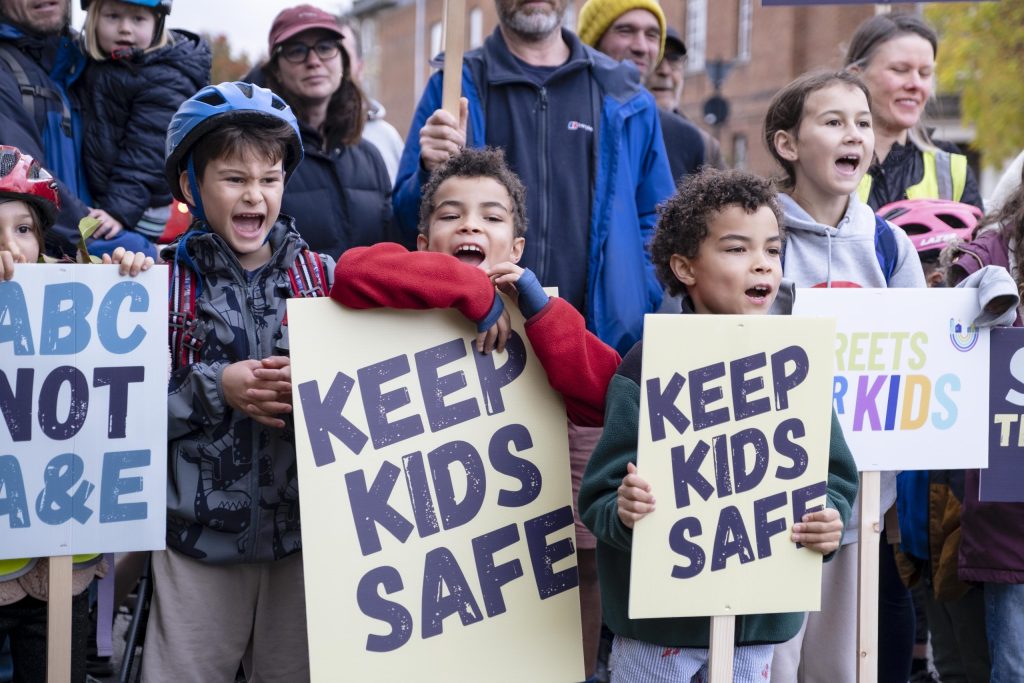
The manifesto calls for three main changes: An effective school street for every school – meaning the closure of certain streets to traffic during the school run, access to a cargo bike for every family through subsides, secure parking, or bike share schemes, and the reallocation of kerb space so children can see and be seen as well as parking tariffs to discourage SUVs and carspreading.
The school run has been found to be one of the most difficult trips many children make according to analysis of Transport for London road collision data by parent campaigners at Solve The School Run.
Solve The School Run co-founder Claire McDonald said: “We wanted to shine a light on the very real danger that children face getting to school.
“We wanted to turn that experience into numbers that councils can understand, to demonstrate the need for immediate action.”
The campaign demands are clear, and by putting children and their safety at the front of the narrative, parents are able to highlight the importance of safer streets for children all across London, reframing the numbers and data as real people and stories.
Will Norman, London’s Walking and Cycling Commissioner, said: “Every death and injury on London’s roads is a tragedy, and especially when it involves a child.”
He assures that progress is happening with London now having over 800 school streets and a cycle network of over 400km, and says that they are currently transforming dangerous junctions and pedestrian crossings across the capital.
He added mayor Sadiq Khan, TfL and London boroughs are eliminating deaths and serious injuries on the roads through their investments, reducing road danger and making it easier and safer for children to walk, cycle and scoot to school.
McDonald said: “Councils have the power to transform the journey to school for thousands of children and many of them are already doing it, with school streets, bike lanes and increased parking tariffs on SUVs – but we want more.
“We want councillors to pledge to save children’s lives, give them back their independence and bring the joy of freedom into their lives. They can do this by committing to our pledge.”
Every child deserves to attend school every day worry free and parents deserve the peace of mind that their child will arrive back home at the end of the day safe and sound.
Parents and campaigners are continuing to plead for more safety measures to be put in place to keep the children of London safe through protests and campaigns London wide.
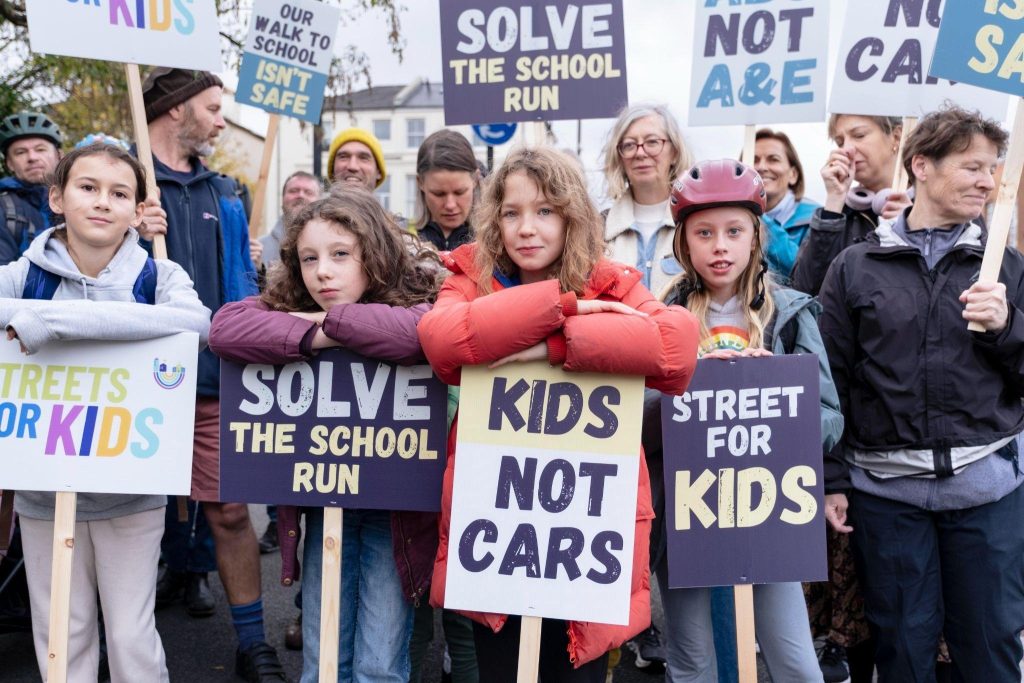
A protest took place in October near the A316 at Margaret’s Roundabout in Twickenham, after a driver fell asleep at the wheel and crashed through roadside barriers in January of 2024.
The driver narrowly missed mother Rosie Greaves and her children who were aged one, four, and seven at the time of the incident.
The barriers at the Margaret’s Roundabout are claimed to have been frequently out of action, and Greaves believes it is just a matter of time until someone is killed.
For parents looking for ways to get involved, Solve the School Run are presenting solutions to allow for parents to complete the school run in safer ways including group cycling or walking as well as tips on how to campaign for a school minibus, cycle lanes, zebra crossings, and singing schools up for behaviour change schemes such as Travel for Life and Modeshift stars.
For families like the Mohammeds and the Healds, the school run should be a safe and stress-free part of daily life, not a dangerous journey with incidents waiting to occur around each corner.
Their stories are just a few of hundreds of children who are seriously injured each year highlighting the urgent need for change.
Through community campaigning and protests, parents are making a difference and putting plans into action to make the streets of London a safer part of daily life.
Feature image: Becky Mursell