The British Medical Association (BMA) are again calling on the government to ‘Stop the Drop’ in final year medical student loans, five months after mistakenly claiming victory.
The Department of Education responded to email correspondence in September with an announcement of the ‘Lifelong Learning Entitlement’ (LLE), which is set to reform the current student loan system from 2027.
It was not until the medical union shared its campaign success widely across social media that they realised the policy small print excluded medical students.
A report published on Wednesday found the drop between fourth and fifth year funding equates to £3647 on average, leaving many struggling to afford basic necessities.
Leading up to September, neither the Department of Education nor Department of Health and Social Care took ownership of the issue, instead deflecting student lobbyists to one another.
One medical student familiar with the issue, who wishes to stay anonymous to protect their medical career, described the government communication as ‘misleading.’
The student said: “It was an embarrassing moment for the BMA. They had to publicly advertise the mistake and retract the statements that they made – it brought us back to square one.”
Correcting its previous announcements, the BMA said: “The government has missed an open goal to fix student finances, deliberately excluding medical students from a full entitlement, which was both misleading and ambiguous in its policy release.”
90% of respondents in the BMA report said their student finance combined with the NHS bursary does not adequately cover living costs, with 4 in 10 having considered leaving or pausing their course due to financial pressures.
The campaign relaunch comes amid heightened debates over the student finance system, where high interest rates and salary threshold freezes leave many paying significantly more.
Louise Davey, a 24 year old University of Leeds medic, frequently worked full-time as a bartender alongside hospital placement and teaching.
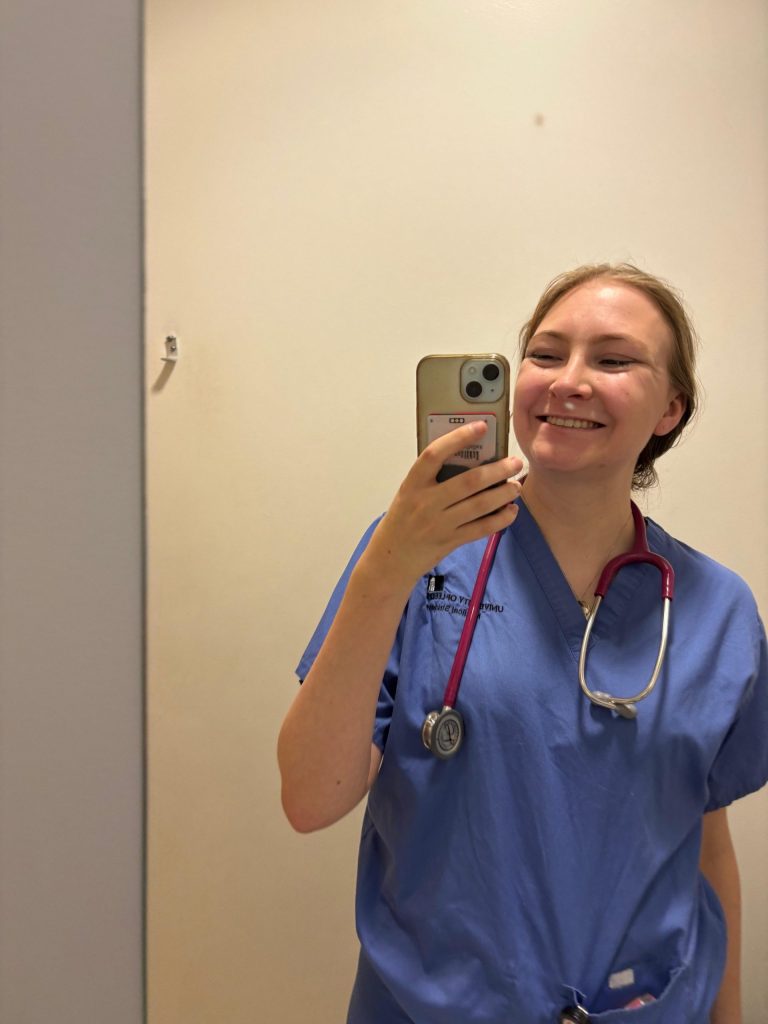
The first generation university student failed exams in every year of her degree, and was forced to resit the whole of third year.
Davey said: “I knew that I hadn’t done as much work as other people, because I just didn’t have the time.”
She said: “In the lead up to exams, I’d still have to do three shifts a week. Everyone else could go home or go to the library after placement, but I’d go to work. It definitely puts you in a worse position.”
Sometimes Davey would finish placement at 5pm, work as a bartender between 6-11.30pm, before starting again at 9am the following morning.
She said: “It’s just exhausting, really.”
In financial emergencies, like a failed MOT, she’s had to rely on her boyfriend to cover hundreds of pounds.
Even after medical school, the industry is competitive. To secure coveted speciality training, students are expected to build a strong portfolio of society involvement and research.
Davey said: “I think that’s a big issue for everyone, but it’s especially a big issue if you’re from a low income background and don’t have time to write papers or do research projects.”
After completing her two year foundation training, Davey fears she’ll be stuck working as a low-paid clinical fellow, picking up unstable locum shifts or simply unemployed.
For Davey, medicine seemed like the best route to a stable, well-paid job, but if she had known what the current climate looks like at 17, she said she would not have applied for medicine.
Being on a zero-hour contract meant Davey had little control over when and how many hours she worked.
Asked if she had ever taken part in campaigning, Davey said: “I don’t understand why the people that have that have more on their plate have to fight for it.”
Some students have turned to charities to fill funding gaps not covered by their medical student loans.
The Stapley Trust grant bursaries for second degrees across all disciplines, but 40% of their applications last year were medical students.
Stapley Trust Co-Chair Dr Manali Chitre said: “Our amounts aren’t as big as other charities. That tells us there is a huge need. There should be more charities like this or government sources.
“When you read application forms, you can see how much students want to learn. The numbers of applications have really gone up over the last few years.”
This year, they received well over 800 applications within 24 hours.
Chitre said: “There are some really moving stories. We want to help them but we can do things only up to an extent.”
“Applicants tell us they work to save money but still fall short. That’s the kind of gap we’re trying to plug.”
One Stapley Trust bursary recipient said: “The grant was a lifeline.”
“The final year of medicine came with more examinations and placement hours which meant I had to cut back on working part-time in order to truly focus and engage with my studies.
“I wouldn’t be where I am today (working as a Resident Doctor) without the grants from Sir Richard Stapley.”
From 2027, the LLE allows new students to access tuition fee loans equivalent to four years study. This can go towards different qualifications throughout their lives, but does not apply to medics.
The student familiar with the government email exchange said: “People are making a trade off: do I get a job to finance my way through medical school, or do I spend time doing the extracurricular stuff that will get me the job I want in the future?”
This leaves many depending on the bank of mum and dad, taking a year out to work other jobs, or living in poverty during the most intense and important years of their degree.
The student said: “We risk creating a homogenous class of doctors who will be treating a heterogeneous class of patients.”
The latest BMA campaign aims to secure full maintenance loan access for final year medics. As with their first four years of education, the students would repay the loan once they start working and pass the earnings threshold.
The Department of Education were contacted for comment.
Featured image credit: Leeds Medical School