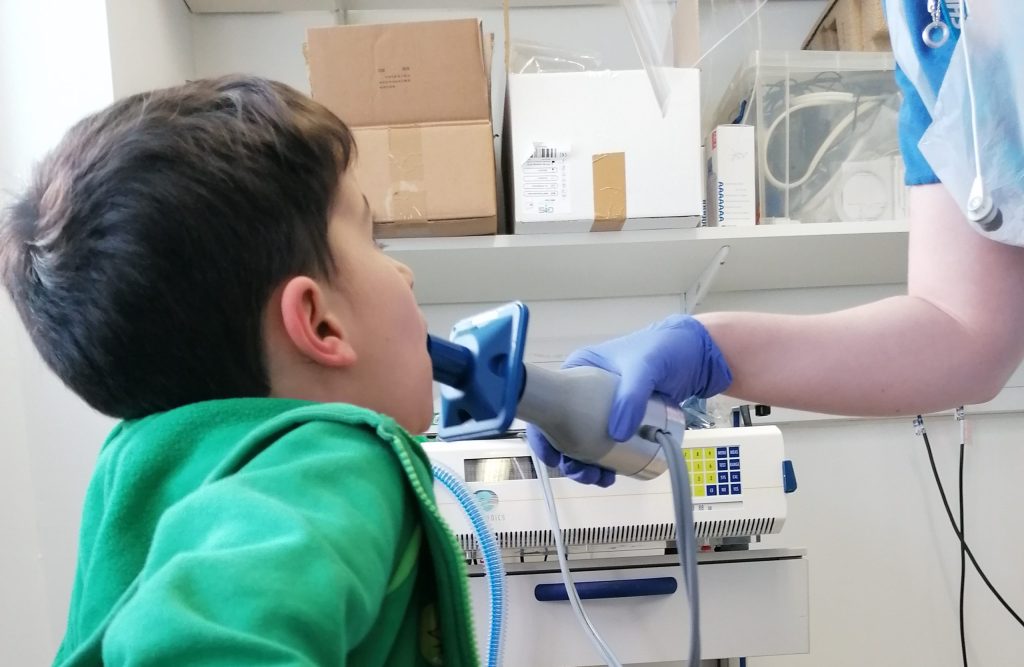
“We got to the hospital and he was struggling to breathe. Then it happened again a month later. And again. In those six months, he had seven asthma attacks.”
Ruth will never forget that first trip to the hospital, or the subsequent months in which she discovered that her 18-month-old son had developed a respiratory condition that will burden him for the rest of his life.
“The third [hospital admission] was very serious. They put cannulas in his hands and oxygen tubes in his nose. To see your child unable to breathe is horrific.”
Ruth’s son is one of more than 170,000 children in London with asthma — a chronic condition that, while sometimes mild, often carries serious health implications. Like many other parents, she suspects the city’s contaminated air caused her child’s illness.
“I don’t have asthma,” she says, recalling advice from a respiratory consultant shortly after her son’s diagnosis to avoid busy roads and other highly polluted areas. “His dad doesn’t have asthma. And every time we were in hospital, there were all these other children experiencing the same thing.
“Everywhere on the ward you heard the hissing of the nebulisers. It was shocking to see so many kids who couldn’t breathe.”
Ruth’s son, now nine, has been admitted to hospital 18 times with respiratory problems. His longest stay, in the summer of 2023, lasted 12 nights, but familiarity makes the experience no less harrowing.
“It’s a striking thing to see. You get a single tracheal pull here,” Ruth explained, running her finger along her throat. “This dips in and out with the effort of getting breath in, and the muscles under the rib cage contract really deeply.
“There’s a specific sound that goes with the wheezing too. It’s like two bits of fabric rubbing together. It’s horrible, you feel so powerless.”
A report published by the Royal College of Physicians last year highlighted links between a vast array of illnesses — including asthma, ischaemic heart disease, lung cancer, and even dementia — to breathing unclean air.
The report also estimated that air pollution costs the UK economy at least £27billion each year through productivity losses and the additional burden it places on healthcare, and that it contributed to 30,000 deaths in 2025.
The consequences are especially acute in London; in cases of asthma affecting young people, almost 20% of England’s hospitalisations occur in the capital, and leading figures in the fields of toxicology and environmental science have stressed an urgent need to drastically reduce air pollution.
“Every organ in your body can be affected by the quality of the air you breathe,” explained Professor Frank Kelly, director of Imperial College London’s Environmental Research Group who support the World Health Organisation (WHO) in devising its air quality guidelines.
Kelly said: “In London, we have more people developing chronic diseases because of air pollution. And those people aren’t just losing healthy life years; some are dying prematurely.”
Professor Kelly had just returned from the EU’s Clean Air Forum in Bonn, Germany — a conference to address ‘Europe’s largest environmental health risk’ and the high levels of harmful pollutants, notably fine particulate matter (PM2.5) and nitrogen dioxide (NO2), that fuel it — when he offered his deathly analysis.
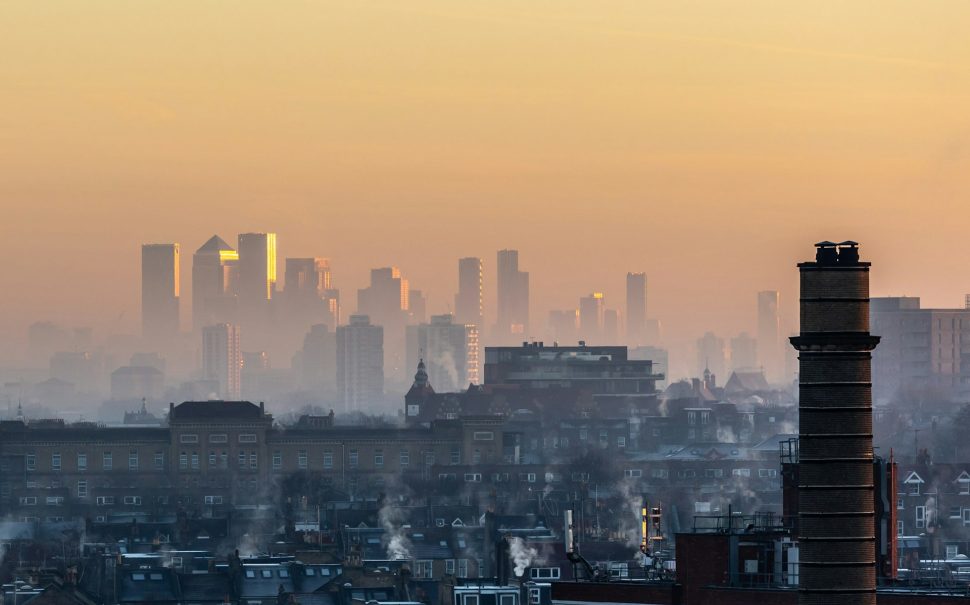
London has made significant progress in reducing atmospheric concentrations of these pollutants over the past decade. Crucially however, it is still a long way from meeting the WHO guidelines that Kelly helped to create.
Kelly says the government deserves praise for the reductions made so far, citing the Ultra Low Emission Zone as a particularly effective piece of policymaking, but hastily adds that London is not improving quickly enough.
“It absolutely needs speeding up,” he explained, “because it’s still having an impact on Londoners’ health. People are suffering, they’re developing diseases, and their lives are being shortened.”
Having devoted most of his life to understanding the human cost of polluted air, he is now calling for a public health campaign to raise awareness of the issue and teach people how to minimise their exposure to harmful pollutants.
This reflects a common refrain among campaigners, that Londoners realise neither the dirtiness of the city’s air nor how severely it is damaging them. The invisible nature of air pollution, they say, means it’s a serious problem that is largely overlooked.
Of course, there are exceptions. Ben, an architect living in Camden, installed a bespoke air filtration system above the front door of his home in order to protect his family.
He says the unit, which sucks air in from outside and filters out pollutants before circulating it around his flat, is similar to the kinds used in operating theatres, and that it has only reinforced his appreciation of how contaminated the city’s air really is.
“We change the filter materials about once every nine months, and they come out black,” he said, describing them as “thick with pollution”.
Ben and his wife were conscious of air quality before the birth of their son, and endeavoured to minimise his exposure to pollution as much as two parents living in London reasonably could. But it was not enough to stop him developing asthma as a teenager.
Ben’s son, now 16, has not yet suffered serious symptoms, but Ben worries about how the condition might impact his future.
“Asthma can be life-threatening, and it’s indicative of other potential illnesses later on,” he explained, noting that people with the illness face a greater risk of developing serious respiratory conditions in adulthood. “I almost feel like, if all he ends up with is mild asthma, that’s a lucky escape.
“I’m somewhat terrified. It’s probably had a bigger psychological impact on me than it has on him.”
Like Ruth, neither Ben nor his wife have a family history of asthma, and he also believes air pollution has probably caused his son’s illness.
A cruel corollary of this belief is that it invites self-recrimination: “I do wonder if we damaged his health by choosing to live here,” he said. “You ask yourself if we gave him the best start by living where we do, then there’s this nagging sense that, in health terms, we didn’t.
“I feel like maybe I’ve let him down as a parent.”
Unsurprisingly, some of London’s most vociferous air quality campaigners are parents of young children. Jemima Hartshorn founded the organisation Mums for Lungs shortly after having her first child in 2017, and now works full-time on its campaigns to clean up the nation’s air.
“I was living within two kilometres of an air pollution monitor in Brixton that breached annual legal limits in the first week of January every year,” she recalled.
“Then I had this precious little baby in this pram and I just wanted the best for him. I began learning about air pollution and talking to other mums about it, and we realised that parents weren’t aware and something needed to happen.”
Jemima emphasises that, while pollution affects everyone, it hits London’s children the hardest.
“Children are more active, they breathe very fast, and they’re closer to exhaust pipes,” she said, thinking back to that precious little baby (no longer in his pram). “They’re still growing and they have all these toxic gases entering their bodies.
“But this government, and the many before it, haven’t shown the political leadership needed to fix the problem. It’s immoral, and it makes me angry.
“Our kids are paying with their lungs.”
It was similar frustration that compelled Elizabeth, a doctor based in Barnet, to join London’s growing network of volunteer air quality campaigners. But the city’s pollution issue acquired greater significance when her second child developed respiratory problems.
At just two years old, her son is already familiar with the discomforting buzz of a respiratory ward. He has previously suffered from pneumonia, and Elizabeth expects him to be diagnosed with asthma.
“He’s been dogged by lung problems for a while,” she said. “He first went to hospital with chest problems when he was just seven weeks old, and he’s had more nights in hospital since.”
Elizabeth says that illnesses which are routine for most children frequently send her son to A&E, and that they currently attend appointments, or are otherwise admitted to hospital, around once a month.
As with Ben, Elizabeth’s biggest anxieties concern her son’s long-term health. “The children who have it worst end up with chronic lung disease in their forties and fifties,” she explained. And while she acknowledges that her son’s asthma may not have been caused by air pollution, she believes London’s air quality is undoubtedly making it worse.
“I’ve got asthma,” she said, “but I’ve never had a night in hospital with it, because I grew up in the countryside and my childhood was spent breathing clean air.”
In adulthood, her high street — like most London high streets — fails to meet WHO guidelines for air quality.
Knowing that, implicitly, the WHO would not consider the air in their neighbourhood ‘safe’ for humans to regularly breathe, Elizabeth and her family are thinking about leaving the city.
“I love living in London,” she said, almost regretfully. “We built a life here, we have family here. And it would make my commute a lot longer and much more expensive if we moved.
“But no amount of money can buy my son’s lung health in his forties.”
Elizabeth’s dismay is shared by thousands of parents, but her family are among a lucky minority who can consider moving.
For some, the only salvation is in fighting for something better.
“It keeps me awake at night,” said Jemima, reconciling her encyclopedic knowledge of London’s polluted air with the fact that it’s where she’s raising her children. “Though it’s not possible for me to leave.
“But,” she added with a note of defiance, “I also don’t think anyone should be forced out of their home because of air pollution.
“The pollution is the problem. And that’s what we need to address.”
Feature image credit: Mario La Pergola