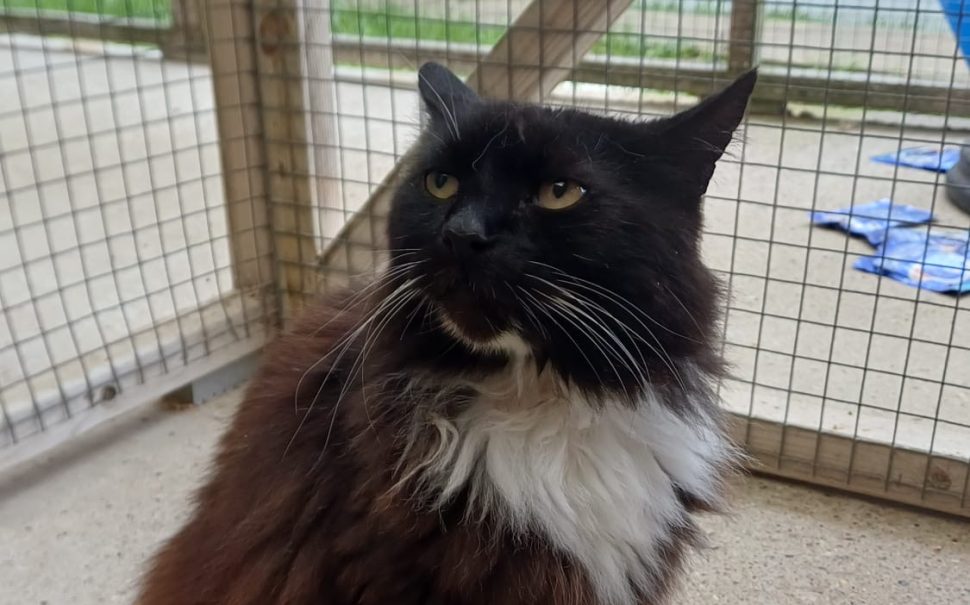
A London-based animal rescue charity has called for mandatory neutering as they are overwhelmed by suffering cats in need of rescue.
The owners of south-west London based charity Protected Paws Animal Rescue Robert Ho and Kerry Flynn are desperate for more to be done about the number of stray cats and dogs in London.
The RSPCA have designated October ‘Adoptober’ to raise awareness for the issue, claiming the country is currently facing the biggest rehoming crisis in recent memory.
Kerry said: “If we neutered animals all day every day, it still wouldn’t be a drop in the ocean.
“The main aim for society should be that vets should get on board, we should be getting animals neutered and we need to get this problem under control.”
Robert said that Protected Paws has definitely seen an increase in the number of rescue cases in recent years.
He added: “From comparing last year to this year there has been a huge amount of abandoned animals across London.”
According to the London Datastore, since 2020 the number of rescue incidents has been increasing year on year, with cat rescue incidents seeing a particularly significant spike.
Before 2020, animal rescue incidents attended by the London Fire Brigade were fairly consistent, with an average of 588 incidents per year.
In 2024, there were a total of 1,326 animal rescue incidents, with cats making up more than 60% of the incidents that year.
Causes of the crisis
Robert said that the Covid-19 pandemic played a huge role in the current rehoming crisis.
He said: “A lot of people in lockdown started adopting cats and dogs but they were probably inexperienced.
“Because they couldn’t see veterinary practices, the dogs and cats weren’t neutered and when people let them out they started having kittens.
“That created a big boom in stray cats and dogs.”
Robert added that mental illness was a factor in the spike in rescues.
He said: “The other issue we had with Covid was the mental illness of the owners.
“It affects a lot of people and unfortunately sometimes the animals get the brunt of it.
“It’s not the owners’ fault, they don’t realise they are doing it but in some of the situations that we have been to to rescue the animals it is because of the owners more than anything else.”
Struggling to cope
The spike in animals needing to be rescued has put a huge amount of strain on Protected Paws, especially since Kerry and Robert both work full time jobs alongside their charity work.
Kerry is a vet nurse but is on leave at the moment as she had to have an operation to remove a brain tumour.
But that hasn’t stopped her work at Protected Paws. As Kerry was speaking to the Londoners, she received the news that a cat she had helped rescue a few days earlier had died whilst having kittens.
Kerry said that she doesn’t think the workload will ever be manageable amidst the rehoming crisis.
She said: “When you are face to face with an animal that if you don’t take them they are going to be left there to die, it is really hard to say no.”
Jacqui Jackson, Branch Manager RSPCA South London, said that the RSPCA rehomes more cats than any other animal.
She echoed Kerry and Robert’s view that the Covid-19 pandemic and the high cost of living has worsened the rehoming crisis.
She said: “We are seeing a lot of effects from the continuing cost of living crisis, a lot of people not able to look after their pets and a lot of people not able to afford appropriate vet treatment.
“Mainly, a lot of people are unable to fund neutering. A lot of unwanted kittens are being born and that is where a lot of abandonments are involved.”
Government intervention?
Jacqui added that she thinks that as cats cause far less injuries to humans than dogs do, the government is reluctant to step in.
She said: “It is one of those things where the government feels it doesn’t have to be regulated because in terms of human safety it’s not really an issue, but it is still massively affecting the cats.
“There are so many cats that are being bred and not being properly vet checked or vaccinated, and are then sold on with so many health issues that they will come into charities because they don’t know what else to do.”
Jacqui added that even though cat microchipping became law last year, the RSPCA would like to see it enforced more, as there are “no regulations” with cat breeding.
As of 10th June 2024, all cats in England over 20 weeks of age must be microchipped and registered on a compliant database, unless exempt or free-living.
However, there has been no such move to make neutering mandatory by law, as Protected Paws hope for.
A petition to make neutering cats mandatory in the UK, aside from licensed breeding cats, was launched in October 2023 and gained 28,000 signatures.
However, the government responded and said it had no plans to mandate the neutering of cats. The petition closed on 5th March 2024.
The neutering debate
Patrizia Sgaravato, a London-based cat owner, said she is pro-neutering because when she was growing up in Italy it wasn’t common to do so.
She said: “People thought you shouldn’t interfere with nature.
“And we always had a problem, at least twice a year, with what to do with housing them.
“I can’t think why an owner wouldn’t do it apart from the price, that’s the only time you would think twice about it.”
Patrizia added that she would be all for mandatory neutering if it was subsidised to make it less expensive for owners.
She said her friend had taken her cat to be neutered and “almost fell off her chair” when she heard the price.
According to a study conducted by ManyPets, the average cost of neutering a male cat in the UK is £103.82, whereas the average cost to spay a female cat is £148.83.
However, the cost can be up to £350.
The government code of practice for the welfare of cats still advises owners to neuter their felines.
It states: “Neutering has numerous benefits including a reduction in spraying, and a lessened risk of some cancers.
“Un-neutered cats are more likely to fight, to catch some diseases as a result of fighting, and to be lost or run over whilst roaming.
“Cats frequently enter puberty at a very young age and unplanned early breeding may result in welfare problems.”
Featured image: Jacqui Jackson, RSPCA South London