Richmond borough has been named the most recommended place to live in England for a consecutive year.
Results from the annual Community Life survey conducted by the UK government show Richmond exceeds the national average and tops London’s local authorities on a number of factors measuring neighbourhood satisfaction and well-being.
This includes topping the percentage of people who are satisfied with their local area and the amount of natural spaces available, as well as agreeing that their neighbourhoods are cohesive, trustworthy, and foster a sense of belonging.
Twickenham MP Munira Wilson said, “I’m always thrilled, but not at all surprised, to see Richmond upon Thames named among the best places to live in London. “It is that sense of community spirit that is perhaps the most special part of living here.
“Every day, I’m touched by the depth of compassion in our community, and all of the incredible people and organisations who do their best to make life better for others.”
With a population just shy of 200,000 people, the affluent London borough boasts the longest stretch of the River Thames and houses several sprawling Royal Parks.
John Coombs, councillor and Spokesperson for Arts in Richmond-upon-Thames, believes Richmond having a 38% higher recommendation rate than the national average is due to the accessibility of highly-rated schools, green spaces, and various arts and cultural offerings.
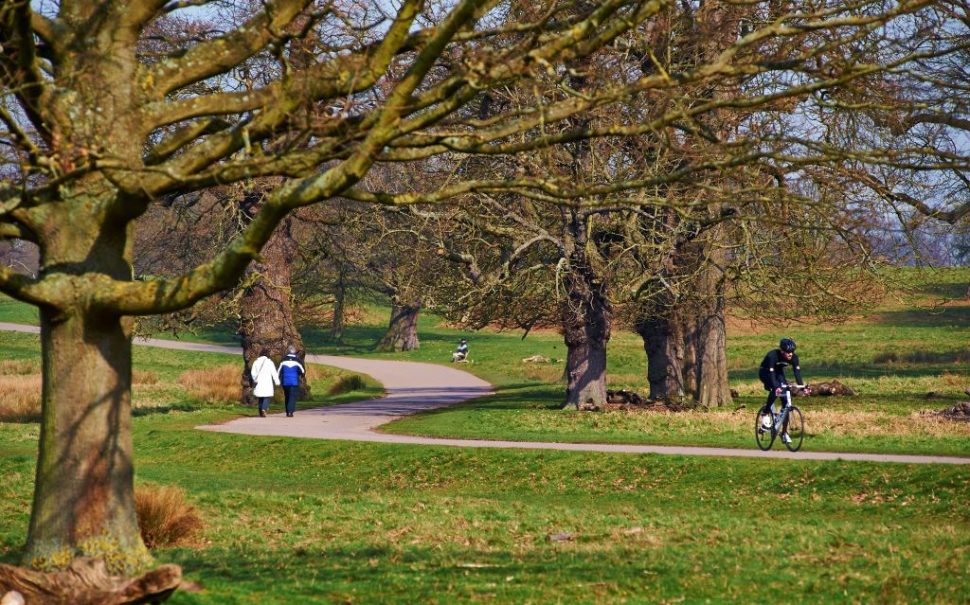
With a quarter of Richmond’s landmass being green spaces, there are 72 square meters of green space per capita in Richmond – compared to the 20 meter London average – including several Royal Parks and over 160 open spaces monitored by the council.
It has led to almost all of residents being satisfied with the offerings of the borough according to the survey.
“We have these lungs of London here,” Coombs said, mentioning that Bushy Park that birthed community initiatives like Park Run as examples.
“People have these very big areas they can just wander about and do whatever they want in, it’s easy for them to access and it’s really good for them.”
It has also topped the London charts by being a place where residents agree they have a strong sense of belonging, ranking 24% higher than the national average and 30% higher than the London average.
Marketing manager Louise Prince is a Teddington resident who has recently bought a home in the neighbourhood.
She said: “My main priorities were to feel at home and to feel safe, especially as a single woman.
“I’ve grown up in Teddington and I’ve always felt at home here. I feel like I have a sense of community here which is something I really wanted when I was buying my first property.”
She cites the local businesses, community events, and proximity to Bushy Park as reasons she enjoys her neighbourhood.
Coombs attributes that part of Richmond’s success at cultivating belonging comes down to how people view their own immediate wards.
He added: “We have a really good sense of community wherever we go in the borough, and it’s all quite localised. People living in Barnes like living in Barnes, people living in Teddington like living in Teddington.”
Richmond also attracts an older and aging population. Council data showcases that population projections into 2035 predict that the over 60s demographic will see the most growth (19%) compared to a decline in under 19s, and a stagnated younger adults population.
Councillor Coombs recognises that the cost of living and lack of affordable housing may be driving these “worrying” demographic shifts.
He said: “London is a very young city but Richmond isn’t. Our profile as a borough is much older, much whiter, and the amount of younger people we have living in the borough is lower than it should be.”
He acknowledges that there is an “affordability gap” pricing out young people in the borough who struggle to navigate the rental market.
Coombs points out that the targets for affordable housing are being reduced, which creates challenges on top of high land values in the borough.
Fergus Murray, 25, is an engineer who has recently moved to Twickenham from Newcastle for his graduate job due to his younger brother having a spare room.
“I didn’t really have a choice,” he said. “Being close to the river is lovely but I don’t plan on staying here long-term.”
Fergus said moving more central is a priority, where rent prices are similar but the nightlife and transport links are more suited to his preference.
Coombs acknowledges that the council are working on making the nighttime economy fit to what people want.
“I do think what is on offer is good for the population that we have,” said Coombs.
He said that areas like Kingston-upon-Thames and Twickenham, that both have student populations, are centres that have the most opportunity to appeal to younger people.
Featured image credit: Royal Parks