If Shakespeare could doomscroll, would he have written Hamlet? If Turner had access to Chat GPT, would he have taken to watercolour? So the crisis narrative goes: a culture of artificiality, passive consumption, and digital overstimulation has stumped creativity.
But contrary to the digital zeitgeist fear-mongering, Brits are picking up pens, paintbrushes and instruments at an increasing rate.
Active creative participation is rising across all artforms, data from the Department of Culture, Media, and Sport Annual Participation Survey reveals, as people purposefully search for activities to wean them off the screen and towards human connection.
Music, drama, and dance were cited as the fastest growing art forms: the percentage of people who said they wrote, practiced, or performed music, or choreographed or performed a drama or dance routine near-doubled between 2021 and 2025. Those writing stories, plays and poetry rose by half.
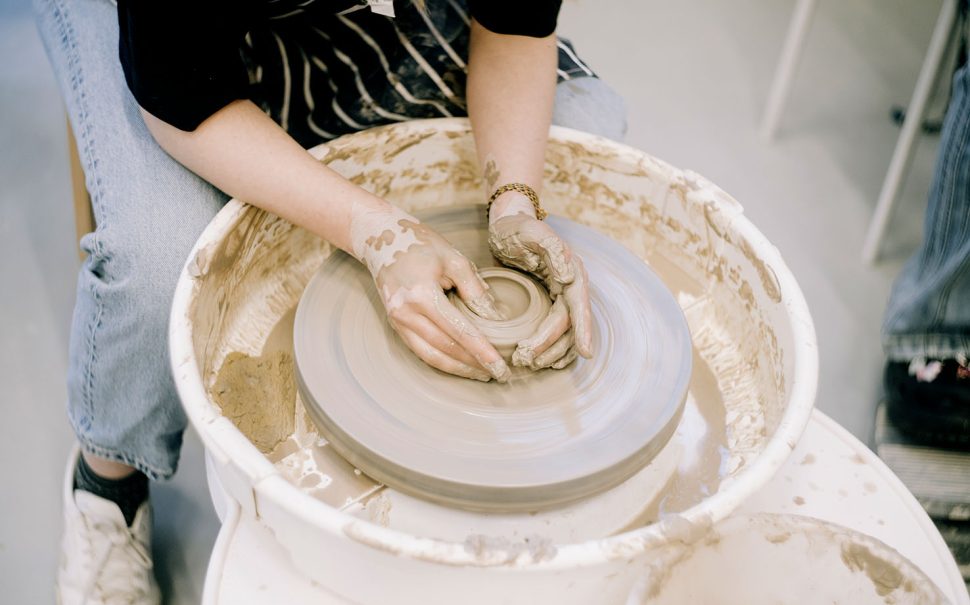
Further still, painting and drawing rose by over 40%, while crafts, including textiles, ceramics and woodwork, increased by roughly a third.
People are actively seeking to create and connect in the form of hands-on, self-directed practice, as Nick Wilson, Professor of Culture and Creativity at King’s College London, explained: “Engaging in activities like making art or playing music offers opportunities for sharing experiences in our humanity.”
He said: “Our digital age perpetuates a tendency to value only what one recognises. Consider the role of social media influencers, likes and dislikes, algorithmic search patterns that drive us to purchase things on the basis of what we’ve searched for or bought before, rather than discovering what we genuinely value.
“Maybe this is also a reason why we continue to seek opportunities to experience our shared humanity in new, surprising, and creative ways.”
To move, make, or mould is to engage in real-life practice. In the wake of Covid-19 and lockdown’s lingering loneliness and social isolation, coupled with the rise of passive scrolling threatening to replace meaningful face-to-face interaction, people are becoming aware of the need to get offline and find alternatives.
Post lockdown, museums, galleries, and theatres opened their doors to those eager to revel in the novelty of being shoulder-to-shoulder with other human beings, consuming art ‘IRL’ for the first time in two years. However, it took a few years for numbers to reflect pre-covid behaviours: by the end of 2023, 77% of adults reported attending an arts event in the previous 12 months, up from 57% at the end of 2021.
Yet, while it makes sense that art consumption has gradually increased, what is perhaps less expected is that active art creation has grown at a much faster rate.
The popularity of restriction-less, home-based physical arts participation during the pandemic was noted by the DCMS Taking Part survey, which showed that across May, June and July 2020, 14% of 3,000 of respondents spent more time engaged in home-based arts activities such as painting, drawing, printmaking or sculpturing.
Since then, the trend has continued. When Rachael Nilsson, manager of Mud Gang, a community pottery studio based in Waterloo, sent out clay kits for people to use at home in lockdown, it sparked the beginnings of a vibrant and inclusive ceramics community.
Nilsson said: “A lot of people wanted to do something creative when they came out of lockdown. There was a lot of talk about mental health, and feeling lonely and isolated – so that pushed me more into setting up the studio as an inclusive place where people can be creative, but also chat.”
“If you’re focusing on something you’re creating rather than something you’re feeling, it’s a really good way to manage stress and emotions.”
“There’s the human contact part where you’re getting this therapy from creating something that’s come from your imagination, but you’re able to share that with somebody.”
Tayla Davis, 23, a regular at Mud Gang, vouched for the sense of belonging crafting creates.
She said: “It’s become such a community thing. If you’re confused and don’t know how to do something, someone will always help and give advice.
“You can say, ‘I don’t know how to glaze something’, or ‘what colour should I do it? And someone else will be like, I think that this colour would look really nice. Everyone supports each other.”
According to the DCMS participation survey, cost was the second-most recorded barrier to arts engagement in 2025.
Mud Gang, which officially became a Community Interest Company at the end of June 2020, works with local charities and community projects alongside its day-to-day workshops, to ensure everyone has the opportunity to experience the health and well-being benefits of being creative.
Daisy Fancourt, Professor of Psychobiology and Epidemiology at University College London and author of Art Cure, explained how the relative low-cost of creating is versus paying to go to a venue like the to consume content, is likely to be a driver in the overall trend.
She said: “Crafts have the benefit of not requiring much cost, transport, or proximity to any particular venues. Given that basic crafts materials can be picked up for very little in charity shops or online (or even upcycled from things people already own at home), they provide an accessible option for people who want to bring more creativity into their lives.
“While there are health benefits from all kinds of arts activities, actively participating can help to build a sense of mastery, purpose and fulfilment – core psychological needs in our lives.”
To find out more about Mud Gang and their mission, visit their website.