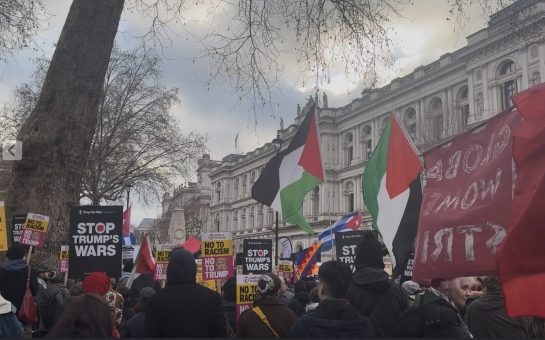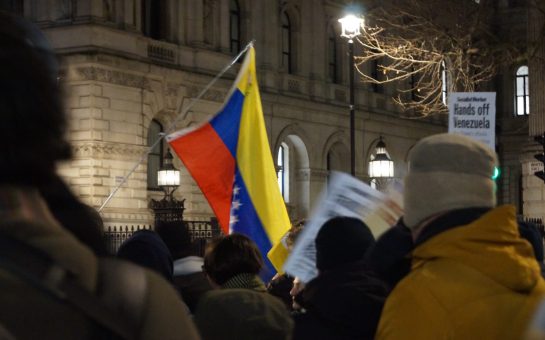
The United States of America has abducted the head of state of one country, talked of invading another and threatened a third country with military strikes – all in the last couple of weeks.
After conducting a military operation in Venezuela that resulted in the nation’s President Nicolás Maduro being removed from the country and taken to the United States, the American President Donald Trump has now threatened to invade the Danish territory of Greenland.
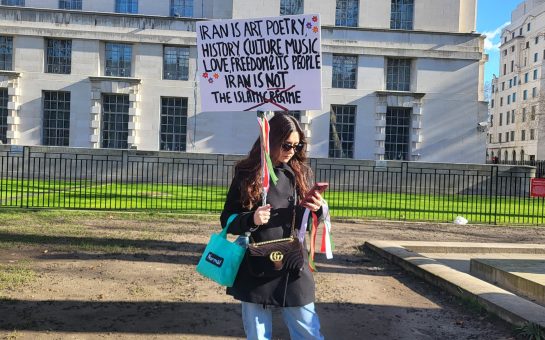
Moreover, in response to a government crackdown of protests in Iran, Trump has issued a series of threats to the Iranian government and has said that the US military is considering its options in Iran.
In response to the threats on Greenland, the UK has joined France in talks to discuss the potential deployment of troops to the island in an effort to discourage the US from taking the territory by force.
Veronika Fikfak, Professor of Human Rights and International Law at University College London, said that the UK needs to decide how it is going to react to these recent developments.
She said: “It’s just leaving the question open.
“Domestic human rights law is being slowly eroded, and that is now happening on an international level and the response to the breaking of certain rules that we’ve taken as a gospel is: ‘Yeah, it happened. We won’t comment.’
“It’s quite a big move in our circles of international lawyers. It’s a major shift that there’s silence.”
Fikfak says that although the British government is being cautious to not anger Trump, silence ought not to be the response.
She said: “I understand the government calculating how to play things politically with Trump, not wanting to upset him.
“But there are legal ramifications to staying silent when these kinds of things happen and this is a blunt and obvious violation of a basic rule that countries will not use force against each other.”
In response to America’s military actions in Venezuela, the British Prime Minister – himself a former international humanitarian lawyer – spoke of his support for international law but fell short of an explicit condemnation.
However, his tone has switched in regard to Greenland, with Starmer stating that Greenland’s fate ought to be decided by Greenlanders and Danes – drawing criticism of double standards.
Fikfak said that such double standards have always been present within international relations.
She said: “You’ve got Syria, you’ve got Iraq, and then you’ve got Gaza – so there have always been double standards, and governments will react to different things depending on how close they are, how important they feel they are.
“Obviously Denmark is an important ally, it’s an EU state to which the UK has always been close.
“It is unclear at the moment what the options on the table are, but I think they need to make clear that an attack on Greenland as part of Denmark would be an attack on all countries.
“But just calling it a threat, which at the moment it is, and then potentially an attack later on, what do you do in response?
“Is it that the UK provides military support to Denmark?
“They haven’t actually said we’re going to defend Greenland, which under NATO article 5, one would have expected.
“So that is one thing where they need to clarify their position and they need to think about whether being silent on this issue is a good thing or whether it’s actually hurting the situation.”
“If a member state of NATO attacks another member state of NATO then essentially the whole thing collapses.”
Dr Rod Abouharb, Associate Professor in International Relations at University College London, said that the US’ threats to annex Greenland present an unprecedented scenario for the NATO military alliance, of which the UK is a member.
He said: “This would be the end of the NATO system as we know it, right?
“And of course, where the UK stands on this is very important.
“The UK is a little late to the party in regards to condemning it but they’re now talking about potentially deploying troops in cooperation with the Germans to support Denmark in order to put the Trump administration off from doing any more, so we’ll have to see how that works.”
US President Donald Trump has also been engaged in a war of words with the Supreme Leader of the Islamic Republic of Iran.
It has been reported that more than 2,000 people have been killed during the past fortnight of protests and Trump has said he is receiving hourly updates on the situation.
Dr Abouharb said that he thinks that war is a real possibility.
He said: “The US seems to be getting more assets into the region – there have been large transport planes which have been going via the UK into the Middle East and these would be the things that they would need for potential strikes.”
The Iranian government has vowed to retaliate to any strikes from the United States, stating that American military bases in the region, as well as US-ally Israel, would all be legitimate targets.
But Dr Abouharb doubts Iran’s ability to respond in kind to any US military action taken against it.
He said: “The Iranians do like to threaten all sorts of terrible consequences.
“I think the capacity of the Iranian state to do this explicitly seems to be quite limited.”
Dr Abouharb said that the actions of the Trump administration in Venezuela have put the international rules-based system into question.
He said: “They have broken international law in how they went about exfiltrating Maduro from Venezuela, and whilst I’m sure most of us won’t be sorry to see him go, that’s not how to conduct international relations.”
Dr Abouharb disagrees with the notion that the American military action in Venezuela was about Maduro’s attitude towards democracy, arguing that the real reason for the US interest in the South American nation is its vast amount of oil.
Venezuela has the world’s largest proven oil reserves, and last week Donald Trump held a meeting in the White House with a cohort of executives from a range of American oil companies.
Dr Abouharb said: “What we’ve seen in Venezuela is that it’s not really about a transition to democracy – it’s about access to oil in a very explicit way that we haven’t seen for decades.
“And of course, there’s plenty of money to be made too.
“Secondarily, there are some arguments that this could weaken the positions of Russia and China globally.
“But the increase in oil production will take at least five or more years to happen, so, it’s not going to happen quickly, even if it happens at all.”
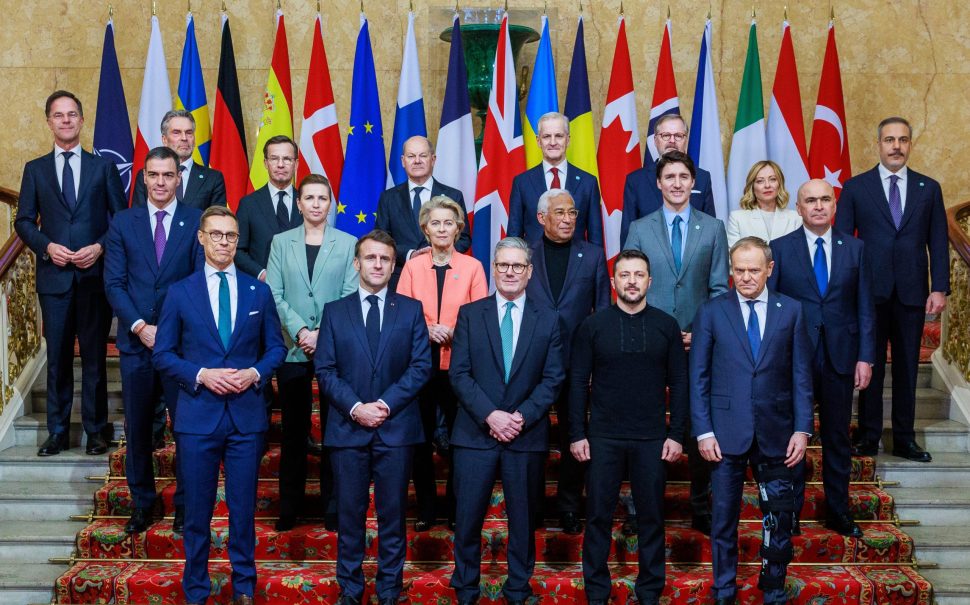
Featured image credit: “Securing Our Future London Summit participants on 2 March 2025” by Christophe Licoppe, © European Union, 2025