Since fans returned to stadiums following the pandemic, football-related disorder in London has escalated and remains above pre-2020 levels, according to data from the Home Office.
The number of banning orders and arrests have risen sharply across the capital, particularly at the largest clubs, with West Ham topping the table for both.
Since the last full pre-pandemic season in 2019, banning orders for London clubs have more than doubled, from 227 total banning orders across London clubs in 2019, to 473 in 2025.
The only London clubs that have actually reduced their number of banning orders since the pandemic are Charlton Athletic and Queens Park Rangers.
Some supporters point to football culture as one factor.
West Ham season-ticket holder Toby Burder said: “One of my favourite things about West Ham is that there’s a bit of edge to the game.”
Banning orders are legal restrictions that are intended to prevent individuals involved in football-related disorder from attending matches.
They typically last from three to ten years and may include travel limitations, mandatory reporting to police, and surrendering passports during international fixtures.
West Ham United currently has 112 active banning orders, up from 93 in the 2023/24 season, and holds the second-highest total number of arrests nationally since 2019.
The club with the highest number of banning orders over the past decade is Newcastle United, with 671 issued since 2015.
However, the majority of Newcastle’s orders were imposed before 2022, when crowds returned to stadiums.
By contrast, of West Ham’s 655 banning orders since 2015, most have been issued after 2022 — indicating that the rise in sanctions at West Ham is a relatively recent phenomenon.
The number of arrests of fans of London clubs has also more than doubled since pre-Covid, with 103 arrests in 2019 compared to 235 in 2025.
West Ham tops the chart with 243 total arrests since the 2019/20 season, followed by Chelsea at 157 and Arsenal at 158.
The highest reason for arrests of fans of London football clubs, according to the Home Office, is ‘Public Disorder’ which is classed as behaviour in a public place which is likely to cause or intends to cause harassment, alarm or distress.
The second highest is for alcohol related incidents.
So why is West Ham leading both sets of statistics?
The club has a historical association with football related disorder, particularly during the 1970s–1990s, when the Inter City Firm (ICF) became one of the most notorious hooligan groups in England.
Named for the trains used for organised fights, the ICF gained infamy for violence with rival firms, including Millwall’s Bushwackers.
Burder said: “I think it’s ingrained in the culture of West Ham. There’s this sort of folklore around West Ham hooliganism that’s in films and maybe a lot of more boisterous people would be attracted to the club based on that.”
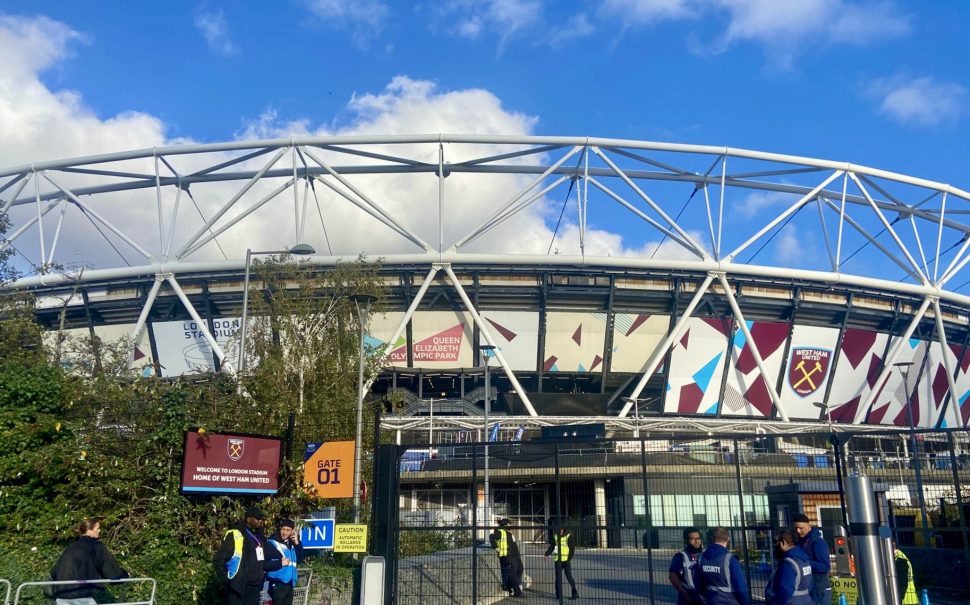
Burder also felt that the club’s new stadium, The London Stadium, which West Ham moved to in 2016 and was originally built for the 2012 Olympics, could be contributing to higher rates of arrests and banning orders.
He added: “Since we moved stadiums there’s been more times that it’s become violent or there’s been a scuffle, even more so in non-event games where you wouldn’t expect it, and often it’s actually between West Ham fans as well because tensions are higher.
“At Upton Park, there’s also big problem with opposition fans being seated in home end, I’ve seen a big brawl between middle-aged fans after an away team scores.
“I think the combination of West Ham fans the way that they are – they are working class, they like a drink and like a bit of a fight – and then put them in this new surroundings where the heart of the club has been ripped out and it’s a recipe for disaster.”
But do the numbers really tell the whole story?
For many fans, football hooliganism is a thing of the past and some locals even say there has been a marked positive improvement in the behavior of football fans from notoriously rowdy clubs.
Arya Chanda, whose family has lived in Newham for generations, said: “When my father – who is Asian – was living in East London in the 1980s, you were terrified of West Ham fans and would cross the street to avoid them.
“But I’ve never seen them cause any trouble or act in an intimidating fashion. I attended the 2023 Conference League parade and it was pretty chilled out, and the fan base seemed to represent the multiculturalism of the area.”
Furthermore, another factor behind the post-pandemic rise in football-related arrests may simply be down to changes in policing strategy rather than behaviour alone.
Since early 2024, the Metropolitan Police has significantly expanded its use of Live Facial Recognition (LFR) technology at major fixtures. The force has also deployed live-streaming body-worn video and tagging spray at high-profile matches, such as the North London derby.
These tools enable officers to identify suspects more quickly and trace individuals long after incidents have taken place, meaning that a higher arrest rate may indicate not a rise in hooliganism but rather a more efficient police force tackling disorder at football matches.
The Londoners contacted the Metropolitan Police for comment.