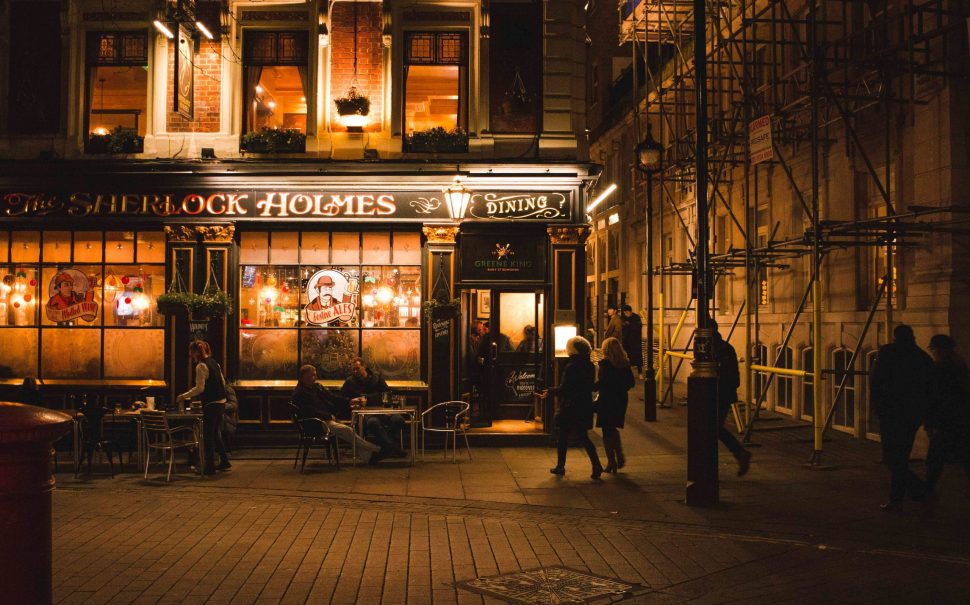
Pub culture in the UK is deeply ingrained in British society. It is about much more than just drinking, but is an essential part of the social fabric, where people come together for relaxation, connection and community. In smaller towns, the pub is often the focal point of social life.
“If this pub closes, there will be no public place for people to gather within at least five miles,” lamented a patron at the Carrington Arms in the village of Ashby Folville, Leicestershire.
“Yes, there might be people meeting to do yoga, discuss books, play pickleball, or whatever, and that’s great. But there’s nowhere visible, nowhere anyone can wander into.”
Pubs are said to be in crisis.
The surge in zero and low-alcohol drinking, the rise of health and fitness culture, and the influence of social media aesthetics – combined with rising business rates and the broader cost-of-living crisis – are reshaping the pub landscape.
Though the extent of this predicament varies sharply depending on whom you ask.
Across the UK, the number of pubs has dropped to 45,000 as of late 2024, continuing a long decline that has erased roughly a fourth of sites since 2000, according to an analysis by the British Beer & Pub Association.
According to Altus Group’s data, the Business Rescue Expert reported that nearly eight pubs have closed each week over the past five years.
Paradoxically, the Office for National Statistics (UK) reported that the turnover of establishments in the beverage-serving industry (which includes pubs, bars and clubs) increased sharply from 2021 to 2023.
In 2023, beverage serving activities recorded a turnover of over £26 billion, which reflects a 9% increase from the previous year, marking the second consecutive year that pre-COVID levels were exceeded.
The data suggests the pub sector is slimming down but bulking up – fewer pubs, bigger players.
London offers a clear example of this structural shift.
The capital had 3,585 pubs and bars in 2022, showing little change since 2019.
In 2019, there were 15% more pubs with more than ten employees compared to 2001.
Notes in the 2023 GLA “London Pubs Audit” support this trend, noting that larger pubs account for a growing share year-on-year of the overall number of pubs.
The total pub employment in the capital has surpassed its pre-pandemic peak, even though the number of venues remains steady, suggesting that bigger venues and more varied offerings are attracting more labour (and spending) to fewer locations.
Tony O’Neill, pub landlord in the Richmond-upon-Thames Borough, with over 20 years’ experience in the industry, explained: “There remains a huge demand for pubs. Figures are showing that. Twenty years ago, pubs were drinking pubs- ladies were not welcome. Full stop.
“That model is gone, and many of these smaller pubs, which have not evolved with consumers’ needs, have closed in recent years. Unless publicans focus on better catering to both young and old customers, their businesses are doomed.”
Within London, a varied picture emerges across boroughs.
The Office for National Statistics, as of March 2024, found that among local authorities, the highest number of pubs and bars is in Westminster, with the lowest in Barking and Dagenham, while inner boroughs such as Hackney, Islington, and Camden recorded the greatest numbers with more than 210 establishments.
The City of London, where pubs are most reliant on office workers, continued to see a decline.
Simon Clarke is the boss of The Eagle Ale House, situated in a posher part of Battersea, but is better known for successfully leading the campaign to give landlords greater control over where they buy their beer.
He claimed that some London boroughs are now faring better than others post-COVID.
Clarke said: “The work pattern of a four-day week in the office and remote working has favoured the pubs in living neighbourhoods over the central London ones. Locals are now coming on Thursday and Friday nights, as well as at weekends.
“Earlier in the day, dads who are now doing the school run will stop by beforehand to grab a drink. It helps if you have an outdoor area to accommodate the large number of young adults who smoke.
“Saying that, a contributing factor often overlooked for small pub closures is their inability to renegotiate their tie beer business relationships with their landlords.”
Under the “tie beer model”, a pub tenant is obligated to buy beer and other products from the pub-owning company (pubco) landlord, often at inflated prices, in exchange for lower rent and other benefits.
Clarke added: “After COVID, smaller pubs bound by this centuries-old business arrangement didn’t have the savings to renegotiate their deals and couldn’t compete with pubs with free-of-tie lease arrangements.”
The former arrangement allows tenants to buy their beer from any supplier they choose, giving them more control over their business and, in most instances, higher profitability.
On a national scale, urban-rural divergence has widened. Rural pubs faced additional constraints—limited public transport, drink-driving regulations, and lower population density. Some have diversified into accommodation and community services to sustain revenue streams.
Grace Franklin has worked for four years at The Sawley Arms in rural Yorkshire, which caters for the mid-range bracket and is close by the Grentley Hall, a five-star hotel popular with footballers and used for weddings.
She said: “Our pub caters for the flow of guests who can’t afford the hotel prices and we have added rooms to boost our revenues.
“The offering of non-alcoholic drinks has increased massively since it was introduced two years ago. Now, three beers and five types of mocktails are on the menu.
“Pubs can’t live on pints and packs of crisps alone. In many rural areas, there are no taxis or Uber. Unless the pub is in a destination area, there is a real struggle to survive.”
The “Pub is the Hub” initiative, originally founded by King Charles III, has recognised the struggles of rural pubs.
Following campaigning efforts, it received £440,000 in government funding last month to help rural pubs provide services that have disappeared from villages, such as post offices, IT hubs, libraries, and computer training.
Has the pub had to become something else to survive? In many postcodes, yes.
A key factor has been diversification – not just a longer tap list but also in how spaces are used.
Food-led pubs have scaled menus and table service while drink-led venues have doubled down on sports, late-night and events and hybrids combine coffee during the day with cocktails after work.
These shifts aim to boost hourly revenue and offset rising costs, including wages, energy, and business rates, which have not been addressed again in the Autumn Budget 2025.
Independent pubs continue to operate by emphasising local sourcing, community involvement, and distinctive offerings, with 2025 data from NIQ Hospitality Market Monitor suggesting a modest rise in their numbers.
However, larger national chains retain advantages in negotiating rents, managing supply chains, and spreading costs over multiple sites.
From a single-purpose drinking venue to a multi-use social space, the modern pub is swiftly evolving into a place to do everything. To thrive, publicans and punters alike need to rethink what it means to go to the pub.